

This Is The Reason Your Shrimp Heads Are Turning Black
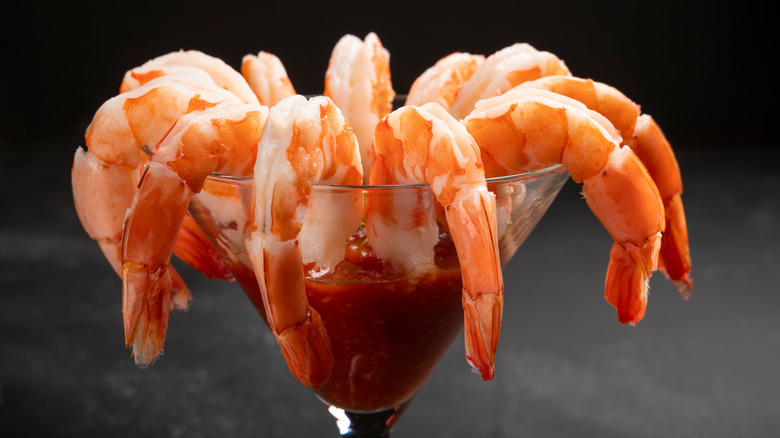
So you just bought a big bag of shrimp to present at your get-together. You've spent hours researching the best ways to serve shrimp cocktail, perfected your cooking technique, and even found a vegan cocktail sauce swap for your one plant-based friend. Everything seems to be perfectly falling into place — that is, until you notice your shrimp heads have turned an alarming shade of black.
But wait — don't panic. While it looks a little sketchy, black spots on shrimp actually aren't as scary as you may think. We sat down with Ahmad Alzahabi (@thegoldenbalance) for an exclusive interview at the New York City Wine and Food Festival, where he assured us that discolored shrimp heads are usually tied to science rather than spoilage.
The culprit is a chemical reaction called blackspot or melanosis. "Usually when something is turning black ... it's oxidizing," Alzahabi says. If you're unfamiliar with that process, it essentially means that when your shrimp are exposed to oxygen, their enzymes react and cause the color to change. You've probably seen oxidation at work in other foods. The Golden Balance founder compared it to the browning that occurs in avocados or apples after they are sliced open. While these foods couldn't be more different from shrimp, the chemical reaction they experience is the same. The color change may not be the most appealing to look at, but rest assured, it's not a food safety issue. So, unless you're judging your seafood solely on its looks, you don't have to be worried.
How to actually tell if your shrimp is going bad
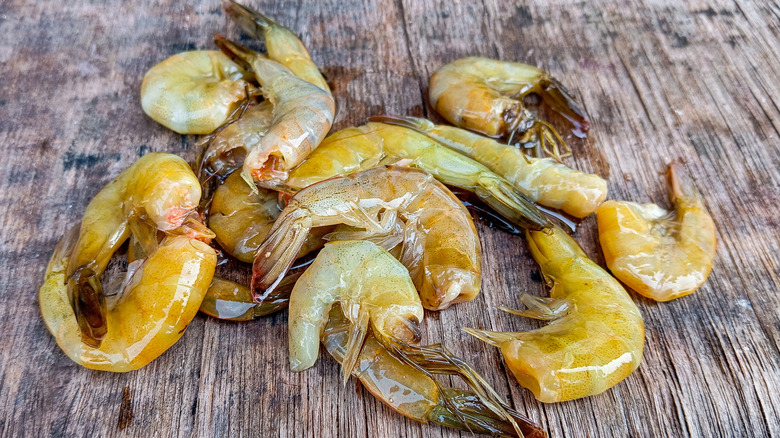
If the shrimp's color isn't the best way to judge its freshness, what is? According to Ahmad Alzahabi, other sensory cues such as smell and touch are far more reliable. "You should go based on the sliminess and the smell of it," Alzahabi tells us, stating that it's crucial to "just feel the ingredients." As for the scent, the content creator shares that "if it smells too fishy and kind of rotten, it's usually not a good sign."
But how long does it take shrimp to reach that point? Raw shrimp is typically safe to store in the refrigerator for one to two days, meaning that it's not the kind of grocery item you'll want to buy far in advance. You can also consider freezing your shrimp to extend its usage. Though it's a common belief that shrimp can't be refrozen after it's been thawed, that's actually a myth. According to USDA guidelines, the only issue you may run into after refreezing once frozen food is a loss in quality. If you want to avoid the hassle, you can always opt for a nice bag of already frozen shrimp for a longer shelf life and fewer uncertainties. And if your shrimp is already showing any of the warning signs the day you buy it, well, you may want to take it back to the grocery store and have a talk with the seafood department.