

Your Outdoor BBQ Grill Is Affected By This Way More Than You Realize
We may receive a commission on purchases made from links.
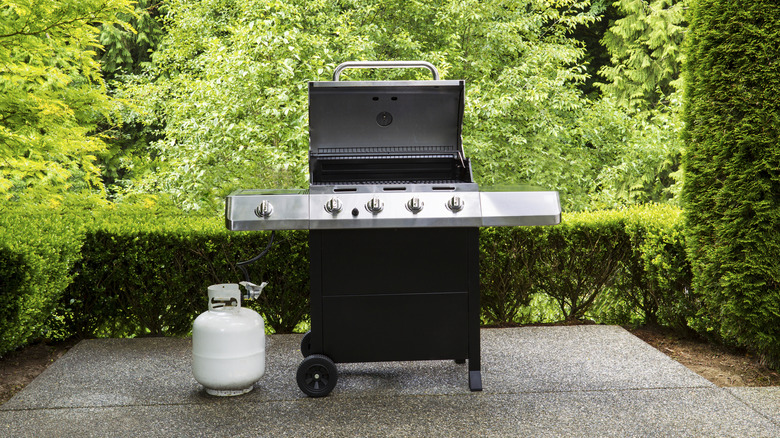
As simple as the act of grilling seems, there are a lot of factors that will affect the way your cook turns out. One thing to consider is the overall outdoor temperature — and not just for your own comfort while you're cooking. External temperatures have an effect on the way your grill retains heat, and should be taken into account if you're grilling on certain types of days. To get more insight on this, we spoke to expert Scott Thomas, founder of The Grillin' Fools, for what to think about when it comes to this factor.
"Ambient outside temp has a huge impact on the temp of the grill," explains Thomas. "[And in particular], less expensive grills that aren't insulated as well. For example, a 1"-thick ceramic Kamado grill will withstand the temps better than a thin steel grill."
Of course, grilling during summer is going to make it easier and faster to bring your grill up to temp. But on a cold day, opening the lid to check on the meat (or add fuel) means it takes longer for your gas or charcoal grill to heat up. In turn, it also means that cooking times will be longer.
Here are some tips on how to cook on both ends of the weather spectrum
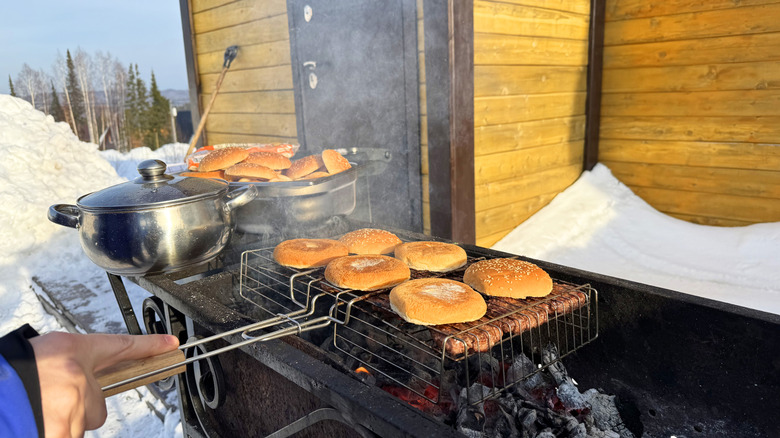
You can grill outside in cold and warm weather, but there's definitely some adjustments to make, depending on the day. Scott Thomas says that in cold weather, you'll want to strategically shield your grill from wind. He suggests that you place your grill on the side of your house, or alongside a shed, so that you and your grill don't get disturbed by any cold breezes. Thomas also notes that there are also products — basically, modified welding blankets — that are specifically designed to insulate grills without getting in the way of lids or ventilation. That way, you can still access what you're cooking, but not lose radiant heat as quickly.
In hot weather situations, it's easiest that you remember to cook your particular cut of meat to the required temperature (failing to do so is one of the many mistakes people make with charcoal grills). Warmer days might mean that your cook moves faster towards the ideal core temp, so keep your probe handy, or use a wireless one to keep an eye on things. (My wireless probe has a handy target temperature alarm, which means I don't have to hover much.) The same principle works during cold weather: As Thomas explains, "Sure, cold weather grilling will probably take longer, but the only way to truly know is with a probe thermometer. So that pork butt that took 6 hours on a July day ... very well could take 7 hours in January."