

The Common Storage Mistakes That Are Ruining Your Cheese

We may receive a commission on purchases made from links.
Cheese has been around for thousands of years, and every day we're grateful to whoever decided that coagulated dairy products were actually a good thing instead of a tragic food accident. Over the millennia, we've learned a thing or two, coming up with genius uses for cheese such as fondue and raclette (thanks to Switzerland for both of these similar-but-not-identical dishes) as well as comfort foods including macaroni and cheese and grilled cheese sandwiches. We've even invented implements like the cheese slicer and cheese board to show them off at their finest. How, then, are we still making mistakes with storage, so our precious cheeses wind up dried out or slimy? To address this issue, The Takeout called in a certified Big Cheese: Molly Browne, who serves as the Education Director at Dairy Farmers of Wisconsin.
Browne explained that the key to cheese storage involves regulating the airflow: "Different types of cheese need different amounts of airflow to thrive. Cheeses like brie-styles, cave-aged cheddars, and anything that has been washed have rinds composed of living microbial communities that need air to survive. Cut off their airflow and they become slimy and stinky, and not in the good way. Rindless cheeses like Colby, gouda, and provolone do not have this same need for airflow and need protection from drying out." How and where we store cheese affects the airflow, so Browne advises against making the following mistakes due to a lack of cheese-pertise.
Keeping cheese in the wrong place

Never allow your cheese to go into the fridge naked. (Come on, it's chilly in there.) According to Browne, cheese should always stay covered whether or not it has a rind. Not necessarily in the wrapper it came in, though. "My top recommendation is cheese paper," said Browne. "Cheese paper gives the cheese some breathing room while still preventing it from drying out or coming into contact with other foods in your refrigerator." For the sake of convenience, she's a big fan of Formaticum cheese storage bags. "Cheese paper is suitable for most styles of cheese, with the exception of high-moisture fresh styles like mozzarella and burrata," she advised. She added that if you don't have any, you can DIY it by wrapping your cheese in parchment paper and then keeping it in a plastic bag or storage tub to create a cheese-friendly microclimate.
Browne also feels that cheese deserves a dedicated space in your fridge. "Because cheese easily absorbs other flavors, I recommend keeping it away from other foods in the refrigerator. All wrapped cheeses can be stored together in the cheese drawer or vegetable crisper, where the temperature is more stable, and humidity is higher."
Storing cheese at the wrong temperature
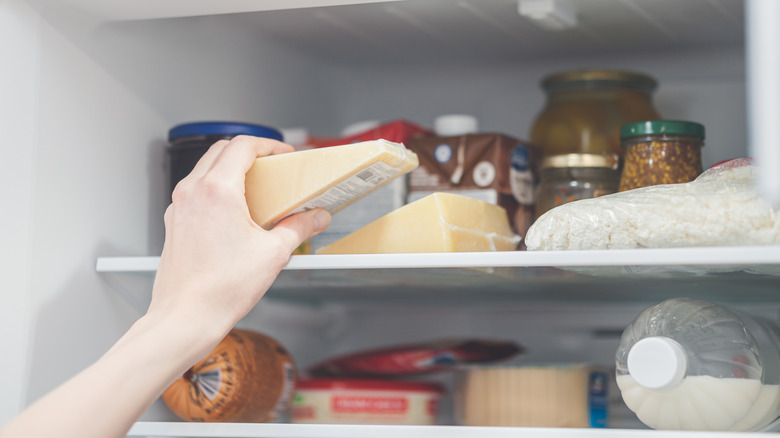
"Cheese was invented to preserve milk long before refrigeration was a thing, so a few hours on your counter will not significantly damage or alter most cheeses," declared Browne. That being said, the countertop is not a viable long-term storage solution. Cheese is best kept cold, preferably at temperatures ranging between 34 and 40 degrees Fahrenheit. This is pretty standard for a refrigerator, but you can check for signs your fridge is too cold if you don't want your cheese to freeze. (Not that you can't store cheese in the freezer, but it might change the texture and taste.) If you can't keep it in a dedicated drawer as Browne recommended, at least position it away from the door so it's not quite as affected by temperature drops every time you open the fridge. As Browne explained, "Maintaining consistent temperatures helps preserve the quality of your cheese and extend its shelf life."
Just because you should keep cheese in cold storage doesn't mean it should be eaten that way, though. Browne says it's best consumed at room temperature, so her recommendation is to take it out of the refrigerator anywhere from half an hour to an hour before you plan to eat it.
Failing to take the cheese type into account

Fun fact from Molly Browne: "Wisconsin alone makes over 600 varieties of cheese, including over half of the nation's specialty cheeses." If you take the entire world into account, you're looking at over 2,000 cheese types. With that in mind, be aware that different cheeses have different storage needs due to their varying moisture levels. According to Browne, the low moisture level of hard cheeses like parmesan means they can last for six weeks or longer. "Cheese paper is still ideal, but plastic wrap or bags can also be used," she advised. For semi-hard cheeses, you're looking at about a month. "Depending on the rind, you'll want to use cheese paper here, but for rindless varieties, plastic wrap or bags will work great."
A soft, ripened cheese like brie can be stored for up to two weeks or up to a week after being opened if you store it properly. Again, Browne recommends using paper, but this trick won't work for fresh cheeses like queso fresco or ricotta. "Fresh cheeses ... are highest in moisture and are intended to be consumed soon after they're opened," she observed, and said you might as well keep them in the containers they came in. Fresh mozzarella, however, can be stored in a tub of water or olive oil to preserve that freshness for a little bit longer. We'll leave you with this last bit of advice from Browne: "A little care goes a long way. Proper storage ensures your cheese maintains the quality and flavor that professional cheese makers work hard to achieve."