

Reverse Vending Machines Aim To Make Recycling Easier, But There's A Catch
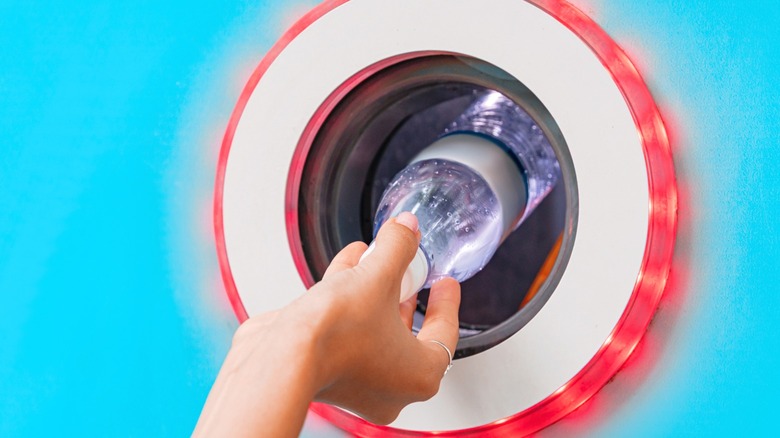
If you've been to the supermarket lately, you may have seen reverse vending machines stationed outside it. (Maybe they call them "bottle deposits" where you are.) It's a neat, convenient way to return your recyclables, like plastic or glass bottles and cans, helping you make an eco-friendly choice with the incentive of a little reward — usually a bit of money or a store coupon. But these machines, as handy as they can be, aren't quite perfect, and there are a few catches that might complicate your recycling experience, including busted machines, trash being put where it doesn't belong, and even fraud.
Yes, fraud. Although reverse vending machines are often able to detect whether an inserted item is recyclable or not, it's possible to cheat the system and get it to recycle something that isn't recyclable in exchange for however much (or however little) money it offers. Fraud is especially a problem with older machines, whose recognition technology isn't as effective as in newer models. Even if your plastic water bottles (microplastics and all) or old Pepsi cans (once beloved by the Soviet Union) are entirely above board, however, it's still possible to run into problems with the machine. Maybe you put in too many items too quickly, or maybe the person who used it before you decided to use it as a trash receptacle. Either way, the machines are known to malfunction.
How to use a reverse vending machine properly
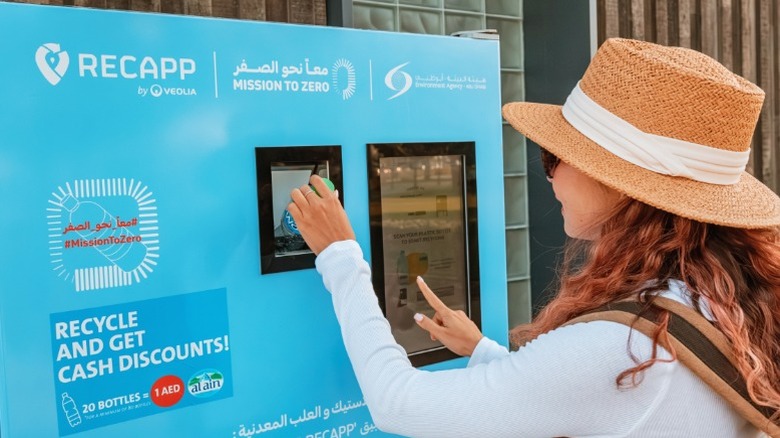
So how do you make use of a reverse vending machine the right way? Well, the good news is that most of them will have instructions on the machine for you to follow. As long as you listen to them, you should be fine. But in general, you'll want to avoid overloading the machine or putting stuff that doesn't belong inside it — and if somebody does and you run into trouble, you should let a staff member at the store know so they can fix it. That can be a bit of a sticking point here in America, where people are often content to let it be someone else's problem, but it's really worth taking that bit of initiative.
Another thing to keep in mind is the issue of rinsing. Those cans and bottles used to contain something, after all, and if there's any residue left behind, it can gum up the works. That's why it's a good idea to rinse those old cans and jars out before you deposit them, making sure they're all spick and span before feeding them into the machine. Coca-Cola may be delicious for us humans, with or without high fructose corn syrup, but it's not good for a machine.