

Why A Zero Calorie Label Doesn't Always Mean What You Think It Means
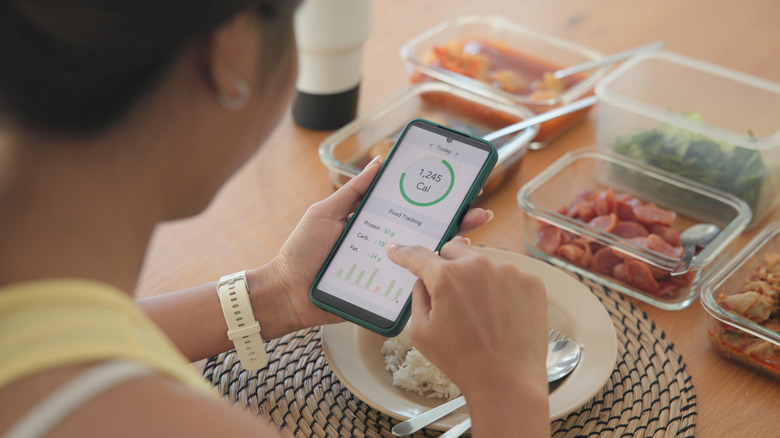
There's an age-old joke, almost an urban legend, that broken cookies don't have any calories. The idea, of course, is that little bits and pieces of cookie don't really count because they're so small that we can eat practically as many as we'd like without having to worry about the calories. Well, that's essentially the official, legal stance of the federal regulations regarding food labels: Anything that has less than 5 calories can be labeled as "zero calorie," even if it's not. That might not seem like a big difference; they're just rounding down, right?
Except that bites, licks, and broken cookie pieces add up. And the smaller the serving size, the quicker it happens because you're more likely to eat multiple servings that way. Let's say you have 10 itty-bitty servings of something labeled as zero calorie but which really has just under 5 calories per serving (and therefore is correctly labeled, according to the law). Now you've eaten nearly 50 calories that you are most likely counting as none. If you grew up baking cookies with Grandma and licking the beaters afterward, it's the same kind of thing — it's just a spoonful here and there. But before you know it, you've had the equivalent of two cookies simply by eating the excess dough you scraped off in tiny doses.
It can be frustrating to try making healthy choices by choosing zero calorie options only to discover they're actually not. The good news is that anything labeled zero calorie still has to be low in calories. Of course, when it comes to being healthy, calories are only part of the equation.
Look for these low-calorie foods often said to be zero calorie
Many food labels fudge the truth a little, and calorie counts can be especially misleading. The best defense against unsuspecting calorie accumulation is knowledge. The only food that truly has zero calories is water, but since many foods are close enough that they can legally be labelled as zero calorie, try to be aware of what is and isn't legitimately close to zero. One food that takes advantage of the zero calorie loophole is cooking spray, which typically has 2 calories in a single spritz. Since you'll need many spritzes to cover the entire surface, your pan will be coated with way more calories than you might assume. Another hidden calorie culprit is cinnamon. Though often considered a calorie-free spice used to innocently spruce up a latte, it has as much as 6 calories per teaspoon. Flavored waters are likewise often said to have no calories but can often be concealing some within, as can sugar-free mints.
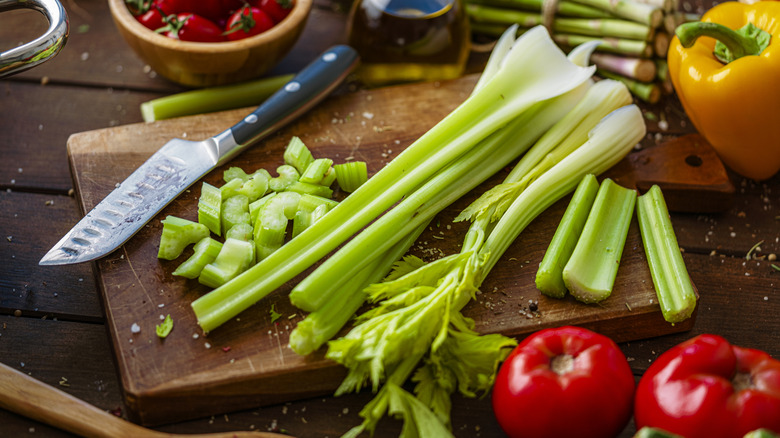
Fortunately, quite a few foods long considered zero calorie genuinely qualify as close enough. Celery is one example. It's a common misconception that eating celery actually burns calories, but at 14 calories per cup, celery is packed with nutrients and helps with everything from heart health to cleaning your teeth. Spinach (which Alex Guarnaschelli cooks in 30 seconds) has just 7 calories per cup and also a ton of health benefits, like supporting eye health. And due to its high water content, the aptly named watermelon has 46 calories per cup and virtually no fat, sodium, or cholesterol.