

10 Ancient Cooking Methods That Have Nearly Been Lost To History
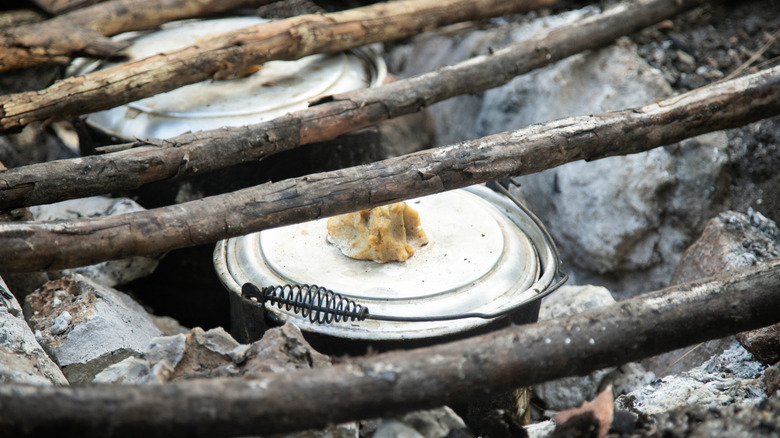
As archaeologists continue to uncover finds influencing how we understand human history, ancient cooking methods are also being excavated, giving us clues as to how our ancestors ate. In 2015, researchers discovered the then-earliest evidence of humans cooking with fire at the Border Cave site in South Africa, which dated to around 170,000 years ago. In 2022, the Gesher Benot Ya'aqov site on the edge of ancient Lake Hula in Israel revealed — through fish remains and tools — that our ancestors, Homo erectus, actually used fire to cook meals some 780,000 years ago.
Before cooking with fire, hunter-gatherers had survived on raw meat, nuts, and fruit. Learning how to cook made food easier to digest, which in turn helped unlock nutrients. Over the years, civilizations have adapted cooking methods to suit new materials, food preferences, and tastes.
But it's not just food remains that give us a glimpse into how people once whipped up ancient dishes. Archaeologists have found evidence of cooking methods from the oldest-known written culinary recipes inscribed on stone tablets, as well as via miniature ornamental versions of earthenware stoves buried in tombs in China. And, there are even some culinary processes that have survived intact, and are still used in many cultures around the world. Here, we take a look at some ancient cooking methods that were nearly lost to history.
Babylonian broth
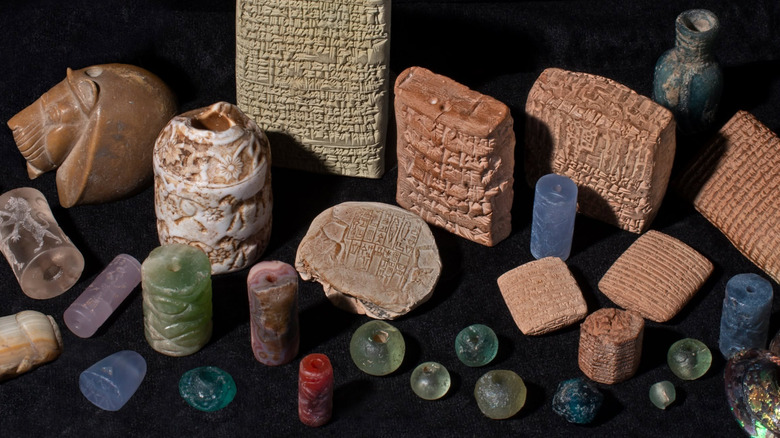
The Yale Babylonian Collection contains the world's earliest written recipes, dating to both the Old Babylonian period (no later than 1730 B.C.E.) and the Neo-Babylonian period, over a thousand years later. The tablets contain a variety of directions and ingredients that vary in completeness and detail, including 25 broth and stew recipes on one tablet. These recipes — which read full of flavor due to the use of spices and herbs — contain different cuts of lamb, have a thickened sauce from sheep's fat, and include alliums like onion, garlic, and leek.
So, how do the recipes hold up? Yale's curators headed to the kitchen to find out. The team selected three recipes from one tablet, including the "Unwinding" recipe, which is a vegetarian pan stew with a leek and onion base. The second was Tuh'i with beets, which Agnete Lassen, Associate Curator of the Yale Babylonian Collection, described as "kind of a proto-borscht." And the third was a milk-based broth of lamb.
The main takeaway from these recipes was that cooking during this period was a lot more sophisticated than once thought, with the use of complex flavors, thickening agents, and healthy whole ingredients. Doing so to make a big stew that could feed big groups also demonstrated the communal vibes of sharing a meal in Babylonian times.
Earthenware and stone cooking
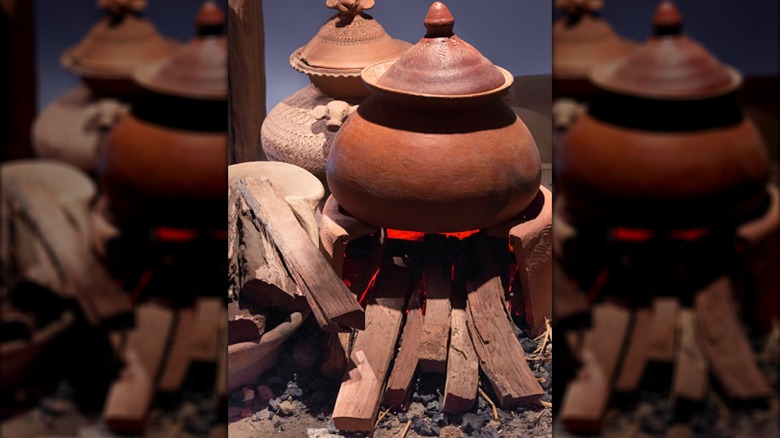
Earthenware and stone cooking involved preparing food on direct fire in clay or stone pots to cook contents evenly, as well as to retain heat. The invention of pottery allowed early humans to utilize this cooking method, store and transport food and water, cook tough plants at higher temperatures, and leave food unattended on a fire while completing other tasks.
The oldest known pottery was discovered in China's Jiangxi Province, and dates back around 20,000 years. According to the archaeological study of Xianrendong Cave, China in 2012: "The occupations in the cave demonstrate that pottery was produced by mobile foragers who hunted and gathered during the Late Glacial Maximum. These vessels may have served as cooking devices."
The American Museum of Natural History's 2012-2013 exhibition "Our Global Kitchen: Food, Nature, Culture" included artifacts from China dating to around 2,000 years ago. The artifacts, miniature versions of household objects found buried with people, provided evidence of more advanced earthenware and stone cooking items used in food preparation. In Japan, the earliest evidence of humans using pottery for cooking was discovered at a dig next to a lake, linking pottery to food between 11,200 and 15,300 years ago, during the Incipient Jōmon period.
Earthenware and stone cooking are the blueprints for braising, slow-cooking, and one-pan cooking that remain ever-popular, thousands of centuries later. Cooks can also find a variety of earthenware cooking vessels that replicate early designs.
Earth ovens (pit cooking)
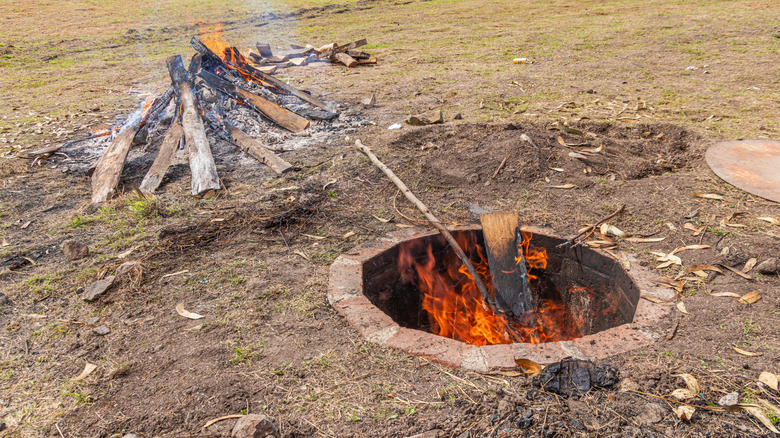
Earth ovens are ancient cooking structures used to roast food slowly — they began as pits dug into the ground, often lined with pebbles or rocks to retain heat, before evolving into overground pits for cooking. Hunter-gatherer sites around the world contain evidence of earth oven use spanning the last 30,000 years. The earliest known earth ovens in North America date back to around 8,000 years ago, and were mainly used to roast roots, nuts, fish, and meat. The main issue with this cooking method was keeping soil and ash out of food, so early adaptations used leaves, grass, and bark to prevent contamination.
We still utilize a version of pit cooking today in the form of barbecuing. The Taino, indigenous Caribbeans, used a pit cooking method called barabicu, which translates to "sacred pit." When the Spanish began colonizing the Americas in the 15th century, they adopted the method. This cooking style soon traveled back to Spain and beyond. The name changed from "barabicu" to "barbacoa" and, eventually, to the barbecue we know today — but the concept of cooking food slowly over fire remained the same.
In New England, people still build earth ovens on beaches, lined with heated rocks and seaweed. Every season, these modern iterations of earth ovens are used to cook shellfish and vegetables for the region's iconic clam bakes.
Garum Roman Flavor Bombs
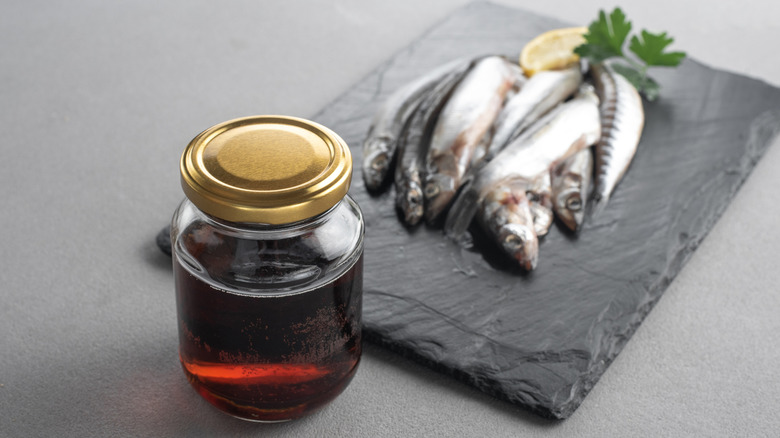
Professional chefs and home cooks can all appreciate special ingredients that instantly elevate a dish when you add them, from cheap seasoning packets that will help your burgers pack a punch to a splash of Worcestershire Sauce in spaghetti bolognese. But flavor bombs aren't a recent invention, and ancient Rome's oldest cookbook is full of references to an early addition that packed a particular punch.
"De Re Coquinaria," or "The Art of Cooking", which is credited to Marcus Gavius Apicius, is the only full-length surviving cookbook from ancient Roman times. This 10-book collection of recipes that dates back to the first century A.D. has one ingredient that appears in 347 of the 459 recipes: garum.
Making this once-popular sauce involves leaving 8 pounds of salt fish and 1 pound of salt in earthenware jugs or pots in the sun for months to ferment. The result wasn't as salty or as fishy as it might sound; instead, it was an umami flavor bomb used to elevate dishes, and shares some characteristics to the aforementioned Worcestershire sauce, as well as fish sauces commonly used in Vietnamese and Thai cuisines — although there is no direct historical connection.
Stone boiling
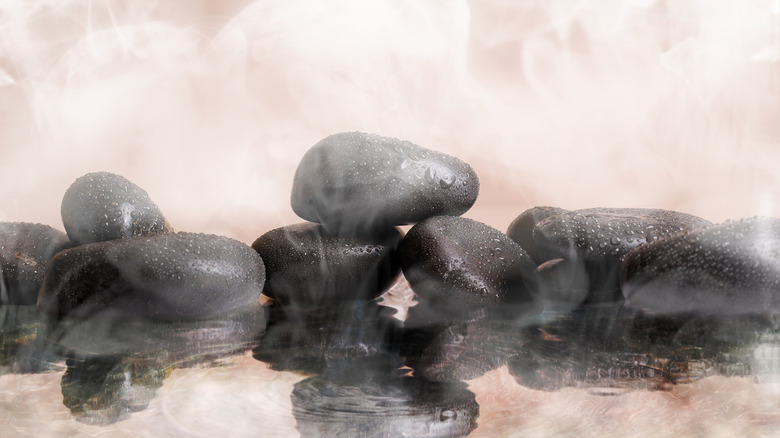
The method of boiling stones directly on a fire and then adding them to a pot of liquid allowed cooking without burning ingredients directly over the flames. The earliest evidence of stone boiling comes from ancient heat-affected rocks found at dig sites, dating back as far as 30,000 to 50,000 years ago. The earliest known hearths containing heat-fractured round river cobbles, suggesting the use of stone boiling, came from the Upper Paleolithic site of Abri Pataud in the Dordogne valley of France, around 32,000 years ago. In the United States, evidence has been uncovered of people living in what is now Leander, Texas using the method around 9,000 years ago.
Stone boiling was also considered to be one of the first methods used to make soup, evoking memories of the old story "Stone Soup." The tale is about hungry passersby persuading people of a village to add small amounts of each household's hidden food to a pot of boiling water and rocks, transforming scraps of food into a hearty stew that would sustain everybody. Heating rocks and using them for cooking remains popular worldwide today, from Japanese ishiyaki, a traditional way to stone grill meat, to khorkhog, a Mongolian barbecue-style dish cooked with extremely hot river stones.
Sand roasting
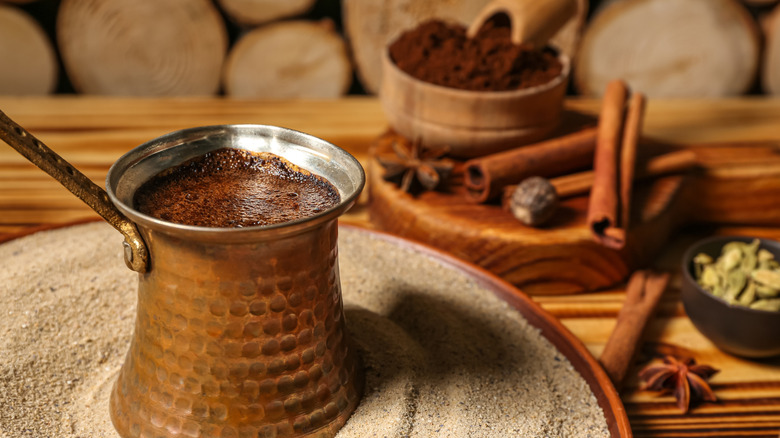
If you've ever tried walking barefoot on a beach in the middle of summer, you'll know that sand can get pretty hot. Did you know that sand can actually get hot enough, that you can cook food in it? Sand roasting (or sand frying) is a traditional, oil-free cooking method that involves heating sand to high temperatures (150–350 degrees Celsius), then adding ingredients like rice (which turns into rice puffs), maize (to make popcorn), oats, peas, or legumes. This ancient dry thermal processing has been used in Asia and parts of North Africa for thousands of years, and is still a common way to cook some street foods. In Turkey, using hot sand is a traditional way to brew coffee.
Sand roasting, which doesn't use chemicals like some other frying methods, could actually offer health benefits, as well. According to a food wellness study released in 2026, sand roasting offers "superior advantages in sensory and nutritional profiles compared to conventional frying;" however, "their industrial scalability requires rigorous standardization of granular medium quality and control of occupational risks from silica." In other words, if you decide to ditch your oil for sand, don't forget to invest in a sieve.
Fufu
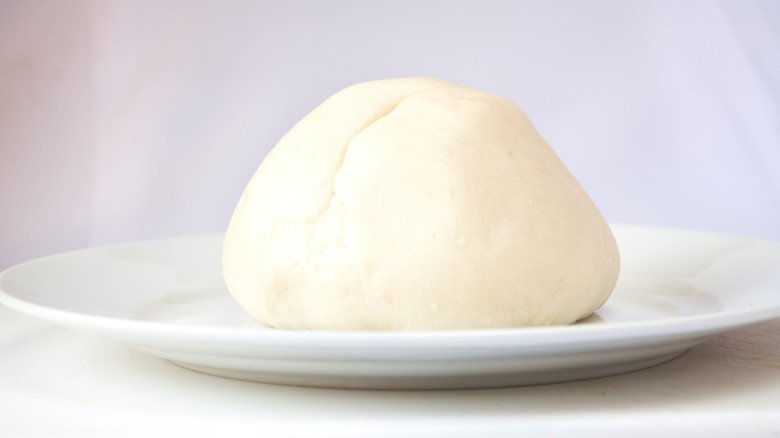
TikTok sensation fufu was the central culinary item of the Asante Empire, a powerful state in modern-day Ghana from 1701 to 1902. Modern food science calls this style of cooking starch gelatinization, the result of which is a carbohydrate- and calorie-dense ball that provides a lot of energy, quickly. More recently, fufu has become a social media trend, introducing new "fufu-natics" to the traditional cooking style, and challenging people to make it and eat it at home.
The traditional process involves pounding boiled cassava (yucca or tapioca root), African yam, or other tough root vegetables in a wooden mortar with a heavy pestle, while folding with wet hands. The combination of the folding and pounding slowly turns the starchy root vegetables into a spongy, dough-like ball. Ghanaian fufu takes roughly 20-30 minutes to prep and cook, while the Nigerian version can take up to five days, because it involves fermented cassava. Or you can save time, but lose some nutritional value, by buying instant fufu powder.
Enslaved Africans brought this cooking tradition to the Americas, which is why you see similar processes in many cultures: Dominican mangú, a plantain-based buttery mashed dish; Puerto Rican mofongo, fried green plantains with garlic; and, in Barbados, cou-cou — made with okra.
Ash baking
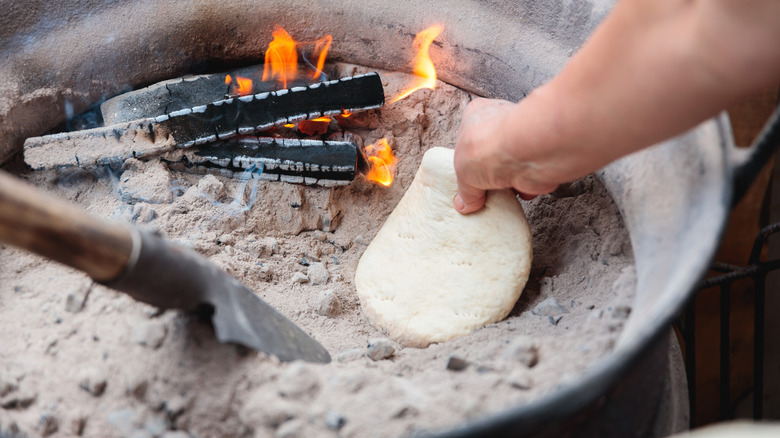
The earliest examples of baking bread existed long before the invention of the oven. Ash baking, the process of placing dough on hot ash, was used for the oldest known bread recipe, dating back 14,000 years to the Black Desert in Jordan. Discovered in 2018, the dig site unearthed evidence of a mixed food product containing flour, pulverized plant roots, and water, that was cooked directly on ash.
This minimal-ingredient and minimal-fuss style of baking is used in traditional bush tucker soda bread preparation in Australia, and by the Berber tribe in the Sahara Desert region. Ash baking has also laid the groundwork for some modern culinary inventions. Pearl ash cooking, which originated in colonial North America, involved using potassium carbonate from wood ashes as a chemical leavener. This method was especially helpful during the Civil War, when many households were cut from supply chains — and before scientists commercialized baking soda and powder.
Bamboo tube cooking
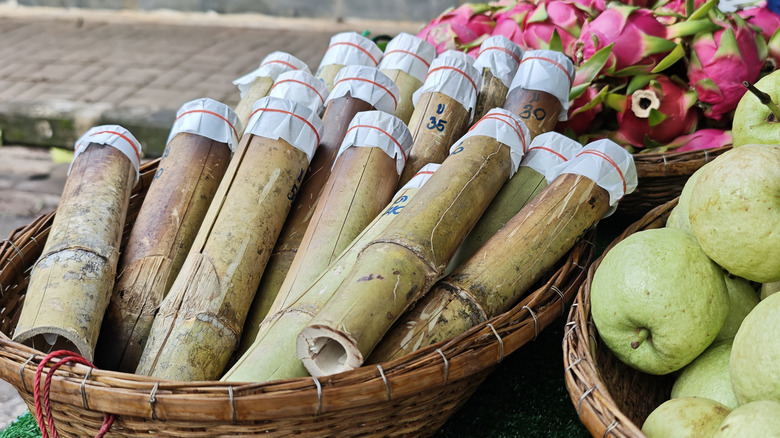
Bamboo is a versatile resource, used for building homes and furniture to being a staple ingredient in many Asian dishes. As long as bamboo shoots are cooked properly, they are safe to eat, but it's not the only way to use bamboo in cooking. Bamboo tube cooking is a popular method in regions where bamboo is abundant; including in China, where the earliest evidence of the culinary style is traced. Wu Jun's "Xu Qixie Ji" (502-520 A.D.), a collection of ghost stories, is the first reference where the cooking style is mentioned in writing.
To cook with bamboo, you first need to select a green tube with a thick wall, cut to 12 to 18 inches. Peel the green away and boil the tubes to remove the bitterness, then soak them for 30 minutes before cooking. Pack banana leaves (which prevent ingredients from sticking to the sides of the bamboo) with rice, liquids like coconut milk, and other fillings — then stuff them into the tubes. The bamboo tubes are then traditionally placed over an open flame, but can also be cooked in the oven.
What to cook inside bamboo varies. In India, people cook biryanis full of spicy ingredients and creamy sauces inside of bamboo tubes. In contrast, sweet sticky rice is popular in countries like Vietnam, and puto bumbong is a popular Filipino Christmas dish of purple rice cakes cooked in bamboo.
Hot spring cuisine
No need to make a fire and boil water when the earth does it for you. In 2020, researchers at MIT presented concrete evidence that early humans cooked in hot springs to make tough food easier to eat, as far back as 1.8 million years ago — long before the dawn of fire — in Tanzania. This incredible discovery shows that our ancient human ancestors started their culinary adventure much earlier than previously thought.
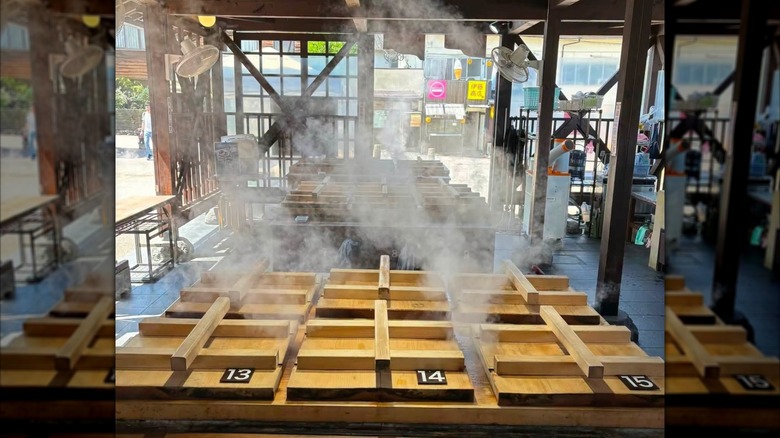
Jigoku mushi, or "hell steaming," originated from the Kannawa Hot Spring on Japan's island of Kyushu. This cooking method uses steam from the hot springs to heat food. While the first mention of this cooking style in text dates to the Edo Period (1603–1868), people likely harnessed geothermal power in this region long before then. If you want to try this style of cooking for yourself, head to Jigokumushikobo Kannawa in Beppu. This restaurant harnesses the hot spring's power to send steam up through the tables. Diners can select their favorite meat and vegetables, and cook their own food on the steam in front of them.