

Season Frozen Peas With 2 Italian-Inspired Ingredients For 10x More Flavor
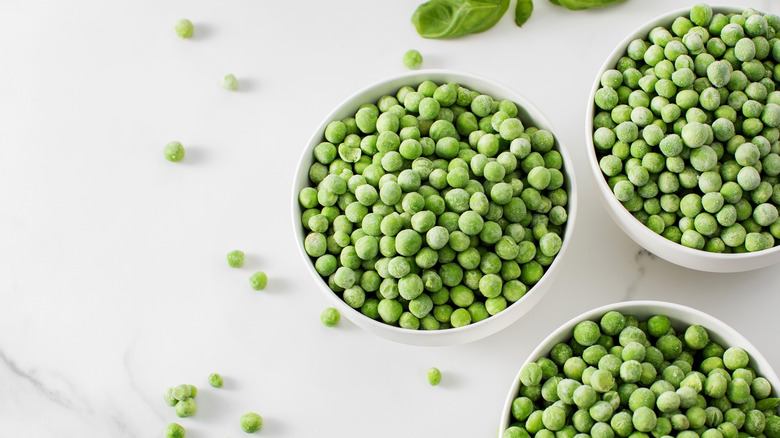
Frozen peas are ... just kind of always there? Don't get me wrong, I love peas and have never understood why they're the butt of jokes, or why they're pushed around children's plates so often. But even I have to admit that plain, unseasoned peas are a bit boring. Yet for some reason, that's how the trusty vegetable is often served. Maybe it's because peas are one of the few vegetables that are usually better frozen than fresh, so we all have a bag, but peas tend to be an afterthought when you need green on your plate rather than the star of the show. That stops now. All you need to liven up the little green vegetables is parmesan and pesto.
Although the Italian ingredients are on the fancier side of standard family fare, they're also staple cupboard ingredients for many, making a quick peas, pesto, and parm starter or side a quick, accessible, and tasty addition to a weeknight meal. And if you have the delicious D.O.P pesto from Costco, it's a great way to use a bit more of that massive jar! Just warm the peas gently (remember, frozen peas are already cooked) and add some butter or oil, grated or shaved parmesan, pesto, and a squeeze of lemon if you're feeling fancy. This wildly simple side works because peas are naturally sweet and fresh. This means the salty, fatty parmesan adds depth to their natural flavor, while herby, sharp pesto adds high notes that bring out the light, spring vegetable flavors of the frozen peas.
Make peas, parm, and pesto into a full meal
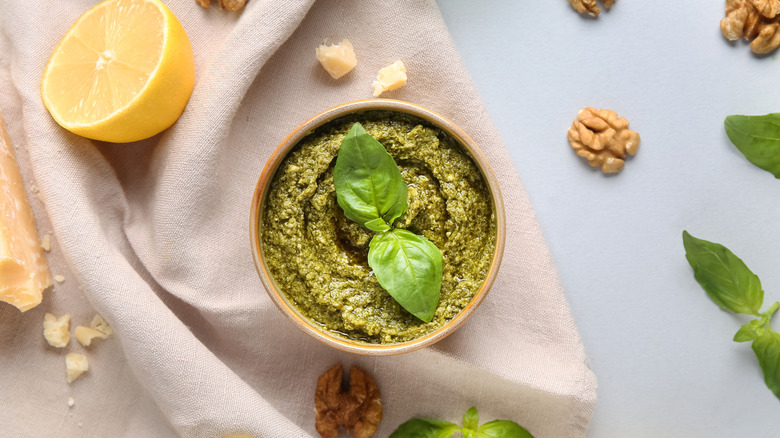
Man cannot live on peas, parmesan, and pesto alone, despite the main ingredient's surprisingly high levels of vitamins, minerals, fiber, and protein. If you're a fan of the flavors, though, there are several ways to make peas, parm, and pesto into a full meal, whether you're feeding the kids or throwing a dinner party.
The first is the most obvious — it's pasta. Pasta is a natural bedfellow for pesto and hard cheese, but it works great with peas too. Plus, the combination is practical. Just throw the peas in for the last few seconds of cooking your pasta, drain it, return the peas and pasta to the pot, and stir in everything else for a one-pot meal. A pea risotto is almost as easy. It gets a bad rap for home cooks, but making a good risotto takes time and attention, not special skills — as long as you remember not to rinse the rice, of course.
Add parmesan and peas to your risotto at the end of cooking, then stir in the pesto. Or, for a more intensely pea-focused celebration of the frozen vegetable, blend some cooked peas into a puree and stir it in just after the last of your stock and white wine. As an admitted pea-lover, I also like crushed peas on sourdough toast drizzled with pesto and topped with olive oil and parm, pea soup with a pesto drizzle, and about a million other combinations of these flavors. If you find you're a fan, why not experiment? If it all goes wrong, at least peas are affordable!