

5 Induction Stovetop Drawbacks To Consider Before Spending Your Money
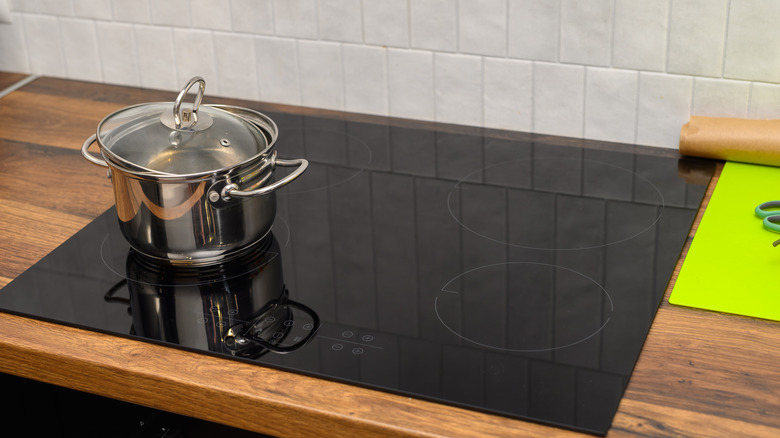
Every so often, some new must-have cooking gadget comes along that everyone raves about — air fryers have achieved an almost cult-like status, as have Instant Pots (although the latter seem to be losing their luster). Another appliance that some cooks rave about with evangelistic fervor is the induction stovetop, which generates heat via electromagnetic power. But unlike acquiring one of those other trendy yet relatively inexpensive kitchen items, switching to induction cooking requires a major investment.
So is an induction stovetop worth the money? That depends largely on your own personal circumstances, finances, and preferences. It's true that induction cooktops have certain advantages. They don't emit harmful gases into the environment, and they tend to cook food faster with less need for preheating. Their glass tops can also be cleaned more quickly than stoves with coil or grate-type burners, and the fact that the stove only heats up directly under a pan means that there should be fewer baked-on food splatters.
That being said, there are a number of downsides to this appliance that you should be aware of before you pull the trigger on such a pricey purchase. Despite all of the home cooks who profess their eternal adoration for their nifty new cooktops, there are others who feel buyer's remorse. As with any relatively recent technology, it's best to look both ways before crossing over to the induction side of the kitchen.
Induction stoves are super-expensive

As we alluded to above, induction cooking can't really be done on the cheap. At Best Buy, set-in gas or electric cooktops can be had for under $600, while the cheaper induction models (as opposed to portable "hot plate"-type burners) start around $1700. If you're looking at replacing the entire range, you might pick up a very basic gas or electric model for under $500, while the lowest-end induction ranges may be twice that price.
Even so, such budget-priced models are something that might cause real induction enthusiasts to turn up their noses. One commenter on an r/inductioncooking thread regretted purchasing a $2000 induction range, complaining, "Undersized burners and heating inconsistencies make it not live up to what induction could be." Someone else dismissed an induction range priced around $1500 by writing: "If by light user you mean you don't really do any complicated cooking and will be happy with a stove that boils water quickly and cleans easily, you might consider the above just fine though."
One other point to ponder is that an induction range must be plugged into a 240V outlet, which is the same type used for a standard electric range. If you're currently cooking with gas, it may cost several hundred dollars to have this outlet installed. What's more, induction ranges draw a high amount of power and can overload the circuits of older homes, making even pricier electrical upgrades a possibility. While induction stovetops may be cheaper to operate in the long run, it may be quite some while before you start to see any added value over sticking with a gas stove.
You may not be able to use your favorite pots and pans
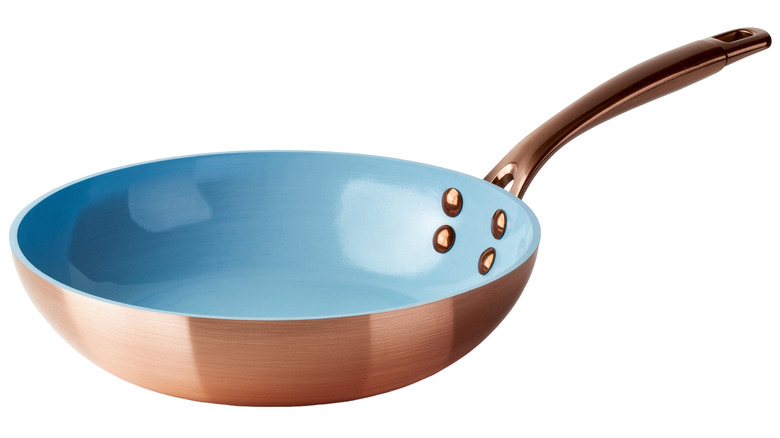
Even if you do decide to pull the trigger on an expensive induction range, you may be in for further expenses. The electromagnetic field that causes the cooktop to heat up right under the pots only works if those pots are made of magnetic material. If your favorite Dutch oven is stoneware, it may need to be replaced or at least reserved for baking. Glass or ceramic pans are also right out for induction cooking, while copper and aluminum, though metal, are generally considered insufficiently magnetic.
So what types of pans will work, then? Cast iron is usually a pretty good bet, while stainless and carbon steel cookware are also induction friendly. That being said, there are exceptions to every rule, so you may find a steel pot made with a preponderance of non-magnetic metals. Conversely, a pan that looks to be made of ceramic may have a cast-iron bottom that allows for induction cooking. If you want to check which of your pots will work before you buy an induction stovetop, see if a magnet will stick to them. If so, you're good to go. If not, take that magnet with you to the kitchen store when looking for replacements. (If you're buying online, you can look for cookware marketed as induction compatible.)
While you're out shopping for new equipment, you also should consider investing in an analog meat thermometer as well. That high-end digital thermometer that worked so well in your electric or gas oven may be messed up by proximity to the induction stovetop's magnetic field.
Induction stoves can be noisy

If you're sensitive to environmental sound, you should be aware that an induction stovetop generates a fair amount of noise. Electric stoves heat up silently, while a gas burner may only make a soft "click-whoosh!" as the flame ignites. Induction stovetops, however, tend to emit a humming or buzzing sound as they cook, and there's also some noise from the cooling fans, which are necessary to keep the range's internal elements from overheating.
One Redditor who considered purchasing an induction range was wondering how much of a deal breaker the noise really was. A commenter compared their induction stovetop's hum to a cell phone on vibrate, something they personally didn't find too bothersome. The OP, however, replied, "Cell phone vibrating in front seems pretty loud and noticeable." Someone else added, "We just moved into a new build w/induction stove. The electric buzz drives me up the wall."
Others added that the type of pots used can definitely worsen the noise level, like the poster who related, "I have a large stainless Made In rondeaux [sic] pot I use for pasta. It makes a significant amount of noise when the power is cranked to high. I also have a stainless griddle that is quite thick. That thing sounds like a robot invasion when I turn the heat up." Even though some swore they got used to the noise or simply accepted it as the cost of using an induction oven, noticeable sound issues aren't something you should dismiss lightly. Otherwise, you could find yourself having to wear noise-canceling headphones while you cook.
The surface can scratch easily
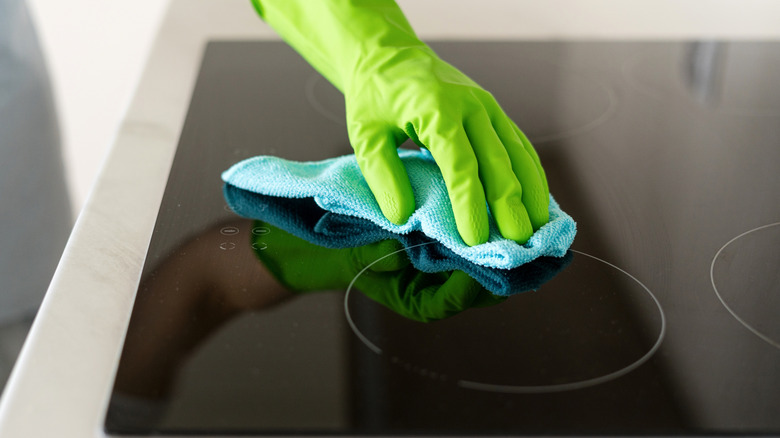
Gas stoves have metal burners and grates, and cheaper electric models have coil tops, but induction stoves are all glass-topped. While this means they can be easily wiped down, they are also susceptible to scratches, chips and even breaks, and are not cheap to replace. As one r/cooking commenter admitted, "The only downside with induction I've experienced is that it scratches very easily. If you wiggle your pan while cooking you will see scratch marks very soon." On an r/Appliances thread, a different person related their experience: "We just put in a 36" GE Profile induction cooktop. After only a couple of uses there is a pretty significant scratch on the surface." Others noted that these cooktops are so delicate they can easily be marred by any salt or sugar crystals spilled on the surface.
When you're cleaning your induction cooktop — which should be done every time it's used if you want it to stay shiny — you need to choose your products carefully. Scrubber sponges are out, and anything harsher, like a Brillo pad, is also verboten. Abrasive cleaners can't be used, nor can bleach or ammonia. Vinegar, baking soda, and a soft cloth may be your best option, although you can also purchase special cleaning products designed for induction cooktops.
Cooking can be a hassle
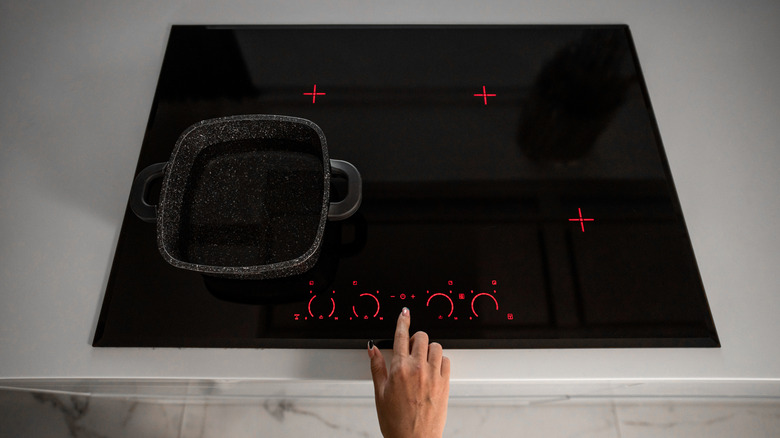
While some induction stoves feature knobs, many are controlled strictly by touch. And as anyone who's come into contact with 21st-century technology is aware, touchpads can be finicky. One r/Cooking commenter and veteran of numerous induction stovetops lamented, "The push buttons suck. you need to hit them multiple times whilst rubbing your head, tapping your tummy and hopping on one foot. Water confuses the buttons. You constantly have to fiddle with the buttons." Another Redditor, although a fan of the cooking method, wrote, "Can we all agree the only legitimate criticism of induction is the lack of knobs? [...] I am convinced engineers intentionally used touch controls to handicap induction so it isn't the undisputed best."
Pans also need to maintain contact with induction stovetops in order to heat evenly, so you won't be able to shake or pick them up while cooking. Needless to say, demonstrating your omelet flip is a no-go. Wok cooking is also problematic, as the bottom may get way too hot while the high sides fail to heat up at all. Finally, if you're used to cooking with all four burners in action, you may need to tone things down with an induction stovetop.
When multiple pots are all set to cook at high temps, it tends to overload their circuits so they lower the temperatures or even shut down. It also causes long-term electronic trauma which can shorten a stovetop's overall lifespan. This is not an insignificant issue, since the estimated duration of even a well-cared-for cooktop is only 10 to 15 years, whereas vintage gas ranges over 70 years old can not only be functional, but also highly desirable appliances.