

12 Seasonings You Need To Start Adding To Your Mashed Potatoes
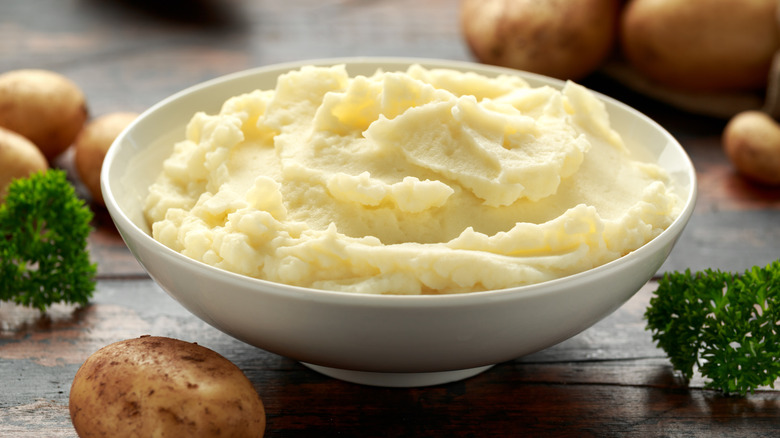
Mashed potatoes are the side dish everyone claims to love — yet most versions never get past salt, butter, and a splash of milk. And while that's not a bad starting point, it's also where a lot of home cooks leave things. Which is a pity, because here is a genuinely flexible dish that ends up tasting the same every single time. To prevent this from happening the next time you put mashed potatoes on the menu, we asked three experts to share the seasonings and techniques they rely on.
Rena Awada is the owner and head chef of Healthy Fitness Meals, a recipe site she started in 2012 to make healthy cooking feel simple and approachable. She is joined by Lisa Keys, a nationally recognized, award-winning home cook and Food Network "Chopped" champion, and the author of two food blogs, Good Grief Cook and Joyful Crumbs. Robyn Conley Downs is a Cornell Nutrition-Certified recipe developer, cookbook author, and the founder of Real Food Whole Life. Together, they break down the ingredients and small adjustments in timing that separate flat, one-note mashed potatoes from something worth going back for seconds.
Roasted garlic
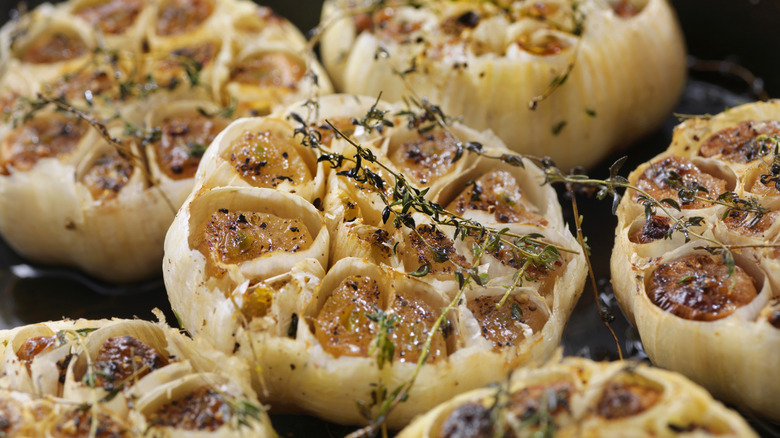
It's no surprise that roasted garlic came up in all our expert's flavor recommendations. Roasting mellows raw garlic (which can be sharp and overpowering) into something sweet and deep, exactly the kind of flavor mashed potatoes can carry well. In fact, when you understand what actually happens during roasting it makes even more sense. The high heat breaks down garlic's naturally sharp compounds and caramelizes the sugars within it, which is why roasted garlic (which you can even do in the slow cooker) tastes noticeably sweeter and softer than the raw cloves. Ultimately, it's this transformation that allows roasted garlic to blend easily into mashed potatoes, adding warmth and depth rather than a sharp bite.
Rena Awada considers garlic as one of her go-to additions to potatoes when thinking beyond salt and butter. For her it's "the rich earthiness" that appeals the most, and she describes it as part of a broader approach to building contrast and depth rather than piling on every flavor at once.
Robyn Conley Downs echoes the same idea. For her, the potatoes are a blank canvas that can only benefit from a layering of flavors. "Potatoes are inherently mild and starchy, so I like to think in layers beyond just salt and butter," she says. "Roasted garlic is great for sweetness and depth."
White miso
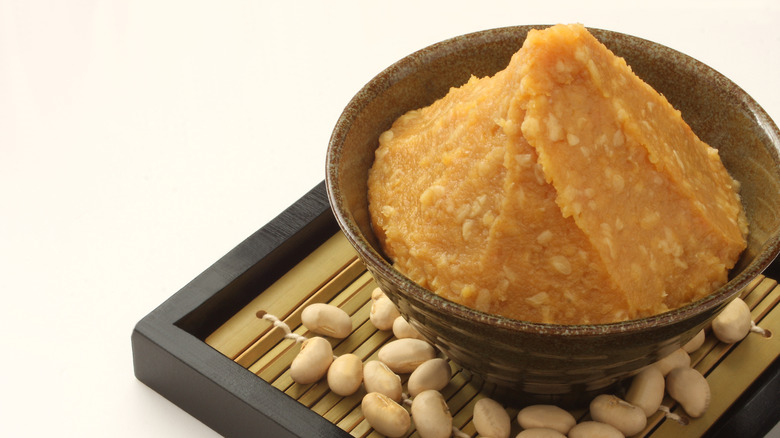
We asked the experts for a surprise pick — something most people would never think of adding to regular mashed potatoes. For both Rena Awada and Robyn Conley Downs, this is white miso. Miso is a fermented soybean paste loaded with naturally occurring glutamates. These are the same compounds responsible for that umami, savory quality found in things like Parmesan, mushrooms, and aged cheeses. As a result, miso pastes can be added to a number of recipes and not necesarily restricted to Japanese or Asian dishes.
"A small amount of white miso is great to add to your mashed potatoes," says Awada. "The flavors are rich but subtle, so you won't know you're eating miso unless you want to." She points out that the richness and umami of white miso rounds off the entire flavor profile, giving the dish a deeper flavor that pairs particularly well with roasted vegetables, mushrooms, or chicken.
Downs loves the un-pin-pointable nature of miso as a flavoring. "Even a teaspoon of miso paste or grated Parmesan can add a savory complexity that makes people wonder what you did differently without being able to pinpoint it," she says. That's the appeal of miso here. It doesn't taste distinctly like miso once it's folded into potatoes; it just makes everything taste more finished. Both experts are careful to specify that a little goes a long way, and that restraint is part of what makes miso work so well in this context.
Parmesan cheese
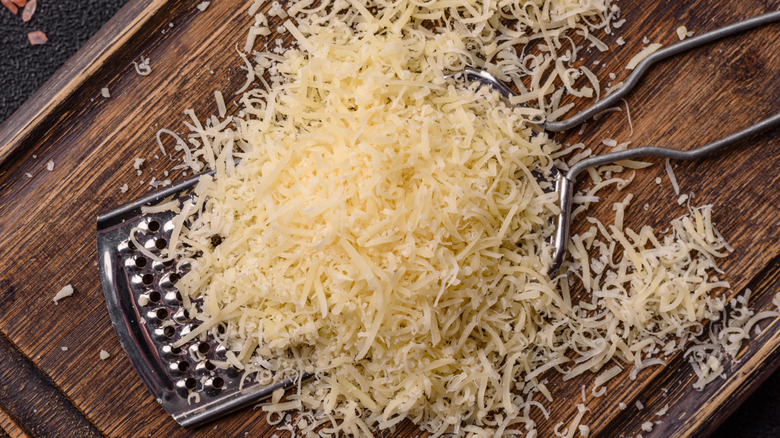
Rena Awada includes Parmesan "for sharp salty goodness," she says, listing it alongside roasted garlic and fresh herbs as ingredients she reaches for to build contrast in her mashed potatoes. In a bid not to have one-dimensional flavorings like cream or plain butter, she prefers the savory depth a good Parmesan adds to the dish. She also connects it to a specific potato pairing, noting that "russet potatoes tend to be lighter in flavor and have a fluffier texture than Yukons; as such, they lend themselves well to Parmesan cheese and horseradish."
Robyn Conley Downs groups Parmesan with other umami-rich ingredients that add an easy complexity to plain old mashed potatoes. Like miso, Parmesan's effect comes down to natural glutamates, the compounds responsible for that deep savory quality. It doesn't just add cheese flavor, it makes everything around it taste more pronounced too.
Both experts caution against adding too much Parmesan, though. A little folded in toward the end of mixing can sharpen the whole dish, while too much risks overwhelming the potato and making the final result taste more like a cheese dish than a side.
Boursin cheese
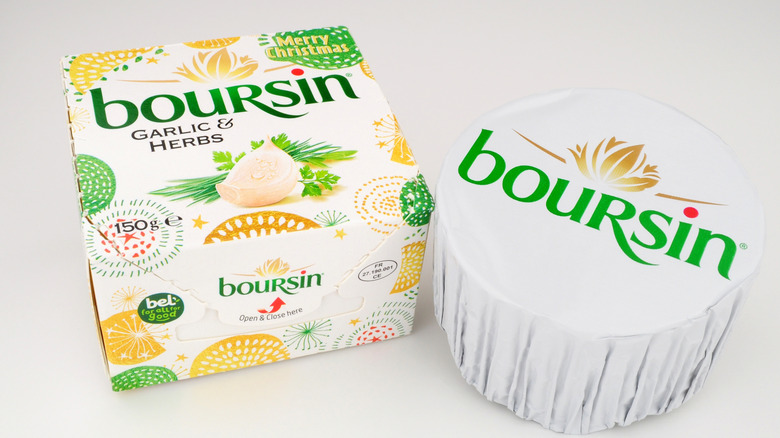
If Parmesan is already in your mashed potato repertoire, we have an even better shortcut for you. Boursin cheese is a single, add-on ingredient that does the work of several seasonings at once. "Boursin cheese is my go-to surprise ingredient that people don't expect in mashed potatoes, but those herbs and garlic do the heavy lifting so you don't have to add extra seasonings," says Robyn Conley Downs. Boursin is a soft, spreadable cheese that already comes pre-seasoned with garlic and herbs — and many other flavors, too, so you can really have fun experimenting. This means folding it into mashed potatoes brings multiple flavor elements in through one ingredient rather than measuring out garlic, herbs, and cream separately.
As a result, Downs treats Boursin as a genuine time saver as much as a flavor upgrade. "Most people stick with butter and salt, but adding a couple tablespoons of Boursin gives you all that flavor work in one ingredient," she says. That built-in balance is part of what makes it approachable for home cooks.
Instead of guessing at ratios between garlic, herbs, and dairy, a couple of tablespoons of Boursin folded into warm potatoes delivers a version of that same combination that's already been tested and balanced by the product itself. Keep in mind though that Boursin can be pretty fatty and rich on its own, so use a light hand when mixing into mashed potatoes for lighter, fluffier results.
Fresh lemon zest
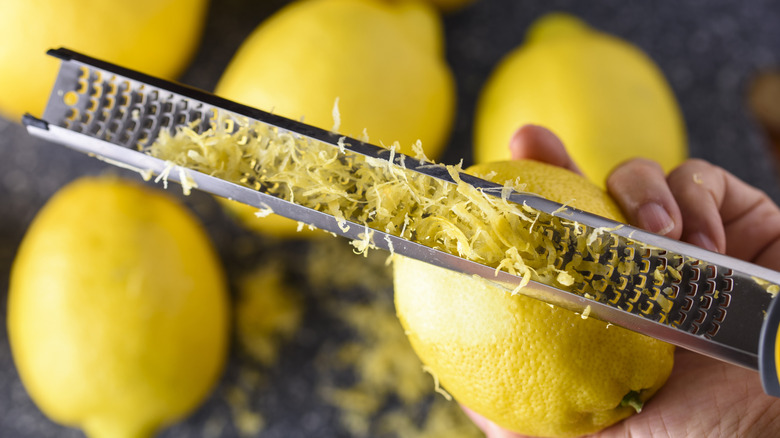
Lisa Keys is the strongest advocate for lemon zest in mashed potatoes, naming it as one of her go-to surprise add-ins. There's a reason that zest works so with mashed potatoes and it comes down to what it actually contains. Unlike lemon juice, zest carries the fruit's aromatic oils without adding liquid or excess acidity to the dish, which means it brightens flavor without thinning out the texture of the potatoes or introducing any tartness. It's a purely aromatic lift rather than a sour one.
"Adding a variety of fresh herbs infused into the dairy may surprise some, but also freshly grated lemon zest," she says. For Keys, zest isn't an afterthought, it's part of a specific order of operations. "The butter is always mixed in first as the fat coats the starch and prevents a gummy texture. This is followed by herb infused hot milk and then lemon zest, dry seasoning like salt, pepper or other seasoning." This ensure that the brightness it brings sits on top of the dish rather than getting buried underneath heavier ingredients added first. Keys also recommends Yukon gold potatoes seasoned "with butter, dill, and lemon" work particularly well alongside fish, where a lighter, brighter potato makes more sense than something dense or heavily savory.
Fresh herbs
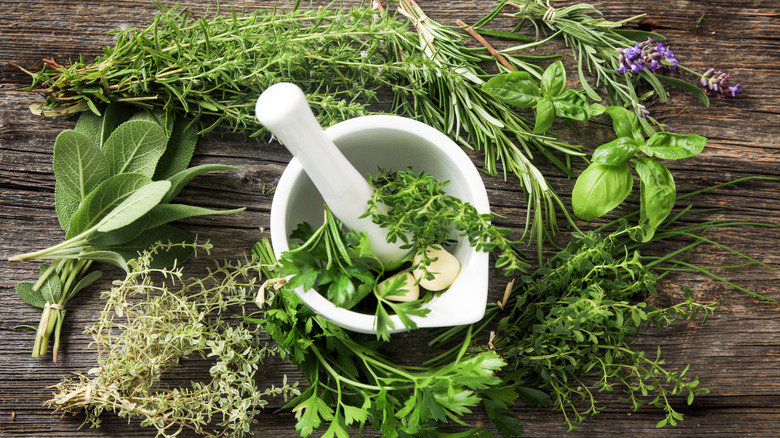
All three experts love adding fresh herbs to their mashed potatoes, but also differ on how and when to use them. For Rena Awada, fresh herbs are a life hack for flavor. She lists them alongside roasted garlic and Parmesan as part of her approach to building contrast into mashed potatoes.
When it comes to timing, Awada is specific about when to add them in. "I use my fresh herbs at the end of cooking to enhance their freshness," she explains. "Heat over time will cause chives, dill, and parsley to lose some of this brightness." Fresh herbs are delicate, and prolonged heat breaks down the compounds responsible for their brightness, leading to dull or lifeless flavors. Robyn Conley Downs agrees: "Fresh herbs like chives or parsley are best added at the end because they lose their brightness and aroma if you cook them with the potatoes," she says.
Fresh herbs for Lisa Keys are a non-negotiable, too. "I can't make mashed potatoes without herbs," she says. "I use twice as much fresh as I do dry seasoning and always try to infuse the flavor into the dairy or use some form of a flavored herb cheese if I don't have fresh herbs on hand." Keys' method involves warming the herbs gently in dairy before combining, a middle ground that still protects some of their freshness while letting a bit of flavor bloom into the butter or milk.
Horseradish
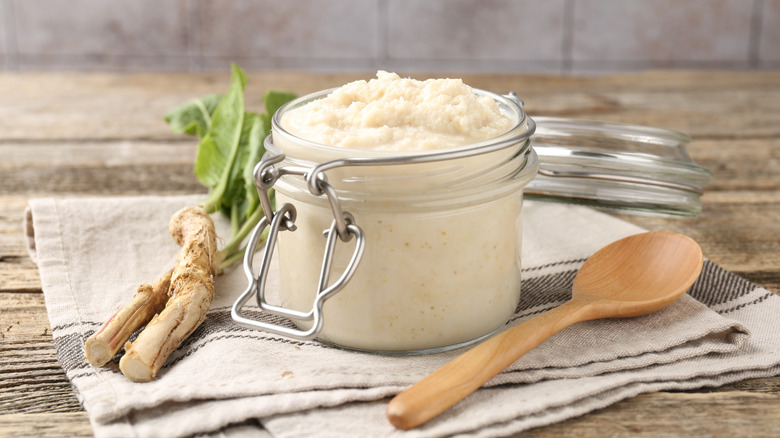
Lisa Keys loves introducing a bit of horseradish (not radish) to potatoes. She notes that russets are "perfect with turkey or meatloaf, or any meat served with a gravy," the kind of rich, savory main dishes where a sharp, peppery kick from horseradish can cut through the heaviness of gravy in a way that another milder seasoning might not be able to. What makes horseradish tricky is exactly what makes it appealing. Its heat comes from a volatile compound that hits hard and fast, then fades quickly, which means a little goes further than expected and too much can overwhelm the dish almost instantly. Added in small increments and tasted along the way, though, it turns a simple potato into something with real bite.
Rena Awada also connects horseradish to a specific potato pairing, noting that "russet potatoes tend to be lighter in flavor and have a fluffier texture than Yukons; as such, they lend themselves well to Parmesan cheese and horseradish." The lighter, fluffier texture of a russet gives horseradish's sharpness room to come through without competing against a potato that already has a strong flavor of its own.
Smoked paprika
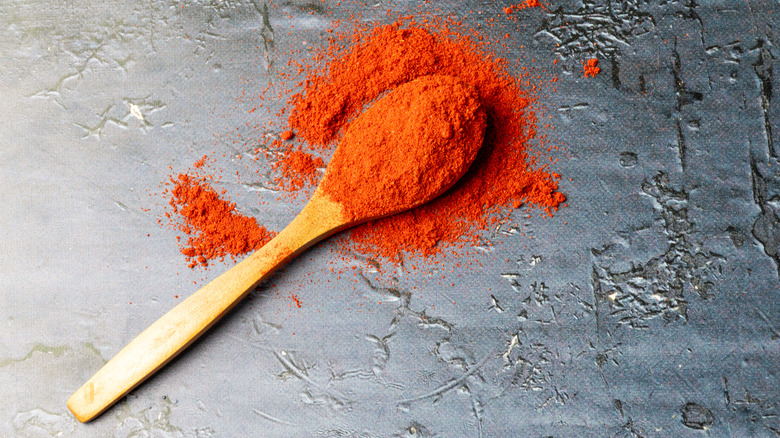
Smoked paprika brings something none of the other seasonings on this list can, a deep, smoky quality that makes mashed potatoes taste like they've spent time near a fire, without any actual grilling involved. "When working with ingredients that are as forceful as horseradish, smoked paprika, and other types of strong cheeses, I always work in increments so I can add my way to a flavor balance rather than adding them all at once," says Rena Awada. Because its flavor is concentrated and can turn slightly bitter if overdone, starting with a small amount and adjusting gradually (the same incremental approach Awada uses for horseradish) is the safest way to bring smoked paprika into mashed potatoes without letting it take over.
Paprika behaves very particularly once it hits warm fat. Since spices like paprika are fat soluble, their flavor compounds need contact with warm butter, oil, or dairy to fully release. That's part of why a small amount can go further than expected. Once it's bloomed properly and hits the warm potatoes, its smoky intensity spreads through the whole dish rather than sitting on the surface. Ideally paired with grilled meats, it echoes the flavors already present and complements the richer, heartier dishes. Just remember to keep an eye on the expiry date of smoked paprika as it can taste rancid when not fresh.
Sour cream
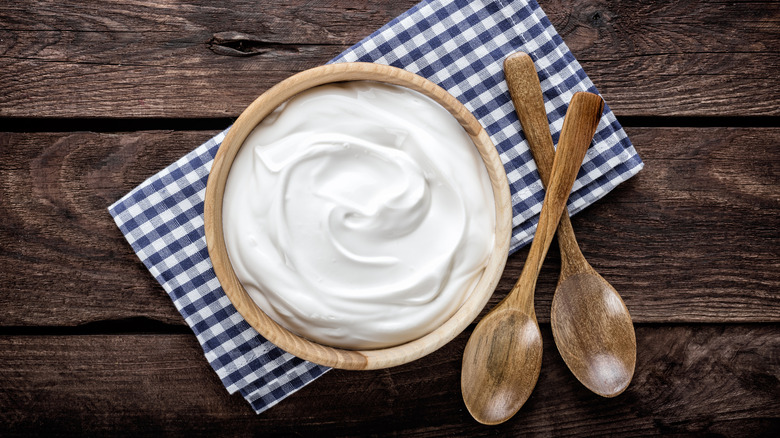
Mashed potatoes, as they are, are often rich enough. So, it's only natural to reach for seasoning to cut through the fattiness and keep the dish from tipping into flat or heavy. Sour cream is next up for the lightness and tang it brings to a regular mashed potato recipe. Don't stress if you don't have it on hand at home though, because there's an easy hack for making your own sour cream.
Robyn Conley Downs calls it one of the most overlooked additions. "They skip adding a flavor booster like sour cream at the end, which adds a subtle tang that keeps everything from tasting flat," she says, describing it as one of the most common mistakes home cooks make. "Sour cream or cream cheese brings a tang that makes everything taste rounder and more complete," she explains.
For Lisa Keys, "Adding a touch of acid like sour cream, lemon, or vinegar will wake up flat tasting mashed potatoes," she says, grouping sour cream with other acidic fixes rather than treating it purely as a dairy addition. That is the key to understanding why sour cream works so well here. Downs also notes a practical detail worth remembering when adding it: Sour cream or cream cheese should be folded in "while the potatoes are still warm but not scalding hot so everything melts without separating," protecting both the texture and the tang that make it worth adding in the first place.
Mustard
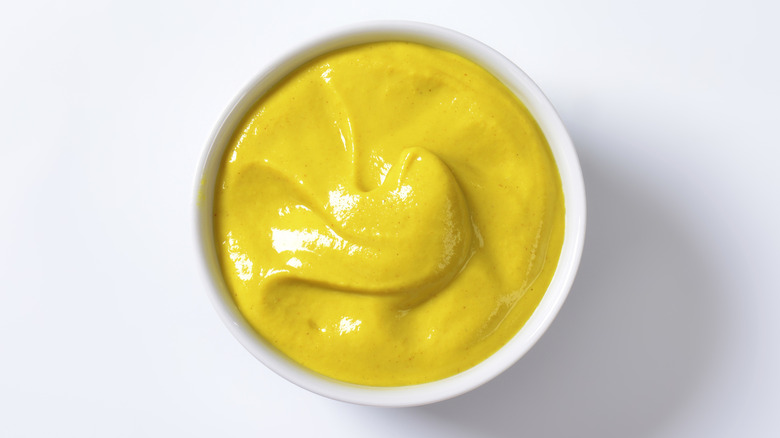
Mustard is positioned as a genuine flavor builder here rather than just a garnish or simple seasoning. "Mustard for pungency," as Rena Awada proclaims, describing it as one of the handful of ingredients she reaches for when thinking beyond salt and butter. For Awada, mustard's role is specific. It's not there for richness or creaminess the way dairy is, it's there to add a sharp, pungent edge that the other ingredients in a typical mashed potato recipe simply don't provide.
Since mustard falls into the same category of bold, assertive flavors, much like horseradish and smoked paprika, the same principle of restraint applies here, too. A small amount of mustard whisked into warm potatoes can add real depth and a subtle zinginess as compared to an overpowering spoonful would. In small amounts, that sharpness works similarly to horseradish, cutting through the richness of butter and cream rather than adding to it, though mustard's flavor tends to be more tangy and complex than horseradish's straightforward heat. Sift through the many brands of yellow mustard or different varieties like Dijon or whole grain to find your favorite, and up the heat on your next batch of mashed potatoes.
Dried herbs
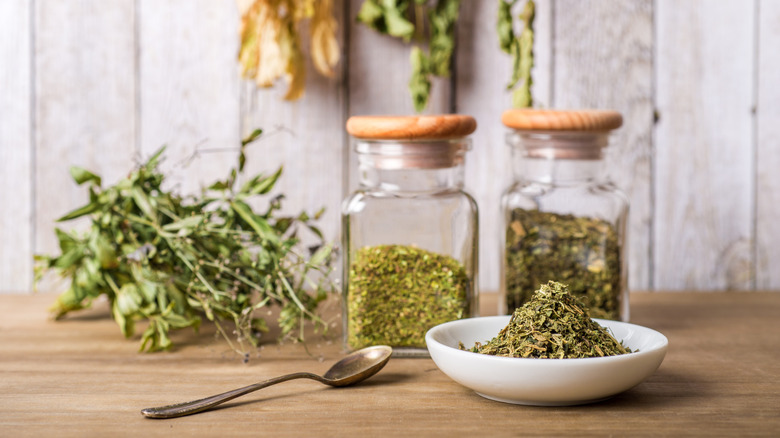
It's not always about just using fresh herbs as seasoning. Our experts insist that dried herbs have their own role to play, but one that depends entirely on giving them time and heat to actually release their flavor. "Dried herbs like thyme or rosemary can go into the cooking water or get warmed in with your butter and cream so they have time to infuse," says Robyn Conley Downs. For Downs, that infusion step isn't optional — it's what separates a dried herb that actually adds flavor to the dish versus one that just sits flat, remaining dry and underdeveloped.
Rena Awada agrees. "Dried herbs will generally release their flavors when they warm up in the butter or milk, however, fresh herbs should be folded into the potatoes as late as possible," she says. That distinction matters because dried herbs work on a different timeline than fresh ones. Where fresh herbs lose brightness the longer they're exposed to heat, dried herbs need that same heat to unlock the flavor concentrated in their dried leaves in the first place.
As with most dried flavoring agents, dried herbs need contact with warm butter, cream, or hot water to fully release into a dish. Adding dried thyme or rosemary directly into already-mashed, no-longer-hot potatoes means those compounds never get the chance to bloom, leaving the dish tasting more like it has flecks of dried leaves in it than any real infused flavor.
Salted cooking water
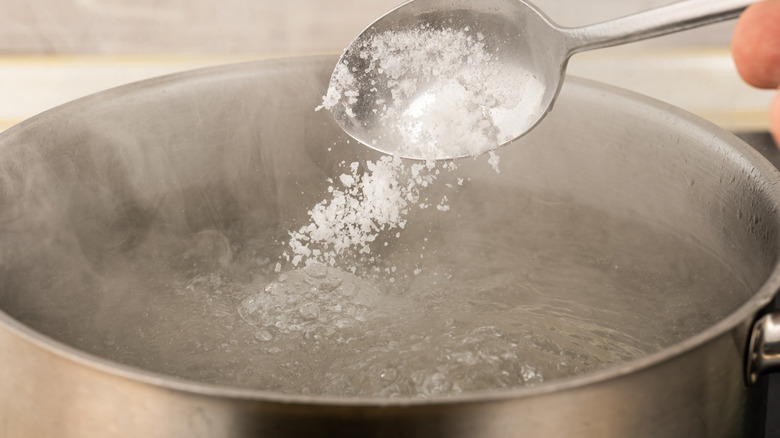
According to Robyn Conley Downs, the most important seasoning decision happens before the potatoes ever leave the pot. "Most home cooks salt at the end, but the potatoes absorb seasoning as they cook if you salt the water generously from the start, like you would pasta water, so you end up needing way less salt at the finish," she says.
"People skip seasoning the cooking water and then wonder why their mashed potatoes taste bland even after adding salt at the end," she says. "Because potatoes absorb salt as they cook you don't want to miss that chance to season them from the inside out." She treats this as important enough to repeat as her single biggest piece of advice overall. "Most people under-season, so you really need salt at two points," she says. "Heavily in the cooking water so the potatoes absorb it from the inside out, then again at the end while you're mashing because you're tasting as you go and adjusting as needed." Skipping either step, she warns, tends to leave the dish tasting flat no matter what else gets added on top.