

Stop Wasting Costco Rotisserie Chicken Bones — Do This Instead

Have you ever eaten a Costco rotisserie chicken right in the parking lot? It's a quick, convenient, and healthy meal. All you need is a set of utensils from the food court, and you can get a little boost of protein before the drive home. To use up the rest of the meat, there are plenty of weeknight meals to make with a rotisserie chicken, too. Once you're down to just the bones, it's just as convenient to toss them in the trash. But you can stretch that $5 chicken even further. Costco rotisserie chicken bones actually make such a delicious stock that it's a waste to throw them away.
Chicken stock is used as a base for soups and stews, and to infuse flavor into many other dishes. It's so decadent and nutrient-dense that it's known as liquid gold in the culinary world, and the process of making it is pretty simple, especially if you're using a Costco rotisserie chicken carcass.
You don't have to worry about which part of the chicken is best to use for stock. Just dump the whole carcass into a big pot of water and simmer for about 3 hours. Be sure to add everything that came in the bag, including any flavorful juices that have turned into a gelatinous blob at the bottom. As it boils, the carcass will release flavor and nutrients into the water and create a fatty, thick broth. The mysterious spice blend and brine that Costco uses to season rotisserie chicken will also diffuse into the stock, adding a few extra levels of flavor.
How to build more flavor for an ultra-luxurious chicken stock
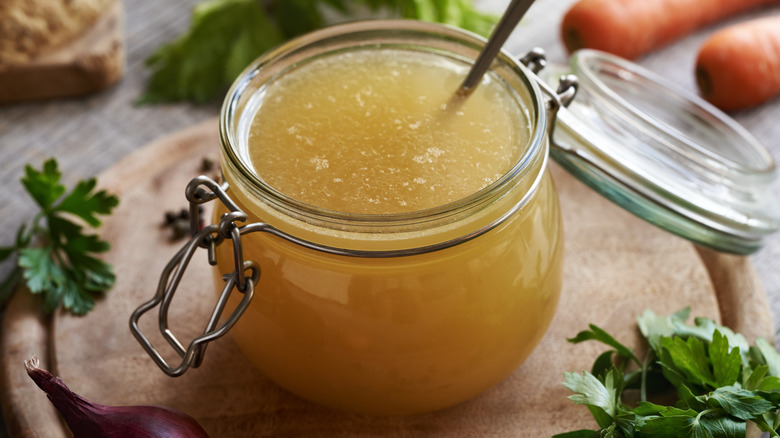
Starting chicken stock with a Costco rotisserie chicken gives it more flavor faster than if you were to begin with a raw chicken. But it'll taste even better if you add some extra ingredients while it simmers. Add aromatics like onion, celery, garlic, and other vegetables to add depth, and drop in leftover rinds from hard cheeses like parmesan for a savory note. You can also turn the homemade stock into an umami powerhouse with kombu and infuse a little more umami with some miso paste, as well. Finish the stock with a splash of white wine or lemon juice (add lemon juice at the end to avoid making bitter stock) to balance out all the savory and salty notes with a touch of acidity.
Fresh and dried herbs can also add a nuanced flavor profile to homemade chicken stock if you introduce them at the right time. In general, dried herbs should be added at the beginning of the boil and fresh herbs put in at the end. However, heartier varieties of fresh herbs, like rosemary and thyme, should be added at the beginning of the boil to extract all their flavor. Toss more fragile herbs like parsley, basil, dill, and chives in at the end of the cooking process to help preserve their light, fresh-tasting qualities.