

How To Eat Japanese Hot Pot Like You Know What You're Doing
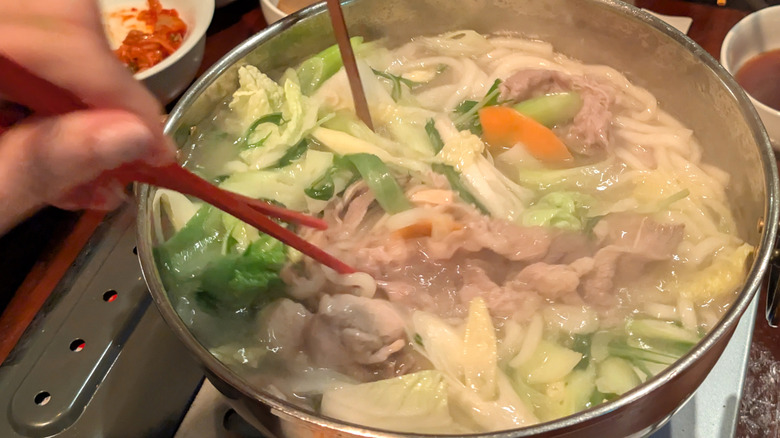
If you're dining at a traditional Japanese restaurant and want to be able to eat hot pot like you know what you're doing, you must abide by a few rules. Taking the time to learn how to play the hot pot game will be worth it after you take just one bite of tender, flavorful vegetables or thinly sliced meat cooked to perfection in a perfectly seasoned dashi. Japanese hot pot, also known as shabu-shabu because of the "swish swish" sounds fresh ingredients make when swirled around in the hot broth, can also be enjoyed at home with the right equipment.
To guide us on all things Japanese hot pot, we enlisted the help of Chef Kevin Lee, a Food Network champion who has appeared on TV shows such as "Beat Bobby Flay," "Guy's Grocery Games," and "Alex vs. America." Chef Lee, who was also a James Beard Award semifinalist, gives us the lowdown on the best ingredients to use when making hot pots, the tastiest broth, and even how to garnish the bowls of steamy goodness. If you've been wanting to dip your chopsticks in the world of hot pots but were afraid of looking like a novice, we've got you covered.
Use the right pot and equipment
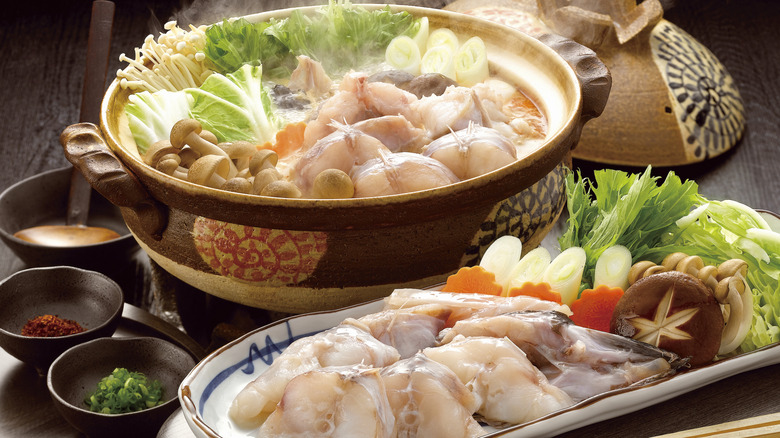
When preparing Japanese hot pot, it all starts with the right equipment. You don't have to break the bank to get the correct pieces, but if you're a big fan of the flavorful soup, you may want to invest in higher-quality pieces. The most essential item is the large Japanese pot, which is called a nabe and is typically crafted from porous earthenware clay. The clay allows the broth to heat slowly and evenly, while retaining the high temperature throughout the communal meal.
When eating shabu shabu at home, you'll also need a portable burner or a hot plate so that you can eat the soup tableside. If you're having it at a traditional Japanese restaurant instead, many of the eateries feature induction heating cooktops built directly into dining tables for convenience. Other equipment you'll need to enjoy hot pot includes metal tongs for immersing raw meat into the broth, chopsticks, and small, individual bowls for dipping sauces. Although shabu shabu is often eaten in a group, you don't want to share germs as well. And, if you've been breaking these eight chopstick rules, we need to talk.
Prepare a traditional dashi broth
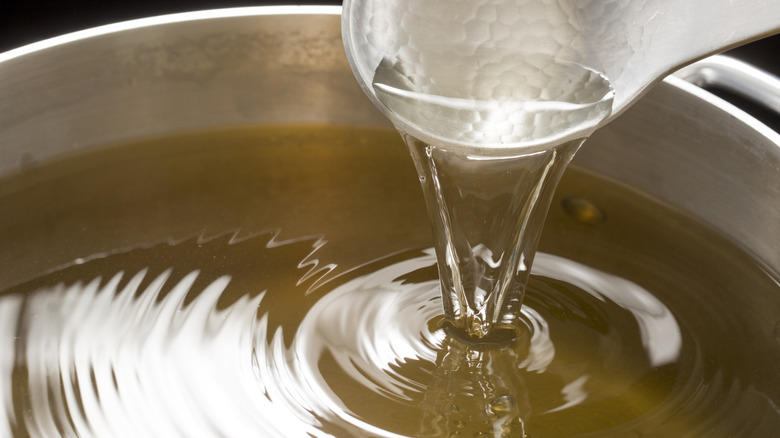
A good, flavorful broth is the basis of hot pot, so you must make the right kind to enjoy your meal to the fullest. Japanese soup stock is traditionally made from a combination of dried mushrooms, kombu, and bonito flakes, which create an explosion of rich flavor in your mouth. You can also add sake, soy sauce, or mirin to the mix for even more depth. If you like spicy broth, drop in some kimchi, a Japanese seven spice blend, chili oil, or Sichuan peppercorns. For reference, check out this beginner's guide to Asian hot sauces.
Chef Kevin Lee says, "For Japanese hot pot, I'd go with a simple kombu dashi. It's clean, full of umami, and lets the ingredients really shine." The beauty of hot pots is that no matter what type of broth you start with, it will get more flavorful and delicious as you cook each fresh ingredient in it. By the end of the meal, you're left with a mouthwatering, savory stock.
Keep the broth at a low boil to prevent overcooking
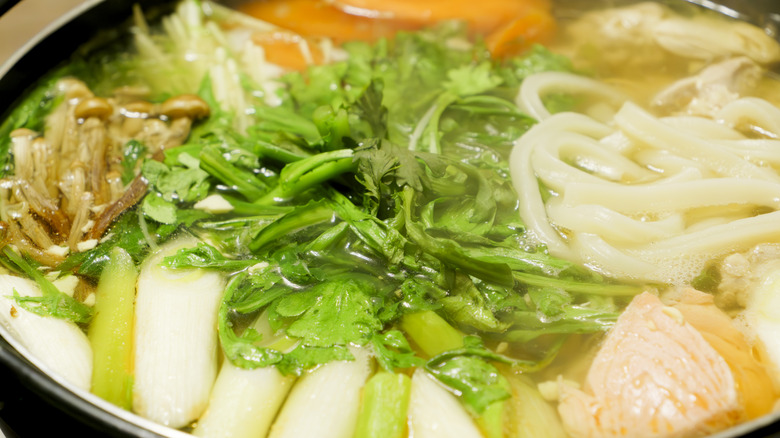
After you've prepared a classic dashi for your hot pot, it's important to make sure it's the proper temperature. To ensure the protein of your choice, such as thinly sliced beef, pork, or shrimp, is cooked to perfection and the fresh veggies are tender, but not mushy, the broth must be the right temperature. It's recommended that you bring the broth to a boil first, and then add in the vegetables, starting with the ones that take the longest to cook, including carrots. Place faster-cooking produce, such as delicate onions, in the pot last.
After the veggies are in the broth, reduce the temperature. Chef Kevin Lee says, "You want a steady simmer. Hot enough to cook everything quickly, but you don't need it at a violent boil." After the first round of food is cooked, you can keep the broth warm and return to a boil when you add in more ingredients. As the food is cooking, serve side dishes or appetizers to snack on.
Cook only enough meat and vegetables for one or two bites at a time
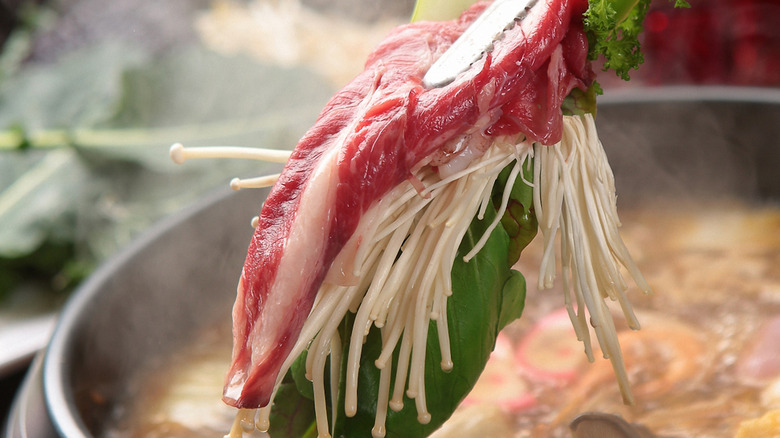
One of the best things about Japanese hot pot is that the last bite is just as fresh as the first, since you prepare it as you go, similar to fondue. Decide what you want to eat at the beginning of the meal, such as cubed tofu, scallops, dumplings, or some type of vegetable, and give it a hot bath in the steaming broth. Use small tongs or chopsticks to enjoy the cooked ingredients one bite at a time and fully experience their flavors.
As the ingredients soak in the broth, they'll absorb all of the goodness of the items that were previously cooked in it. Although tofu is typically bland on its own, it's the perfect hot pot addition as it acts like a sponge and absorbs the full flavor of the broth. In fact, tofu is not just a vegan meat replacement.
When it comes to eating hot pot, Chef Kevin Lee says, "Don't overthink it. Take your time, cook a little at a time, and enjoy the communal experience. That's really what makes hot pot fun." Chef Lee also adds to enjoy hot pot "One piece at a time. It cooks quickly, and adding too much at once can drop the temperature of your broth."
Dip the cooked protein and veggies in a variety of flavorful sauces
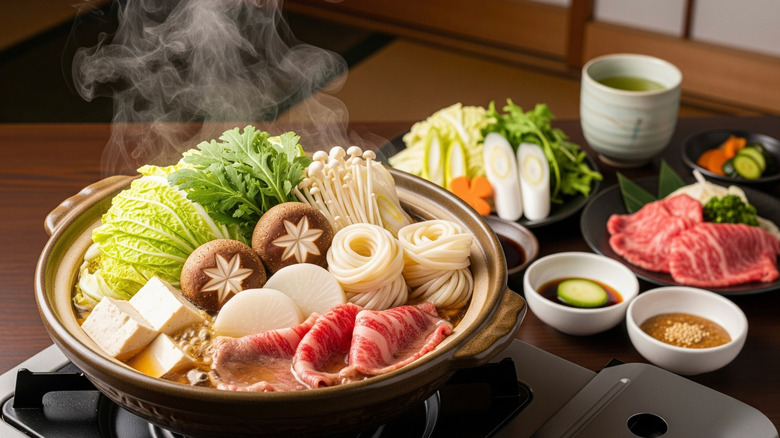
Whether you want each hot pot bite to have a nutty, spicy, sweet, or savory flavor, or a combination of all of these, dipping sauces are the way to go. Think of each hot pot ingredient as a mouthwatering dipping sauce delivery system, and you can completely customize the taste of each chopstick-full. When eating traditional hot pot, you'll commonly see soy sauce, chili oil, or sriracha on the table. In case you were wondering, sriracha is named after a real place in Thailand.
You can also make homemade sauces combining bold flavors, such as sesame paste, minced garlic, vinegar, and even a pinch of sugar for sweetness. If you prefer a creamy dipping sauce, add a bit of mayo to the mix. The sauces are served alongside the hot pot in small, individual bowls. There are no rules when dipping hot pot ingredients, except to not double-dip if you're dining with guests.
When it comes to hot pot dipping sauces, Chef Kevin Lee likes to stay on the traditional side and says "Ponzu sauce is great with beef, and sesame sauce is another classic. I also like adding green onion, chili or shichimi for a little extra flavor."
Include classic, fresh hot pot veggies
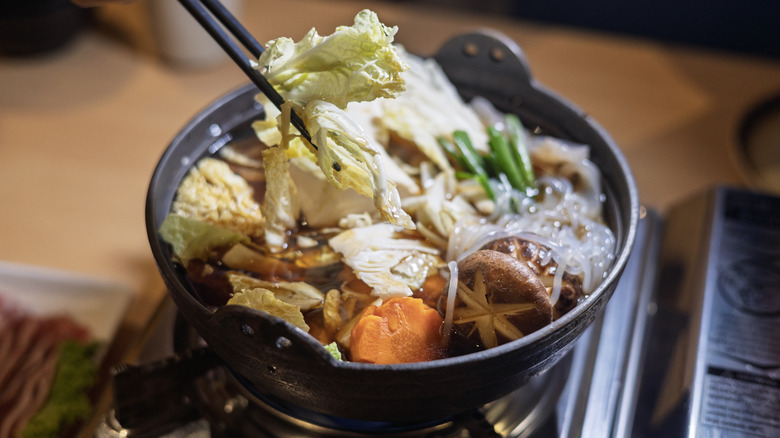
Even if you're not a vegetarian, vegetables play an important role in hot pots. Not only do they taste delicious when gently cooked in the steaming hot broth and dipped into a flavorful sauce, but they add color and texture to the experience. Traditional hot pot veggies include snow peas, sugar snap peas, baby corn, and Asian greens, such as boy choy, choy sum, chrysanthemum leaves, and pea shoots. Like with most dishes, fresh, seasonal produce is preferred, when possible.
Chef Kevin Lee shares that "Napa cabbage, mushrooms, green onions, carrots, and tofu are all great." As a cooking tip, he says, "Add the vegetables that take longer first and the more delicate ones toward the end." When we asked Chef Lee if he recommends combining meat and veggies when eating hot pot or cooking them separately, he said, "Either way. I'll eat the beef by itself sometimes, and other times combine it with cabbage or mushrooms. There really isn't a wrong way to do it."
Slice protein options paper-thin
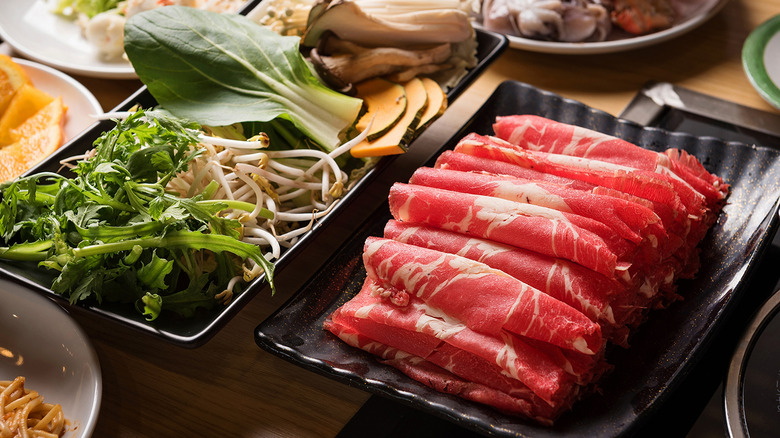
While there are several important rules for eating hot pot like a pro, perhaps the most essential one is slicing your meat paper-thin. Cuts are typically 1 to 2 millimeters thick so they cook quickly in the broth. Depending on the protein you're using, such as Wagyu beef or pork, the slices may cook in under a minute when swished back and forth in the bubbling broth. The razor-thin meat also gives the meal a lighter feel and is easier to dip than larger chunks in the small bowls of sauce after the cooking process.
Chef Kevin Lee says, "I like a well-marbled beef, like ribeye, sliced very thin. With shabu-shabu, it only takes a few seconds in the broth. Once it's cooked through, you're ready to eat." If you're preparing the hot pot at home, you can either slice the meat yourself or buy it pre-sliced at many grocery stores. For the thinnest possible cuts, freeze the meat before slicing it.
Choose the correct condiments
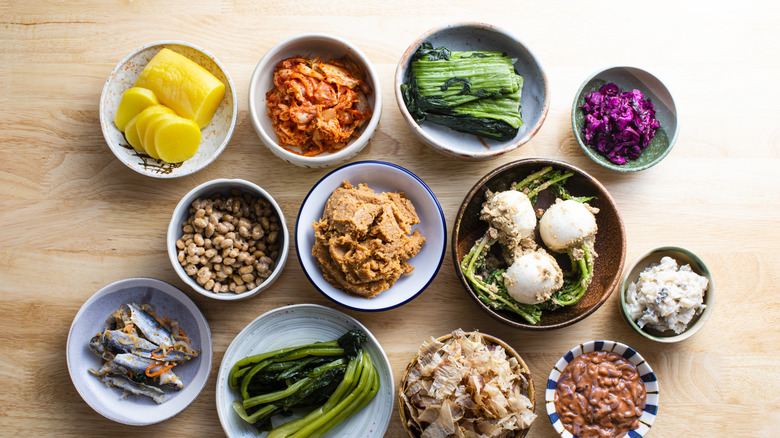
When eating a traditional Japanese hot pot, the condiments used to enhance the dish shouldn't be just an afterthought. If you choose the right ingredients, they can make a delicious hot pot even tastier, while giving it extra texture, and, of course, flavor. If you're serving a communal hot pot meal, condiments will allow dinner guests to completely customize their bowls to their liking.
Like most other hot pot elements, there is no limit to the type of condiments you can use. Popular options include sliced green onions for a bold, crisp bite and vibrant color, grated daikon radish, shichimi pepper, and chili oil for those who like it hot. If you want to get fancy and top your hot pot with popular chili crunch oil, here are the best brands according to our taste test. If crunchy textures are your thing, don't forget to top your hot pot with crushed peanuts, toasted sesame seeds, or fried scallions.
As the broth becomes more flavorful, ladle it into your bowl
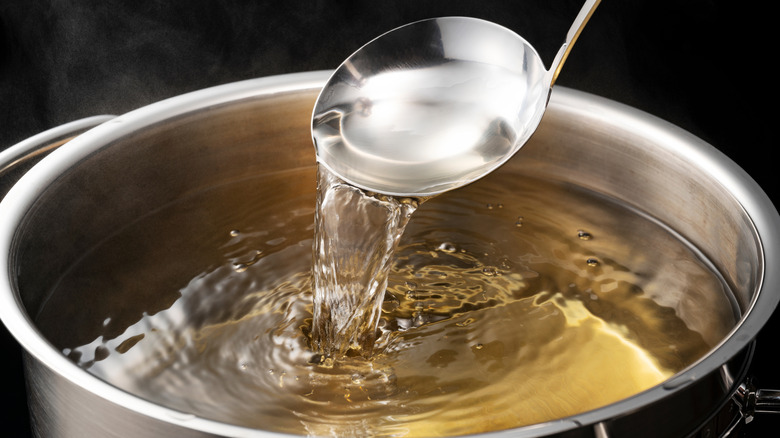
Hot pot broth serves more of a purpose than just cooking your ingredients — it also makes a mouthwatering addition to your bowl, especially toward the end of your meal. While a traditional dashi may not make your taste buds sing when you first start cooking your vegetables and meat, it will eventually become a delicious symphony of combined flavors.
Each vegetable lends the broth its own subtle, or not-so-subtle, taste, depending on the type, and the meat infuses it with richness. The result is a comforting, nourishing broth that you can ladle into your bowl as a pièce de résistance. It's also a great way to eat the last remaining spoonful of goodness from the pot, or enjoy with cooked dumplings, noodles or rice. If you prefer a thicker broth, drizzle a few eggs into the broth for a porridge-like consistency. You can also simply sip the zesty broth as a light, clean finish to your meal.
Enjoy cooked ingredients with a bowl of rice
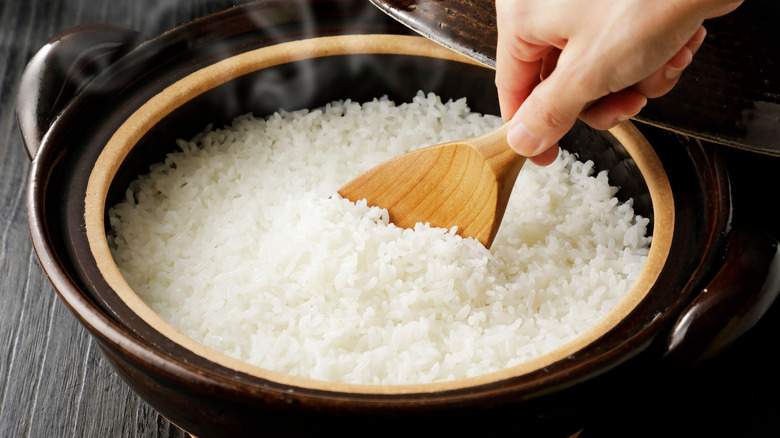
There is no right or wrong way to eat cooked rice with your hot pot, but it will create a more well-rounded hot pot experience. Rice is also a tasty way to make the meal more filling if you don't have many vegetables or a lot of sliced meat or other types of protein to work with. Since rice is so mild-tasting, it will act like a sponge for the lively broth and absorb the flavors of the veggies, herbs, and seasonings you're including in the hot pot.
As one option, you can eat the rice as an appetizer before your hot pot meal, as the first ingredients cook in the steaming broth bath. As another idea, pick up the cooked veggies or meat with your chopsticks or tongs and eat them along with a bite of rice. If you prefer to consume the grain at the end of the hot pot experience, spoon it into your bowl with ladles of the flavorful broth, and enjoy it like a rice soup. If you still haven't honed your rice-making skills, here's an idiot-proof method for making perfect rice.
Add noodles to the hot pot at the end of the meal
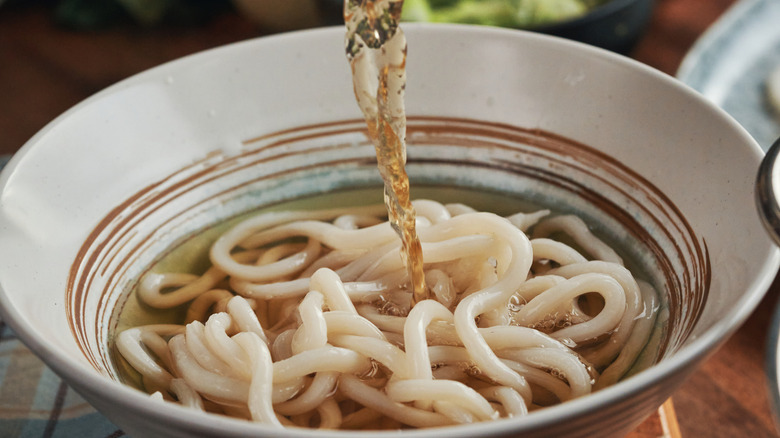
If you're more of a noodle than a rice lover, stick with them at the end of the hot pot meal. Whether you choose thin glass noodles or thick udon noodles, they'll be the ideal way to slurp up the remaining broth. Chef Kevin Lee says that he prefers to use udon noodles when eating Japanese hot pot. "I love adding them toward the end because they soak up all the flavor that's developed in the broth," he shares.
There are several ways to add noodles to the broth, depending on what you have on hand. You can drop dry noodles, such as ramen, into the boiling liquid, allowing them to absorb all of the flavors of the broth as they cook. Frozen noodles will also work, although they may water down the broth a bit. If you have leftover noodles in the refrigerator, warm them up in the broth and serve. Just be sure not to overcook the noodles, or the starches may make the broth too thick. Cook raw noodles until they are just tender to avoid a murky, cloudy broth.
Garnish your hot pot for added texture and flavor
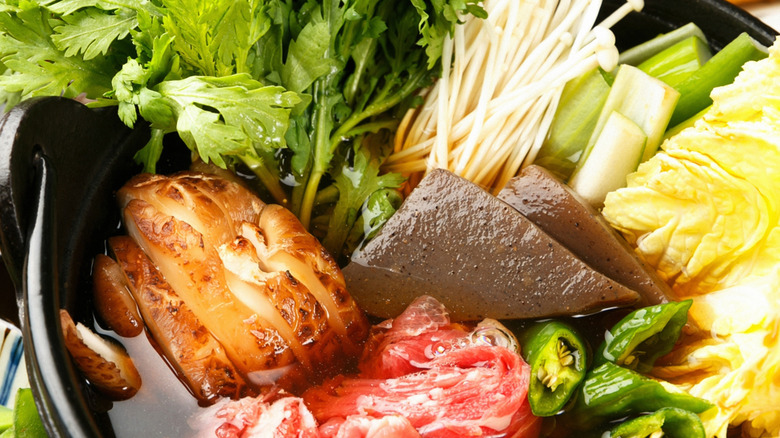
No bowl of soup is complete without a garnish or two. Even though you typically enjoy Japanese hot pot one bite at a time, you can still use a variety of garnishes to add fresh flavor, texture, and visual interest to the broth. Eat the garnishes with each individual piece of meat or veggie, or sprinkle them over the bowl of leftover broth and rice or noodles at the end of the meal
Chef Kevin Lee says that he "absolutely" recommends garnishing hot pot for several reasons. "Green onion and fresh herbs can add a nice brightness," he shares. "I just wouldn't use so much that it takes away from the clean flavor of the broth." A few other hot pot garnish ideas include toasted sesame seeds for a rich, nutty flavor, fried garlic or onions, shichimi togarashi, or yuzu zest as an exotic, citrusy touch. You can also treat it like pho, topping the broth with fresh Thai basil and cilantro, sliced chili peppers for heat, and a squeeze of tangy lime juice. Bean sprouts will give the broth a refreshing crunch.