

Want 10x Creamier Mashed Potatoes? Start Cooking Them In This Fridge Staple
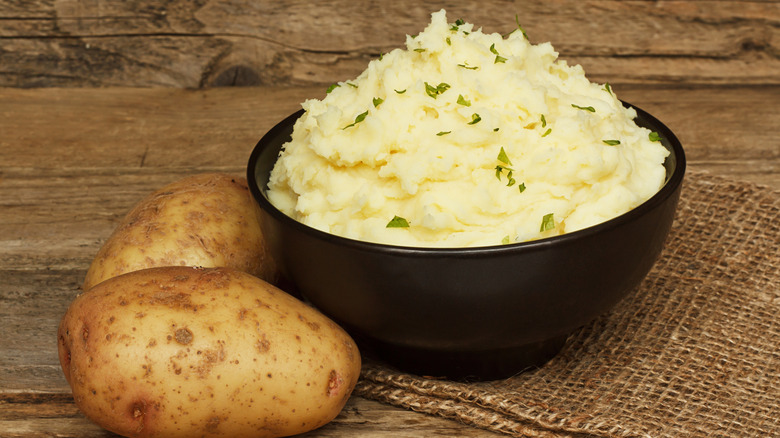
There's no single way to make the best mashed potatoes. Want them extra-fluffy? Fold in some whipped cream before serving. Want them silky? Dry out the spuds before boiling and mashing them. More often than not, the mashing technique is what determines the consistency of the finished dish. However, certain ingredients can also alter the texture. For instance, a simple trick can make mashed potatoes richer and 10x creamier, and it only requires one fridge staple to pull off. Instead of boiling the potato chunks in water, cook them in milk.
Cooking mashed potatoes in milk is as easy as it sounds. After peeling and cutting the spuds into similarly-sized chunks, place them in a deep saucepan or a heavy-bottomed pot, and then pour in enough milk to cover them. Once it starts to simmer, the potatoes will absorb some of the milk. The starch from the sliced potato chunks will then combine with the dairy liquid, causing the potato flesh to thicken when mashed. As the milk reduces, the mash will turn extra-creamy, reaching a velvety consistency that's comparable to restaurant-style mashed potatoes. The best part of this technique is that it allows the richness of the milk to work its way into the potatoes from the inside instead of simply coating them after they have been cooked.
Pointers when cooking mashed potatoes in milk
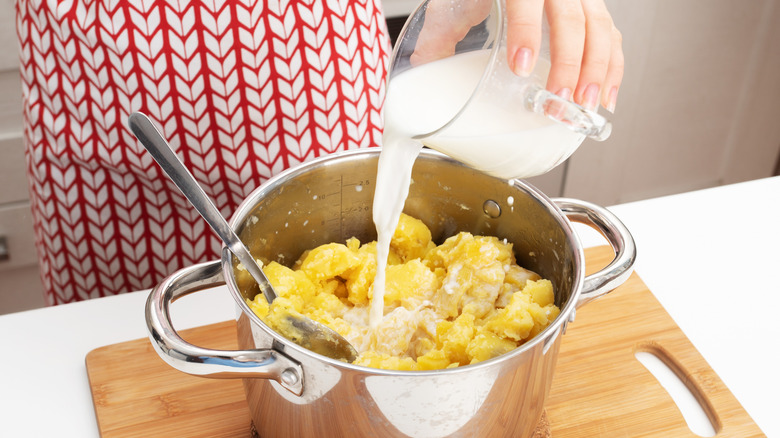
Milk is also Martha Stewart's secret to unbelievably creamy mashed potatoes, although she prefers to add it after boiling the whole potatoes in water. She then uses a mixer to blend the potatoes with butter, cream, salt, and pepper. But simmering the spuds directly in milk eliminates the need to drain the liquid afterward. The potato chunks absorb much of the dairy as they cook, causing them to become soft and creamy from the inside out. However, when trying this hack, there are a few requirements that will ensure you get the best results.
First, it's important to use a deep saucepan or heavy-based pot since milk can scorch easily, even when cooked on low heat. It's also important to choose whole milk over low-fat milk, because the higher fat content helps achieve the desired rich, velvety consistency for this dish. Another important pointer is to avoid washing or soaking the potatoes after cutting them into chunks, as this will rinse off their starch. Both the starch and the dairy components are key to making mashed potatoes that are 10x creamier than the classic recipe.
Finally, only use potato varieties with a significant starch content, such as russets or Yukon Gold. These are best suited for this type of mashing. Once the potatoes are tender and creamy, season with salt and pepper and fold in a few tablespoons of butter to further elevate their richness and flavor.