

Why Hot New Costco Finds You See Online Are Always Missing From Your Local Warehouse
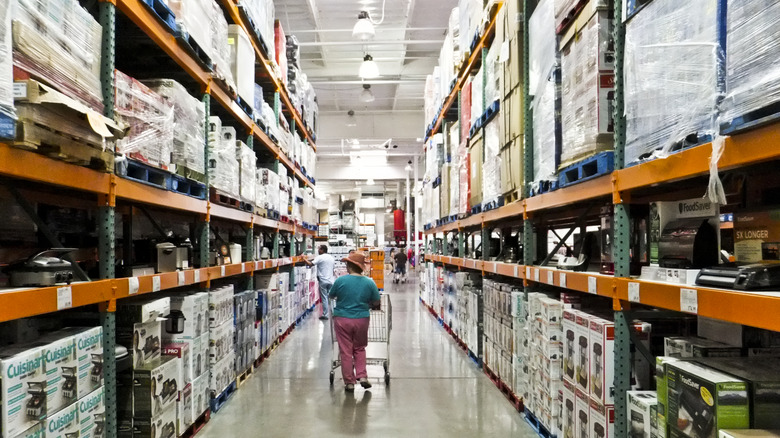
There's always something new to lust after at Costco, from seasonal specialties, like returning fall treats for pumpkin lovers in the bakery, to must-have small kitchen appliances. But if you get your news online, you might find that the hot new item you saw in a TikToker's shopping cart is missing from your local Costco.
There are a few reasons this happens. First, the warehouse chain regularly sells items with limited availability, and anything viral is likely to sell out fast. But there's also a structural reason stock varies between stores: Costco's business is designed regionally, so a shopper in Orlando has access to products that might never be stocked in San Antonio or Ann Arbor.
Within the United States, there are eight Costco regions. California has three: Northern California, Los Angeles, and San Diego. Above these is the Northwest region. Texas gets a region of its own; then there are the Midwest, Northeast, and Southeast regions. In each of these areas, Costco's buying teams have relationships with local suppliers and small businesses. This allows buyers in each of the regions to adjust a percentage of products on the shelves to the local needs.
Close vendor ties built through this local collaboration strategy also strengthen Costco's supply chain and help the company advance other goals, like energy and emissions efficiency alongside suppliers. While it might be annoying to miss out on a must-have item you saw online, the trade-off is essential to Costco's success.
What Costco's regional model means for product selection
Costco refers to its localized buying model as both regional and seasonal. This means you'll see more sweaters in the Midwest and Northeast, surfboards in Maui, and kosher food in places with large Jewish populations.
It's not purely about practicality, though. The varied stock at Costco warehouses is also part of the treasure hunt the company intentionally creates. Executives have found that the availability of exciting, new, locally sourced items keeps shoppers engaged as they search for unexpected finds. Buyers' local knowledge comes into play here, too. Some of the vendors chosen to supply these specialty items are small and family-owned. Costco stores in the Southeast sell Charleston Coffee Roasters beans, for example, while pet treats from Pampered Pets can be found in parts of the Northwest region and California.
For online shoppers, the experience of discovering unique goods is recreated in the "Treasure Hunt" section of the Costco app and website. Here they'll find a curated selection of high-end goods, most of which aren't available in store.
Although the brand's variability is one of the things some customers hate about shopping at Costco, a 92% membership renewal rate shows most think it's part of the fun (per The Independent). Overall, Costco's system prioritizes both value and quality standards; as shoppers, knowing we aren't rolling the dice makes it easy to try whatever we find on store shelves.