

12 Childhood Breakfasts Boomers Will Remember All Too Well
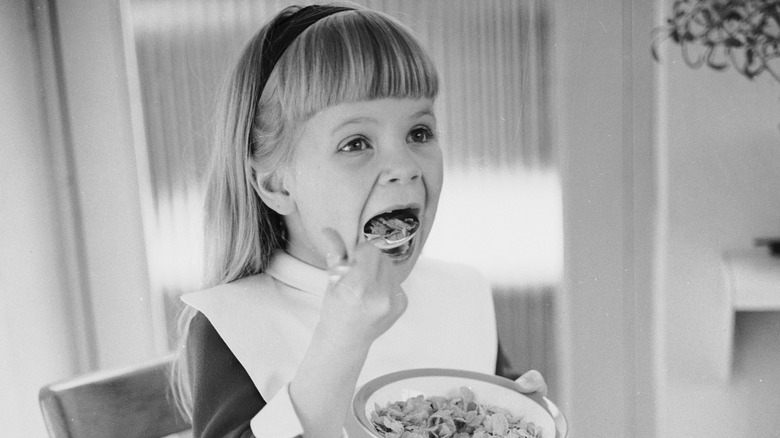
Of the three squares, breakfast is unique. For biological, cultural, and psychological reasons, we tend to eat the same foods for breakfast multiple days a week, but switch up our menus for lunch and dinner. This pattern could be why what people ate in the a.m. as kids evokes warm and fuzzy feelings — maybe it's no coincidence that Cereal Milk is one of the most popular strains of legal marijuana in California. Boomers grew up during a time of tremendous technological change, including being the first generation to watch color TV — and the persuasive ads for breakfast foods that came along with it.
When you think about the nutritional value of some of these foods, you will probably agree it's no wonder breakfast cereal faces dark days ahead, but before you pass judgement, consider that back in the Middle Ages, the first meal of the day was meat and wine. Although not as bad as alcohol, many Boomer kids were sipping huge amounts of sugar and other chemicals alongside their character-themed breakfasts. But, here's the thing: Instead of shame, many of them feel nostalgic about the iconic foods from way back when. Maybe it's because the memory of slurping cereal out of an orange Tupperware bowl while watching Saturday morning cartoons brings them back to simpler times. Whether they ate these foods themselves or hurried to feed them to their kids each morning, cut Boomers some slack — they were all born before the Egg McMuffin even existed.
Quisp & Quake
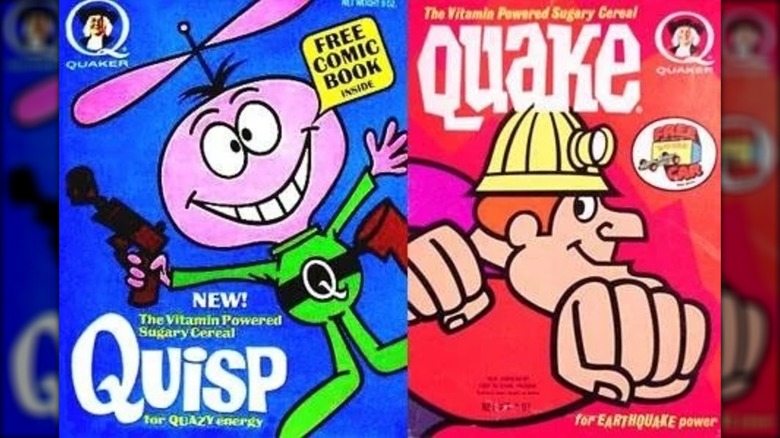
After the major TV networks began airing family-friendly animated series and Saturday morning cartoons in the 1960s, kids' brands were eager to get ad slots. Following Quaker Oats' successful Cap'n Crunch launch in 1963 (which, by the way, is the worst cereal for you), it wanted to expand its footprint. To build brand interest, Quaker execs wanted to create two characters who antagonized each other. They hired Jay Ward, who created Cap'n Crunch, to roll out a plan. The result: Quisp cereal and Quake cereal, released in 1965. Mascot Quisp was a kooky alien from outer space; mascot Quake was a miner from the center of the earth (later a cowboy). Quisp was shaped like flying saucers; Quake like gears. The company didn't bother with a new recipe — both cereals tasted very much like Cap'n Crunch. The characters' rivalry played out on the back of the cereal boxes and in commercial spots. In short, Quisp and Quake were born out of marketing in instead of the other way around.
In 1972, Quaker held the final Quisp vs. Quake showdown, asking consumers to vote for their favorite character. Quisp won, and Quake was discontinued — Redditors are still talking about it. Quisp held on for a few years after that, but was phased out by the late 1970s. Quisp was wildly popular, and there's still a solid market for its free toys and premiums. And, it has made a few comebacks, much to the joy of its Boomer fans.
Ovaltine
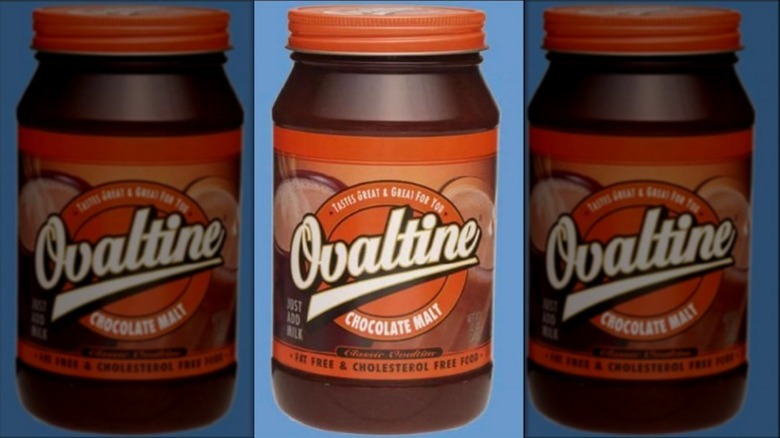
Ovaltine first hit the market in Switzerland in 1904 as a way to deliver extra nutrition to children, and, by 1915, it was introduced to the U.S. It's still available today, manufactured by Nestlé USA, but it's no longer considered a health food — one 2-tablespoon serving contains nine grams of added sugar, which is a big bite out of the 25 grams the American Academy of Pediatrics (AAP) recommends for kids aged 2 to 18. Nutritional doubts aside, the brand still has hundreds of thousands of followers on Facebook and is key to making the maltiest chocolate malted that ever did malt.
Marketed in the '40s, '50s, and '60s, as "The best and quickest energy you can get," a drug-free sleep aid, and even a way to get rosy cheeks, the malt-flavored powered drink mix has also had some memorable high-profile pop-culture mentions, including a 1996 episode of Seinfeld when it was the topic of a poorly written joke and sponsoring Ralphie's Little Orphan Annie decoder pin in the classic 1983 holiday film, "A Christmas Story."
Danish Go Rounds
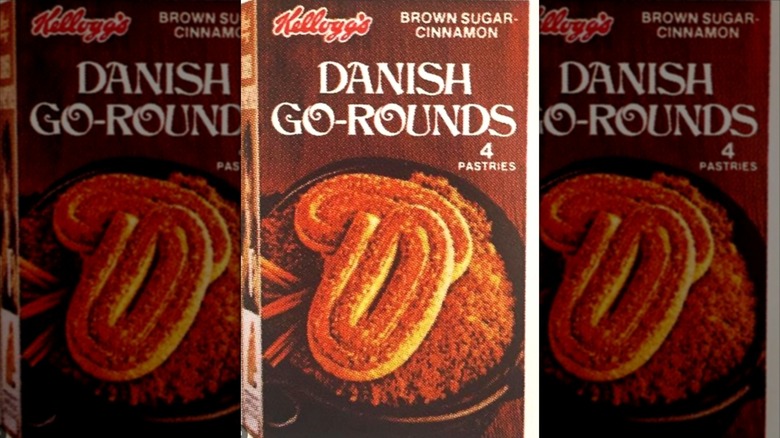
The concept of the Danish pastry was mainstream by the late 1960s, thanks to the Howard Johnson's restaurant chain: It was churning out 10 tons of them per day in its popular roadside eateries. Then the debut of the Kellogg's Pop Tart made consumers very toaster curious (Reddi Bacon, anyone?), so it was only natural for Kellogg's to marry the two and produce a toaster Danish. The company released Danish Go Rounds in 1968, marketing it as a more sophisticated "toaster pastry all grown up" for kaffeeklatsches, parties, and coffee breaks, in contrast to Pop Tarts which were marketed to kids. The Go Rounds were almost identical to Pop Tarts, but they were shaped differently; the first iterations were spirals stuffed with fruit jam or other fillings and topped with no-melt icing and sugar, but they tended to break easily, so Kellogg's pressed them into a more stable spiral shape instead. The concept didn't resonate with the adult market (initial testing of Pop Tarts didn't either), and Kellogg's phased them out in 1980.
But, decades later, Reddit fans still long for a Danish Go Rounds encore. "Danish rounds were so much better than today's pop tarts. I wish Kelloggs would bring them back," said one, and another agreed, noting that "Danish Go Rounds were awesome!"
Freakies
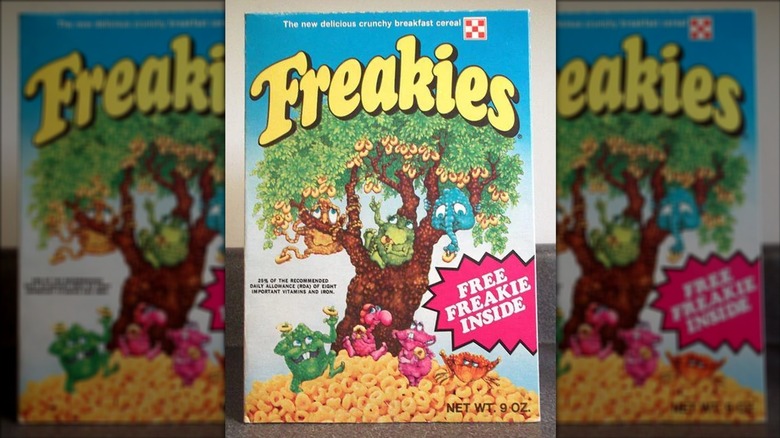
Folks say they still remember the Freakies jingle from the early '70s, for good reason. The Freakies premise is that seven monsters searched and searched, and finally arrived at the Freakies Tree that produced Freakies cereal, so they decided to stay. Each of these monsters, or "Freakies," had a distinct personality modeled after people the copywriter, Jackie End, knew: A boss, a know-it-all, a shy guy, a grump, a goody-goody, a narcissist, and a sweet girl, making the chances pretty good that a child would relate to at least one of them. The prizes in the boxes — figurines, patches, magnets — were of each character, so kids would try to collect all seven, buying lots of boxes of Freakies in the process. According to one Reddit collector, "I had all of the characters as magnets on the fridge!" Genius marketing.
The cereal itself was puffed-shaped O's and gets a lot less airtime than the Freakies toys. The original flavor reportedly tasted similar to Cap'n Crunch, and fruit- and cocoa-flavored variations followed, but, unfortunately Freakies would only be around from 1973 to 1977. It made a brief comeback in 1987, but it did not last. Does the cereal aisle feel less fun than it used to? Here's why you never find prizes in cereal boxes anymore.
Tang
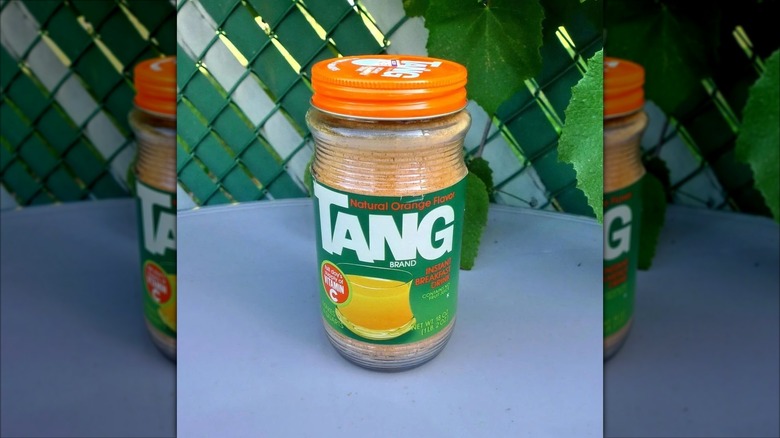
Aside from when Katy Perry took flight, we don't hear a lot of buzz around space travel these days, but the world was wildly different back when Boomers were growing up. Starting in the late 1950s, the U.S. and the Soviet Union, who had chilly relations since the end of World War II, began a fierce competition to send people to the moon, which culminated in July of 1969, when the U.S. got there first. The news covered space travel a lot during this time, making an impression on kids.
What does that have to do with an orange-flavored powdered drink mix? Tang rode along with astronaut John Glenn, the first American to orbit Earth, in 1962, and it went along for many subsequent space missions. Tang capitalized on this, launching ad campaigns connecting Tang to the astronauts and the space program in general. Fun fact: Tang lore is so intertwined with NASA, many people believe the agency invented it. It didn't; it just put it on the map. And, in case you're wondering: Yes, astronauts still drink Tang in space.
Maypo
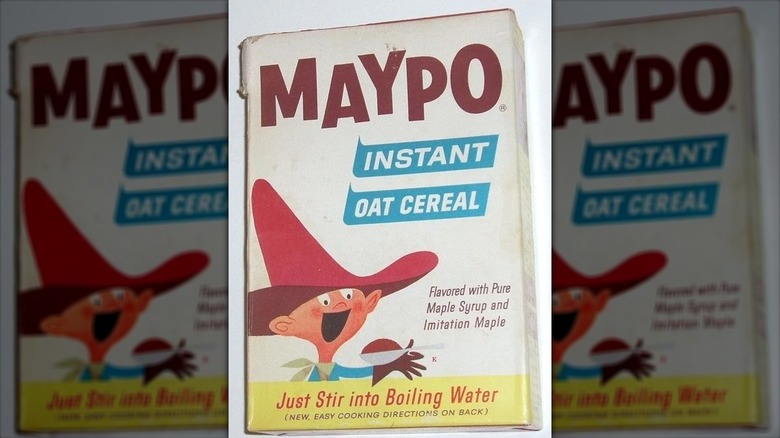
Boomers either liked Maypo or hated it, but according to this Reddit thread, they sure do remember the maple-flavored oatmeal. One of the big reasons for that is its surprisingly successful 1956 animated TV commercial, in which a fussy child, Marky Maypo, who was fashioned after animator John Hubley's own young son, is coaxed to eat his Maypo for breakfast and says, "I want my Maypo!" What Maypo fans may not know is that the Marky character was so popular, the company wanted to put his likeness on the Maypo packages, but John Hubley, the animator who created Marky, did not. The disagreement led to the company cancelling Hubley's contract in 1960.
Despite another unforgettable ad that featured prominent athletes, including Mickey Mantle and Wilt Chamberlain, whining Marky's "I want my Maypo" catchphrase, the brand floundered without Hubley. The brand has had its challenges, but Maypo is still around and Marky is still on the box. Is your breakfast game a bore? Here are some simple ways to upgrade your morning oatmeal.
PDQ
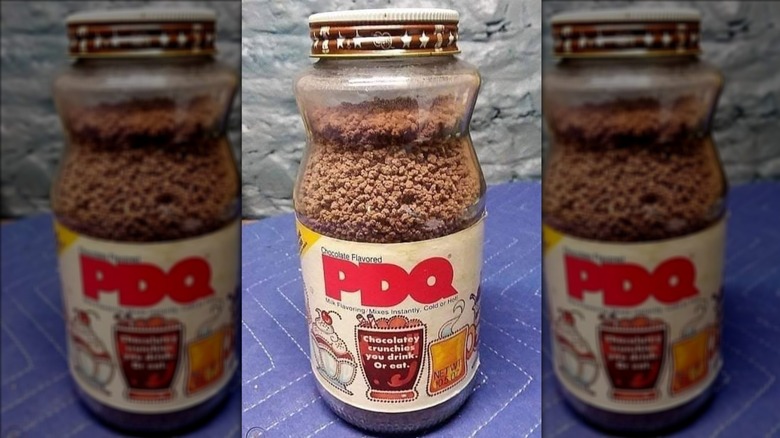
Kids today drink a lot less milk than they used to, but they still do so along with breakfast. There's no doubt milk is a good source of nutrients for growing bodies, but what if a kid just hates the taste? That's not a great way to start the day. Enter PDQ chocolate flavor beads by Krim-Ko. With a strong sugar lobby in the 1960s, that health taboo hadn't spiked yet. PDQ was different than powdered drink mixes as the beads were porous and were said to soak up milk a lot faster and more thoroughly — no muck on the bottom of the glass. Krim-Ko eventually came out with eggnog and strawberry flavors as well. Ovaltine bought the brand in 1971 and used its tech to help its signature drink mix make a successful comeback. Although Ovaltine survives today, the company sunsetted PDQ in the 1990s.
A Redditor agreed the beads did the trick: "I liked it better than trying to stir chocolate Quik powder. Those PDQ "beads" dissolved faster and better than Quik. I liked the flavor better too," while others just wish they could still get it.
Moonstones
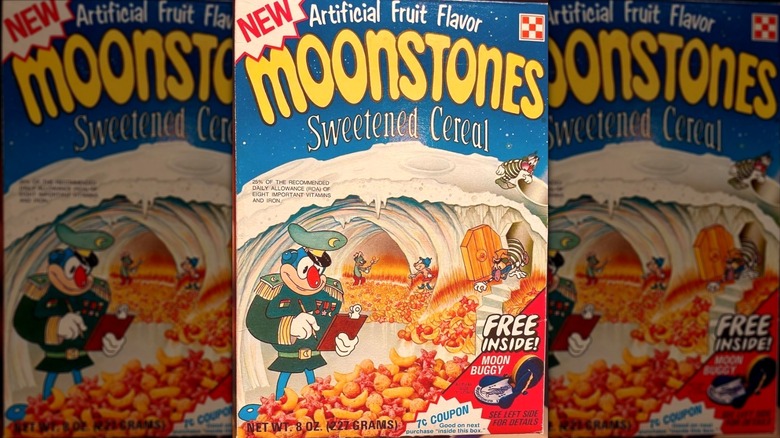
The Moonstones "story," told on the back of the boxes and on TV commercials, went like this: The "good" guys, led by Majormoon, live on one side of the moon and lead productive lives making cereal according to their secret recipe, while more nefarious characters, led by Bigbum, live on the other side and conspire to steal Majormoon's recipe. The actual cereal itself was shaped like moons, planets, and stars, and was fruit-flavored, much like Trix cereal is today. Prizes included stickers, magnets of the main characters, and toys, such as a racing wheel or moon buggy, and offers included mailing in proofs of purchase and payment to receive a t-shirt or a watch, which is a pretty rare find, so if you have one, treasure it.
Moonstones cereal lived a short life after it came out in 1976 —just about a year — but those who ate it remember it fondly. "I LOVED this cereal. I wish they'd bring it back. I honestly think there would be a big audience for limited runs of defunct cereals. There [are] a LOT of potential nostalgia-seeking cereal lovers out there," said one Moonstones fan on Reddit. We're inclined to agree.
Beep Fruit Drink
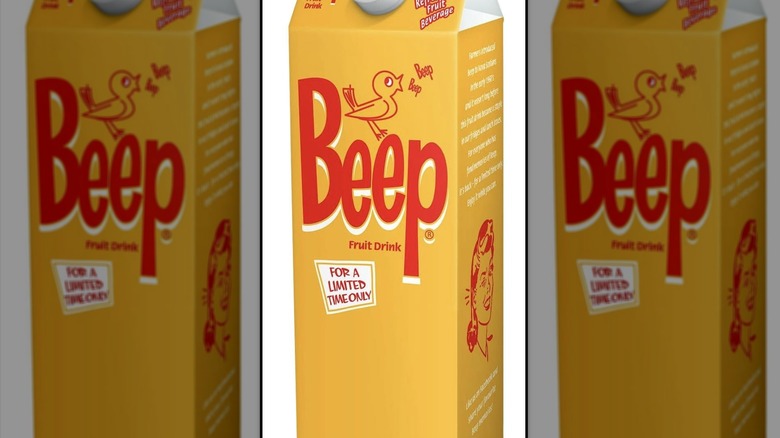
Born and raised in Canada, Beep Fruit Drink was made and distributed by a farmer's cooperative and debuted in Nova Scotia in 1962. Its "fruit" components included orange, apricot, pineapple, apple, and prune juice, but no very much of it — Beep was only about 25% real fruit juice, with water and sugar listed as the first two ingredients.
As consumers became more health conscious, the demand for Beep waned and the cooperative ceased production of it in 2010. Beep's die-hard fans, known as "Beeple," were not happy: They made phone calls, tweeted, signed petitions, and rallied to bring Beep back. In 2012, they got their wish, but just for the summer months. It ceased production for good in 2015. Since then, recipes for homemade Beep have been popping up on blogs and social media, including one from the supermarket Belmont Sobeys in Edmonton, Alberta, on Facebook. Maybe the store was getting tired of Beeple asking for it.
Downyflake Toaster Eggs
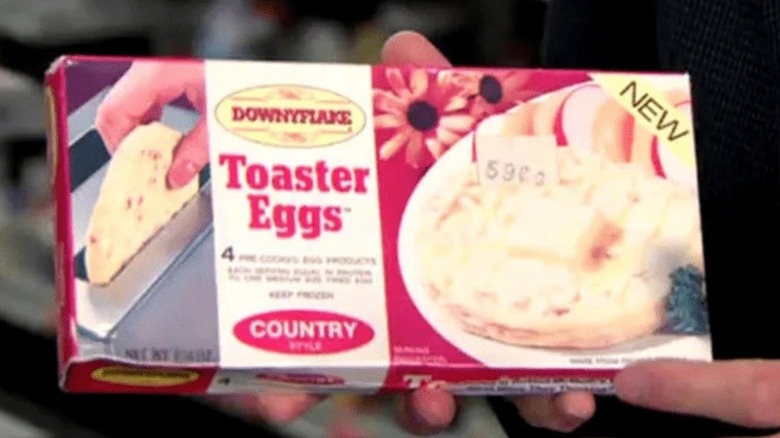
Some breakfast foods are memorable for all the wrong reasons. In 1972, Downyflake released Toaster Eggs, which were frozen egg slices that you pop in the toaster, eliminating the need for frying an in a pan. They came in four varieties: Plain, cheddar cheese, country style, and Western. The company was an industry leader in manufacturing convenience breakfast foods, having found success with the first pre-baked frozen waffles to market and later, pre-cooked pancakes and French toast. Following Pop Tart's smash success just eight years earlier, the American appetite for grab-and-go food was growing.
But, popping a frozen egg in a toaster would not be one of the great innovations of the food industry. "A frozen hockey puck of egg you put in your toaster for breakfast," is how one Reddit described the toaster eggs, and a YouTube video described the experience as, "Chewy, dry, and had an odd taste. Disappointment was evident on the faces of children when they took their first bite." Yuck.
Malt-O-Meal
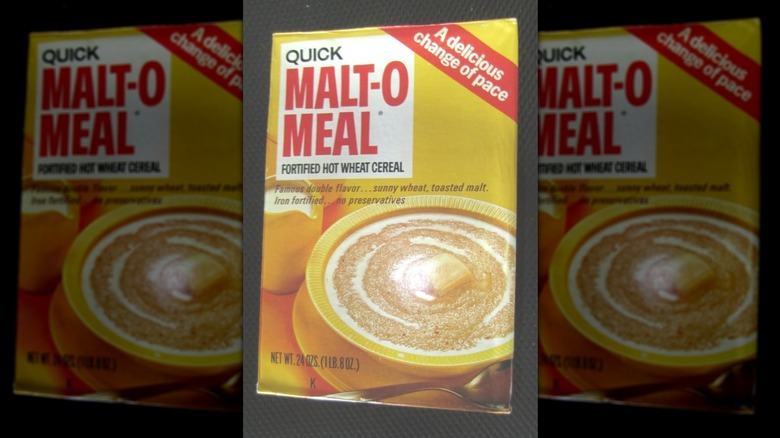
Gen Xers might remember their Boomer dads saying the Malt-O-Meal tagline, "Good stuff, Maynard," from the brand's early 1980s commercials — some might still say it today — but the hot wheat cereal had already been around for more than 60 years by the time Maynard hit the air. Originally slow to take off, it gained legions of young customers by sponsoring the "Steamboat Bill" radio show in the 1920s. Steamboat Bill asked kids to send in Malt-O-Meal box tops along with their favorite jokes; if their joke was selected to be read on the air, they'd get a toy steamboat in the mail. The chocolate variety was introduced in 1961, which helped keep it competitive when consumers were increasingly flocking toward more convenient options.
Malt-O-Meal is still on store shelves today, available in original, chocolate, and maple and brown sugar flavors, and it still has its fans, some of whom really enjoy it in the winter months. If you're looking to warm up on a cool day, give it a try; according to this YouTube taste-tester, it's more flavorful than Cream of Wheat.
Carnation Instant Breakfast
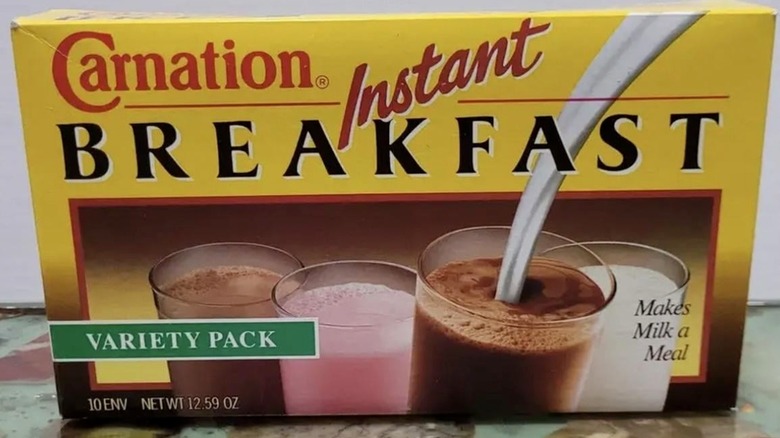
The number of women in the workforce rose steadily between 1960 and 1970, so no-fuss meals, especially for breakfast, became a necessity. A 1965 ad for new Carnation Instant Breakfast says when mixed with milk, it is a complete, balanced meal: "Everything you need to go on — in a glass! Vitamin C, the orange juice vitamin. As much protein as two fresh eggs. More food energy than two slices of buttered toast. And as much mineral nourishment as two strips of crisp bacon" (via YouTube). Before work or school, simply pour an envelope of Instant Breakfast in a glass of milk, and drink up!
One Redditor called them "protein shakes before there were protein shakes," but you won't see any tears shed on the thread because Instant Breakfast is still around today. In 2022, Carnation revamped the whole line as "Carnation Breakfast Essentials," decreased the sugar content, and improved the taste to appeal more to kids.
Sugar Smacks
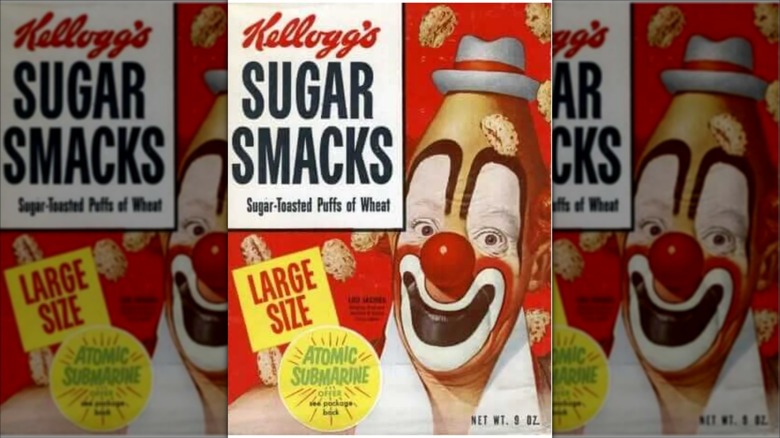
This puffed wheat cereal has led a long life. It first hit the market in 1953 and included innovative packaging: A resuable aluminum inner bag designed to retain product freshness. Its first mascots were clowns. While today we may find the choice disturbing, clowns were quite popular when many Boomers were kids. The brand has endured many marketing shake-ups over the years. The clowns were gone by 1957 and replaced with a seal named Smacky who hung around until Kellogg's began to sponsor Hanna-Barbera cartoons. Soon, there were four new cereal mascots in the Kellogg's portfolio; Sugar Smacks was repped by H-B's Quick Draw McGraw, a cowboy horse. In 1966, the Smackin' Brothers, a pair of bare-chested boxing redheads, took over — we'll leave it to you to decide which is odder, the clowns or the brawling bros. In 1973, the boys were replaced with the mascot we still see today, Dig 'Em The Frog.
The cereal has long ranked top-of-class in sugar content, a potential downside Kellogg's has addressed over the years. In 1984, it dropped "Sugar" in favor of "Honey" and Dig 'Em was briefly replaced with a bear; but the frog quickly returned. In the 1990s, "Honey" was dropped and it was simply "Smacks" until 2004, when "Honey" returned.
On a Reddit feed about nostalgic cereals, one Sugar Smacks lover found out that it is still available as Honey Smacks. He proclaimed "I must now go on a grocery store hunt for these beauties."