

The Bakery Red Flag That Can Land You In The ER
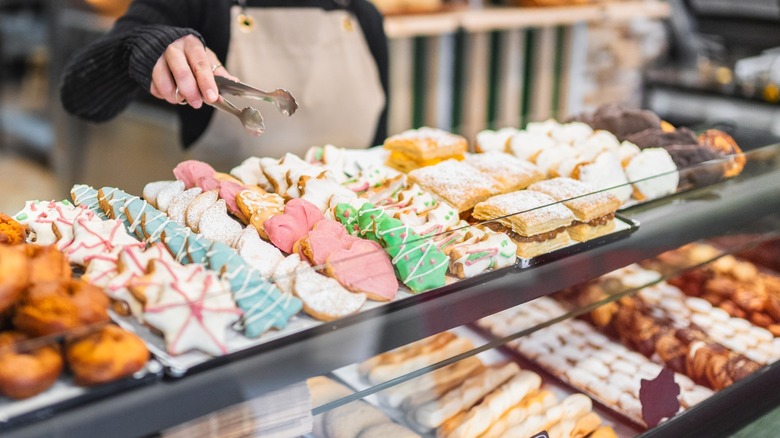
Going to the bakery and witnessing so many exquisite confections on display is a joy, and that's just the beginning of the bakery experience. Once one of those toothsome delights catches your eye, you can ask to have it boxed up and take it home for your personal enjoyment. The question is, should you? According to Brian Labus, associate professor of epidemiology and biostatistics at UNLV School of Public Health, there could be something unpleasant hiding in plain sight in your dessert.
Many baked goods contain dairy products, like eggs and cream. Whipped cream has "cream" right in the name, and while Labus says there isn't an inherent safety risk with whipped cream toppings, there can be a danger if it's been stored improperly. "The real concern is that products that should be refrigerated actually are," Labus explains. "Real whipped cream must be refrigerated, but you can hold it at room temperature for a couple hours before we start to have concerns about bacterial growth."
It's worth asking an employee how long one of the whipped cream-topped Costco bakery items (which can be hit or miss) has been sitting out if you want to err on the side of caution. If they don't know and can't find out, that lack of knowledge is a bakery red flag in itself. However, Labus adds that not all confections featuring cream-based ingredients should be cause for concern. "Think of the number of products that are filled with 'cream' that you can find on the shelves at a grocery store," Labus added, implying that some cream-based ingredients are in fact shelf stable.
Many ingredients can be unsafe when stored wrong

There are certain bakery red flags that should make you turn tail and run, but it can be difficult to determine how long baked goods have been sitting out simply by looking at them. It's not just whipped cream that's a concern, either. Labus notes the dangers of improper storage involve an array of ingredients. "We have to look at the characteristics of the product itself that will affect bacterial growth, including the sugar content, water availability, and acidity," he says.
However, every confection is different, and he points out that not every item in a bakery needs to be refrigerated, making it even harder to conclude what's safe by sight alone. "For some combinations, we can keep things at room temperature with no concern," he says. "For others, we have to pay close attention to time and temperature to prevent bacterial growth. So it really comes down to using the right product for the situation and doing it properly to keep people from getting sick."
Before folks start swearing off going to the bakery for good, it's safe to assume the people who run them are well aware of proper storage techniques so long as they're in good standing with the health inspector. So, although extra care needs to be taken regarding baked good with fresh whipped cream inside or on top, you don't necessarily need to avoid it when visiting a bakery if you trust the establishment is above board. "If there were ingredients that posed a serious risk to consumers, we would not be allowed to use them."