

5 Leafy Greens Way Better For You Than Plain Old Lettuce

Lettuce is usually the first thing that comes to mind when thinking about salad bowls. Whether it's America's favorite iceberg lettuce or the fancier romaine, there's no denying this leafy green is a staple ingredient for salads everywhere. For the most part, the appeal of lettuce is unquestionable, as it's refreshing, versatile, and low in calories. Everyone who is counting calories or otherwise particular about the food they eat are likely to choose lettuce as their regular greens. However, lettuce isn't the most nutrient-dense option in the produce aisle. If you want something with more nutritional value, there are other leafy greens with significantly more vitamins, minerals, antioxidants, and fiber to offer.
So, if you want to pack your salads and other veggie-based meals with more nutrient-rich alternatives, it's time to swap out your usual lettuce for other leafy greens. You'll be surprised at how well these other greens go with the salad recipes that are part of your weekly menu. Some of them have bold, earthy, and peppery flavors, while others are just as mild as lettuce so you don't have to worry about drastically changing the taste of your favorite dishes. Whether you are looking to increase your veggie intake or simply want more from your daily greens, here are five leafy vegetables that are way better for you than plain old lettuce.
Arugula
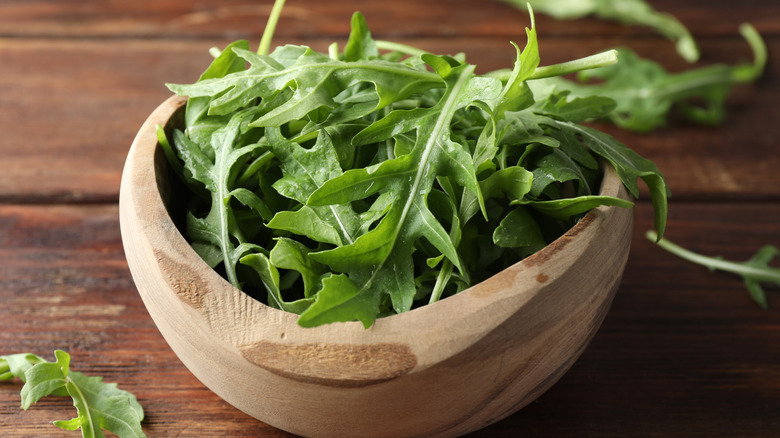
Sometimes confused with lettuce, arugula is not everyone's cup of tea, as this cruciferous vegetable has a peppery kick and an earthy, bitter taste. However, when used as a garnish or mixed into salads, this leafy green can load you up with nutrients like vitamins C and K. It also contains more magnesium and calcium than lettuce. What's more is that arugula also has glucosinolates, which have been found to fight off certain cancers, including lung, colon, breast, and bladder (among others).
To incorporate arugula into your diet, simply toss it into salads, layer it on sandwiches, blend it into pesto, or scatter it over homemade pizza just before serving. Since the leaves are tender, you can stir them into soups during the final moments of cooking or add them lightly wilted into pasta dishes. Do note that since arugula has a bold, peppery flavor, it may not go well with dishes that don't call for its signature taste. Nevertheless, you can combine it with milder greens like romaine or spinach so it doesn't end up overpowering the flavor of the dish.
Kale
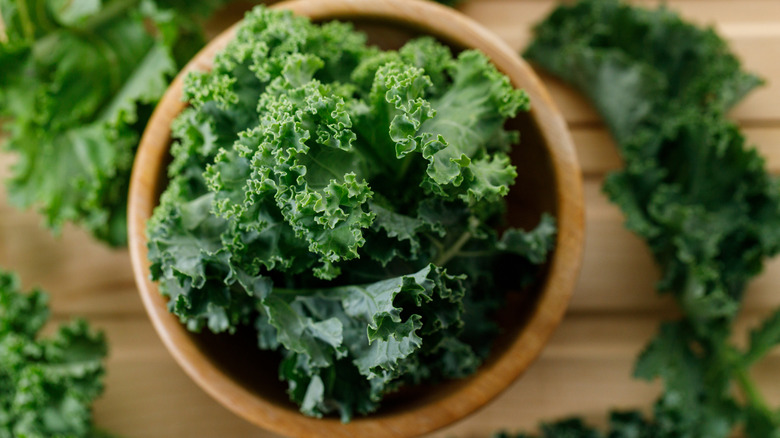
One of the leafy greens to experience a massive boom in popularity due to the superfoods craze was kale. Unlike arugula, kale distinguishes itself by having a milder flavor profile; but like arugula, it is more nutrient-packed than lettuce, with a single raw serving providing significant amounts of vitamins K, C, and A as well as manganese, calcium, and riboflavin. It also contains traces of vitamin B6, iron, potassium, and magnesium. Moreover, kale is rich in antioxidants (including beta-carotene and flavonoids) so it can help protect cells against free radicals.
If you need another reason to favor kale over lettuce, know that the former has more fiber content, which helps improve digestive health and curbs appetite by promoting a feeling of fullness after meals. However, this veggie's tough texture may be hard to overlook for some people. Fortunately, massaging the leafy green with oil will tenderize it, making it the perfect lettuce substitute in salads. Kale is also a great ingredient for soups, stir-fries, pastas, and smoothies.
Spinach
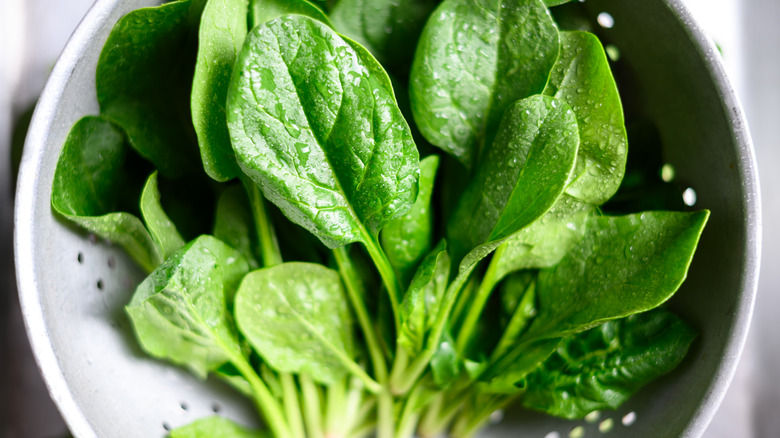
Among the options on this list, spinach is perhaps the easiest leafy green to substitute for lettuce and incorporate into everyday meals because of its mild flavor and remarkable versatility. At the same time, it's also one of the healthiest. A serving of spinach can provide more than 400% of the human body's daily vitamin K requirement. It's also a good source of vitamins A and C, folate, manganese, and magnesium. What's more, spinach contains several antioxidants, including lutein, zeaxanthin, and beta-carotene. Spinach does contain oxalates, which can reduce the absorption of some minerals, but it remains an exceptionally nutritious vegetable nonetheless; providing far more vitamins and beneficial compounds than most traditional salad lettuces.
You can enjoy spinach fresh since it can be eaten raw in salads, sandwiches, and wraps, but you can also cook this leafy green. Be warned that blanching causes the vegetable to shrink dramatically due to its high water content. Briefly steaming or sautéing also reduces its volume. As such, you may need a large amount of spinach when making pasta sauces, soups, curries, and casseroles. Spinach is also perfect for fruit smoothies since its raw leaves have a subtly sweet taste, allowing for an easy nutritional boost without dramatically altering the flavor.
Cabbage
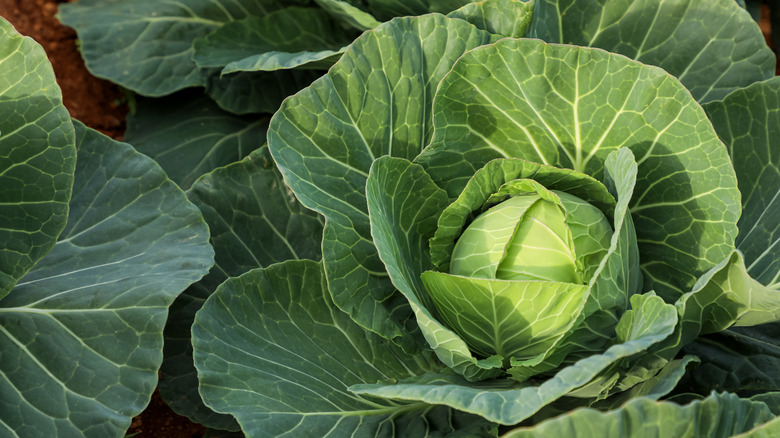
Not only is cabbage more nutritious than lettuce, it's also economical. This cruciferous vegetable has an impressive nutrient profile regardless of variety; be it green, red, or savoy. Cabbage is loaded with vitamins K and C, but is also a good source of folate, vitamin B6, and many minerals. Additionally, it's rich in antioxidants and glucosinolates, which, as previously mentioned, have been found to ward off a number of cancers. Compared with iceberg lettuce, cabbage provides more fiber and a broader range of vitamins. It also lasts considerably longer in the refrigerator (up to two months).
You likely won't have a problem incorporating cabbage into your diet because it's already a staple in so many dishes. Shredded cabbage forms the base of classic coleslaw and is a regular component of tacos, grain bowls, stir-fries, roasted vegetable medleys, and soups. While green cabbage is sometimes mistaken for romaine lettuce, the former is the better choice for meal prepping or packed lunches as it maintains its crunch for longer, especially when stored the right way. To bring out cabbage's natural sweet, nutty flavor, cut it into wedges and roast it until lightly browned.
Bok choy
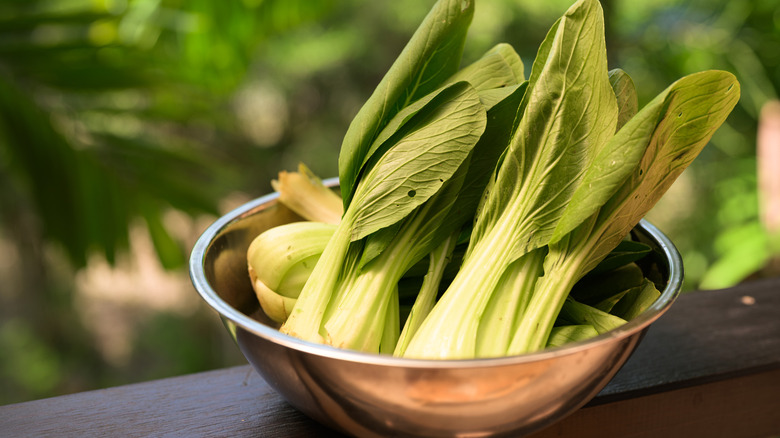
Last but certainly not the least is bok choy, also known as Chinese cabbage. Though not quite as common as the other options on this list, bok choy has the nutritional profile and culinary flexibility to back up this recommendation. For starters, both its green leaves and crisp white stalks are edible and offer a great deal of vitamins, minerals, and dietary fiber. A cup of bok choy provides substantial amounts of vitamins C, K, and A as well as calcium, potassium, magnesium, iron, phosphorus, and folate. Bok choy is also low in calories, something to consider if you're hoping to maximize nutrition without adding significant calories to your meals.
In terms of culinary flexibility, bok choy goes well with many cooked dishes, including stir fry and seafood. It's also great in soups and braises, where the crunchy stems and tender leaves are cooked at different rates to create an appealing contrast for the palate. If your main goal is to swap out lettuce with bok choy in salads, spring rolls, or grain bowls, we suggest going for baby bok choy, as it is milder and sweeter in taste. Cut it in half or quarters and roast it for a satisfying sweetness in each crunchy, juicy bite.