

What Really Happens To Costco Appliances That Get Returned To The Store
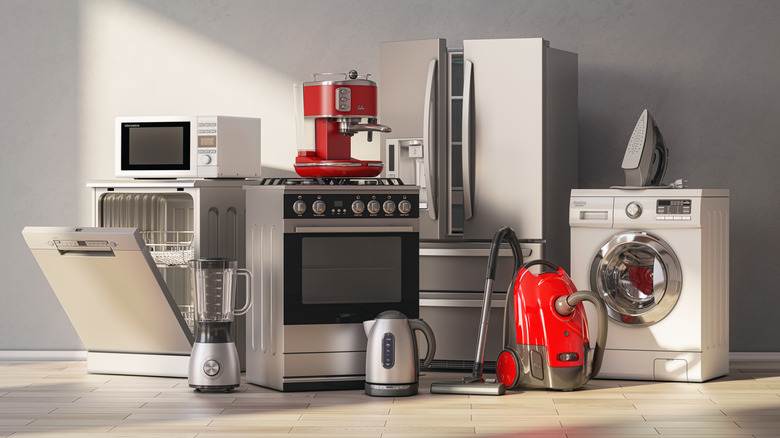
Costco's affordable Kirkland Signature products and beloved food court draw most of the attention to the store, but loyal patrons of the big box retailer know there's so much more they can access with their membership. There's an abundance of deals to score on clothing, electronics, and appliances, to name just a few. Because of Costco's famously easygoing return policy, some of those items inevitably circle back to the retailer for one reason or another. When appliances are returned, the store has two options: Put them back up for sale at a discount if they're still in pristine condition or sell them to a liquidation center.
One such outlet is B-Stock, which sells Costco's returned items to businesses that intend to resell them. It auctions off pallets full of Costco's most frequently returned appliances and other product categories, such as cookware, household furnishings, and jewelry. B-Stock performs a similar service for other retailers, including Walmart, Target, and Home Depot.
The clients that purchase Costco's unwanted appliances from liquidators range from large companies to a single person working out of a spare room, but they typically resell the goods they purchase on third-party sites (like eBay) to make a profit. For Costco, the aim is to make some of its money back even if it still takes a loss. That may seem foolish — after all, if people are profiting off of the returned goods, why wouldn't Costco resell the products itself? The answer lies in the massive amount of returned merchandise the store has to manage.
Costco has a massive supply of returned merchandise
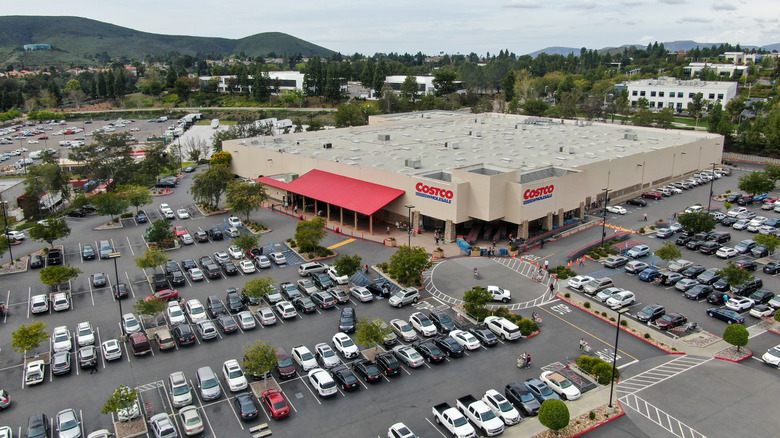
It's estimated that the average retailer has 8% to 10% of its merchandise returned, but because of Costco's laid-back return policy that number is likely quite a bit higher; with some estimates putting it closer to 25%. Considering the company reported its 2025 net sales at roughly $269 billion, if just 10% of products come back, that's $27 billion worth of inventory that comes back to the store. Every item returned represents dollar signs tied to the bottom line, so the company is heavily incentivized to minimize the economic impact of returned merchandise. As such, it takes a strategic approach to returns.
Items customers bring back to the store first travel to a Costco return depot, where they are sorted by category and graded on their condition. If a product is deemed to be in good condition, it generally ends up back on the shelves at a discount. When Costco's small kitchen appliances (or any other goods) don't get this seal of approval, something still has to be done with that inventory which is now taking up precious warehouse space. That's where liquidation centers enter the equation.
Offloading appliances to a liquidation center will result in a loss, but it's better to get something rather than nothing. Customers get to enjoy the company's relaxed return policy and Costco benefits by recouping whatever income it can while making room for new merchandise. It's a win-win that benefits everyone — including the lucky person who purchases a pallet of Costco appliances in working condition.