

Why You Should Be Wary Of 'Locally Caught' Labels At Seafood Restaurants
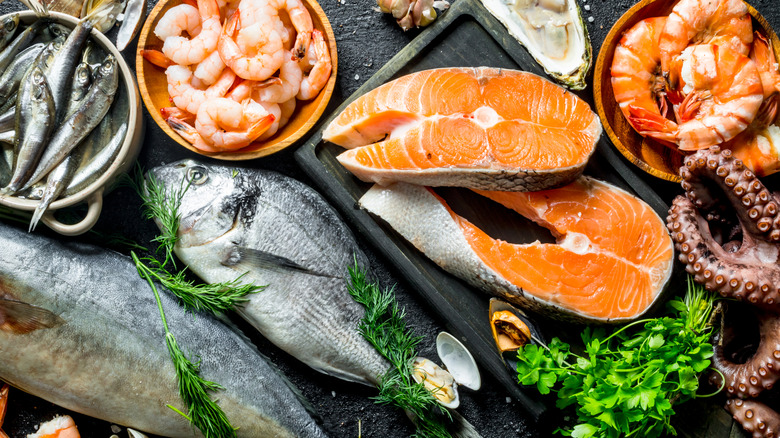
When you travel, you want to experience the local cuisine everywhere you go: a bagel from NYC. Pizza in Chicago. And if you're anywhere near water, fresh-caught fish and seafood straight from the beach or the boat.
But what if you're locally sourced seafood isn't so locally sourced after all? That New Orleans shrimp po-boy or Maine lobster roll could have been made with — gasp — seafood from China or India, fresh from the freezer. Seafood fraud is everywhere — even upscale seafood markets can be caught committing fraud. It comes in many forms, but the bottom line is, you're not always getting the seafood you paid for.
One form of fraud is substitution: when a seafood restaurant or store tries to pass off some type of seafood as another, or even a non-seafood meat as seafood. For instance, that so-called red snapper could really be pollock — the stuff fish fingers are made from (red snapper is the most common fish to get the old switcheroo). Seafood short-weighting is another example of seafood fraud. That's when you get less fish and more fluff — a vendor bulks up your seafood with things like ice or additives and then charges you the full price-by-weight of the seafood. Finally, there's seafood mislabeling, which can go beyond just the name of the fish. Seafood might be labeled as locally caught when it's not, allowing illegally caught or cheap-and-frozen (often sourced from faraway lands) seafood to be bought and served. This is pulling a fast one on you as the diner and undermining local fishermen (who are trying to sell legitimately local seafood) in the process.
Cracking down on counterfeit crab legs (and other seafood fraud)
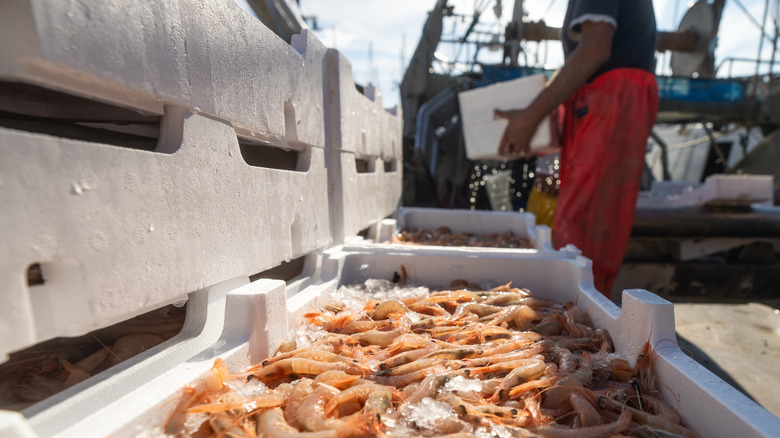
Luckily, people are taking seafood fraud seriously and trying to stop it. Organizations such as NOAA Fisheries are working with government agencies like the FDA to limit the amount of sham seafood that makes it to your plate. They inspect fish processing plants, conduct legal investigations, track seafood moving through the supply chain, and keep close tabs on fishing boats — sometimes even dropping by for an unexpected visit aboard a vessel at sea to check out what fishermen are up to. Plus, genetic DNA testing is now regularly done on seafood species to make sure the reality matches the label. NOAA says it investigates approximately a fifth of all seafood consumed in the U.S., and among what's brought to them voluntarily, 40% of it shows some form of fraud.
When eating out, what can you do to ensure that a restaurant's "locally caught" promise isn't just a bunch of hooey? After all, if you're paying big bucks for bluefish, you hope it came straight from the waters you're dining beside, especially if that's what the menu claims. One approach is to ask about it, point-blank. Of course, if the eatery is trying to pass off its faux fish as flounder, your server may not own up to that. While some states (Alabama, Louisiana, Mississippi, Texas, Georgia) have enacted laws that restaurants must tell it like it is where seafood is concerned, not every state is enforcing honesty yet. But try asking for proof, such as demanding to see the box the seafood came in. You can also do your research — if a restaurant is a known seafood fraudster, there's sure to be buzz on the internet.