

The Cabbage Preparation Method You Need To Avoid A Gassy Stomach
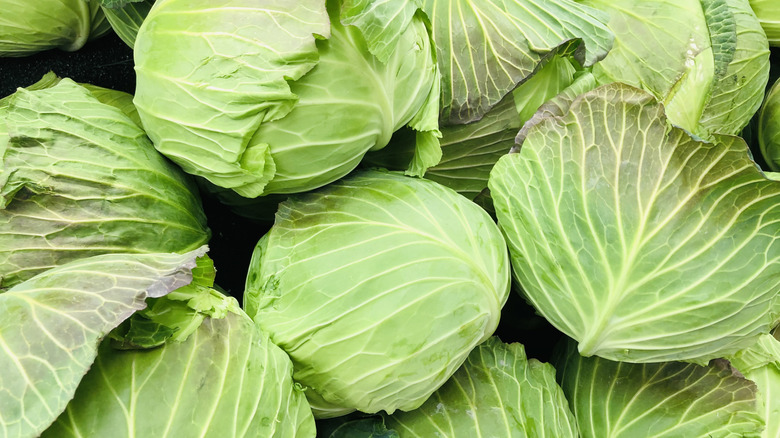
Cabbage has a reputation for causing gas, bloating, and general stomach discomfort. The vegetable is rich in fiber and complex sugars, which are difficult to digest. It also packs in sulfur-containing compounds that release gas when broken down. Fortunately, the way you prepare cabbage can make a big difference in how your stomach reacts to it during digestion. If the leafy green tends to leave your stomach rumbling moments after consuming it, you should try fermenting it first. Not only can fermentation make cabbage easier to digest, it may also unlock extra health benefits along the way.
During fermentation, good bacteria breaks down some of the sugars and compounds responsible for the bloating and gas. This is especially useful for raffinose (one of the complex sugars), which the body struggles to digest because it lacks the enzyme needed to process it fully. Through fermentation, the bacteria do some of that digestive work ahead of time. This helps explain why fermented cabbage products, such as sauerkraut and kimchi, feel gentler on the stomach compared to the raw form of the cruciferous veggie. Fermentation also softens tough fibers, thereby reducing digestive strain. Fermentation also introduces probiotics, including lactic acid bacteria which adds flavor and helps promote a balanced and healthy gut.
Other ways to make cabbage easier on the stomach

If fermented cabbage is not your thing, you can always cook the vegetable to tame its digestive side effects. No need to master how chefs make cabbage exciting or the Japanese way of cooking cabbage to do this. The most basic cooking methods will do. Those include steaming, boiling, and roasting.
Steaming or boiling cabbage softens its fibers and breaks down the sulfur-containing compounds, lowering the chances of your stomach grumbling and expelling gas. However, while steaming preserves the nutritional value of the vegetable, boiling reduces its beneficial components, especially vitamin C. Meanwhile, roasting caramelizes cabbage's natural sugars, altering its flavor while making it less pungent and disruptive to the digestive system. Tip: When cooking cabbage, it's a good idea to pair it with ingredients that support digestion. For instance, adding fresh ginger or turmeric to a cabbage dish will help boost the flavor and make it gentler on your stomach.
It's important to note that these tips and tricks are not foolproof. The chances of you experiencing bloating or flatulence after eating cooked cabbage are never zero, especially if you are consuming large amounts of it in one sitting. It's best to eat a smaller serving if you already have an idea how your stomach typically reacts to cabbage.