

The Ingredient Chocolate Makers Swap For Cocoa Butter
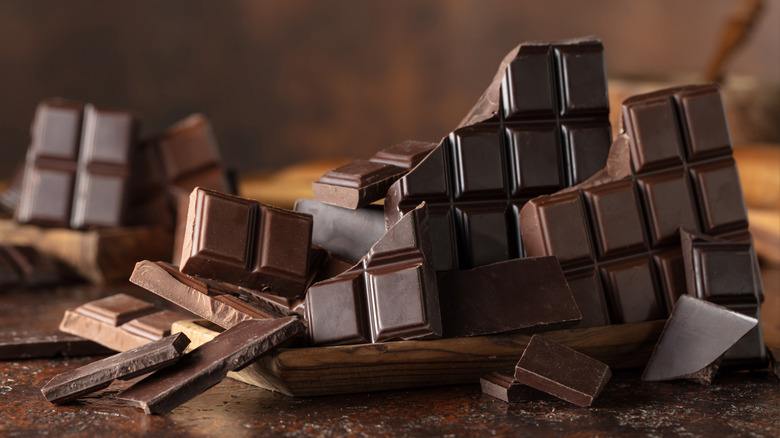
The world of food is not all fun and games — there are legal definitions behind the products we eat, and some of them are very strict. A good example of this is chocolate. For a product to be labeled milk chocolate, it has to have an approved list of ingredients, one of which is cocoa butter. This cacao fruit-derived fat is arguably the sweet's star ingredient, providing much of the iconic taste and texture. However, there are other fats that can mimic cocoa butter, and are much cheaper to use — like palm kernel oil.
Palm kernel oil comes from the seed of the oil palm plant, and differs from palm oil, which is derived from the tree's fruit. It's used in chocolate products all over the world; in the EU and the U.K., chocolate products that contain vegetable oils like palm kernel oil can be labeled as milk chocolate as long as the content doesn't exceed 5%. But in the United States, real chocolate products are not allowed to contain any foreign vegetable fats at all, and if it does, manufacturers must include such language as "chocolate candy," "chocolatey coating," or "chocolate flavor" on its packaging. If you're interested in only eating real chocolate, it's important to check the packaging, even across products from the same brand. Hershey's, for example, sells plenty of real milk chocolate products, but also puts out products labeled as chocolate candy."
Cocoa butter is becoming more expensive
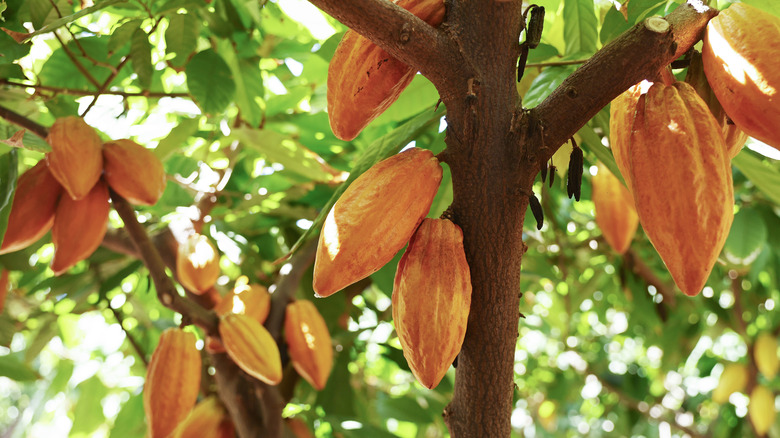
One of the reasons manufacturers are turning to palm oil more recently is because cocoa butter has becoming more expensive. The crop is grown across the cocoa belt" in areas just north and south of the equator, and to thrive, it needs steady rainfall, lots of sunshine, and humid weather. However, recent years have brought unpredictable weather patterns to many of these areas, such as dry periods and heavy rainfall, along with temperatures that are rising above the cacao bean's comfort zone.
As a result, cocoa production has gone down by as much as 40% over the past two years. This shortage naturally drives prices up (though the cost of cocoa has dropped in 2026 after record highs), but to actually solve the problem, they may need to rise even more. There are ways to weather-proof cacao bean trees and boost production even in unstable weather, but farmers need more money to invest in these measures.
To achieve this, both manufacturers and consumers would need to accept higher prices. Turning to vegetable oils could decrease demand for cacao beans and make it harder for farmers to protect their crops in the coming years, resulting in even greater cacao shortages. Some studies have even predicted a worst-case scenario in which cocoa production will end by 2050. But fully adopting palm kernel oil as an alternative has an even more disastrous side: Harvesting palm oil is currently one of the biggest drivers of deforestation, wiping out hundreds of acres to make room for plantations, devastating wildlife habitats, and releasing millions of tons of greenhouse gases.