

For A Focused Caffeine Boost In The Morning, Reach For This Drink (Not Coffee)

When most Americans need a morning jolt or a mid-day pick-me-up, they reach for a cup of coffee. The beloved bean juice is the country's most popular beverage. But these days, coffee isn't the only way Americans are getting their caffeine fix: US matcha sales have soared by 77 percent over the past three years.
While some of the demand is doubtlessly driven by social media frenzy — the drink's vibrant green hue makes it irresistibly Instagrammable — matcha has genuine benefits over coffee. For one, it produces a better buzz. The Takeout talked to Alexander LeRitz, a registered dietitian who works with JM Nutrition, to learn more.
"Matcha does contain caffeine, however, it also contains another compound called L-theanine, an amino acid that is found in tea leaves," explains LeRitz. "L-theanine promotes alpha brain wave activity which means that you have a benefit of feeling uplifted from the caffeine but also more calm and alert due to the L-theanine."
With standard tea, caffeine and L-theanine leach out into the water as the tea steeps. Matcha isn't prepared the same way, though: The finely powdered tea leaves are mixed straight into hot water. Since you're essentially drinking the whole leaf, you get a stronger dose of both compounds. "This results in a much less jittery and more focused effect than what coffee may offer, which is part of why the experience is so different, despite both being caffeinated," LeRitz explains.
The cons of switching to matcha
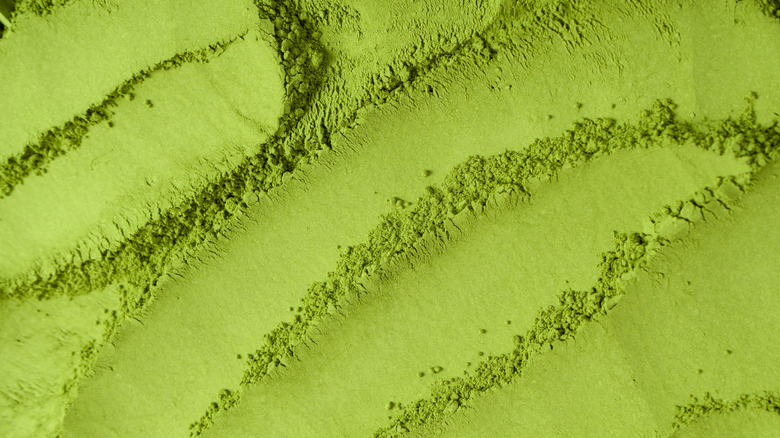
So, should you really swap out your usual cup of coffee for matcha instead? "For those who are particularly sensitive to the effects of coffee and that may feel anxious or wired, matcha can be a genuinely great substitute," says Alexander LeRitz. But, of course, matcha has its downsides too. First and foremost, there's the price: A mere ounce often costs $20 or more, and thanks to the drink's booming popularity in the West, U.S. customers have had to pay more for matcha in recent years.
Beyond cost, though, matcha may not fully replace coffee for everyone. For hard-core caffeine fans, it's important to note that "matcha can vary widely in caffeine content depending on the grade of product and how it is prepared," says LeRitz. "It may not provide a like-for-like caffeine dose."
Like coffee, matcha is also an acquired taste. "Matcha does have a distinct earthy flavor that may take some getting used to," LeRitz admits. Matcha lattes spiked with sugary syrups have made the drink more accessible to folks who wouldn't normally stomach the vegetal taste, but all that sugar could cancel out some of the drink's benefits. After all, matcha's gentle energy boost won't do much good once your blood sugar crashes.
If you don't like the taste of straight matcha, make sure you're preparing your matcha correctly and try experimenting with different brands before you resort to covering the taste with milk and sugar. And if you still can't quit coffee? Consider adding L-theanine to your morning routine in supplement form instead.