

The Fascinating Shared Factor Between Vomit And The Butter In Your Fridge
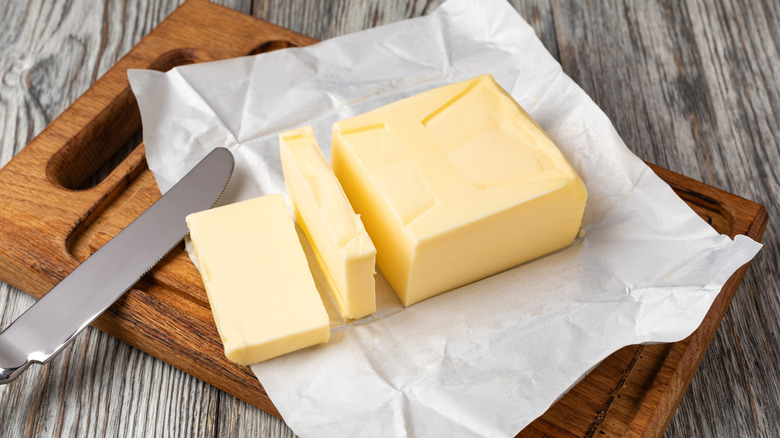
Most people would agree: Butter makes everything taste better. So many foods and recipes can be improved with a bit of butter. Add butter to your popcorn. Slather butter on 3-ingredient biscuits. Use butter for a better béchamel. But it just doesn't seem nearly as appetizing when you know that butter shares certain characteristics and chemical makeup with the contents of your gut. Everything tastes better with ... vomit?
In almost any instance, you want to keep conversations of vomit and cooking ingredients separated as much as possible. And luckily, there usually isn't much overlap. However, butter and vomit actually have quite a lot in common — the link is butyric acid.
Existing in both puke and butter, butyric acid is a short-chain fatty acid. This type of acid is the main ingredient in fat molecules. We all know that butter — no matter what type — is chock full of fat, and it turns out that approximately 3-4% of the fat molecules in butter are butyric acid. In fact, butyric acid was first discovered by the French chemist Michel Eugène Chevreul back in 1814 when some butter went bad. The acid even got its name from the word "butter." And because butyric acid is formed during a fermentation process, it tends to have a rather unpleasant odor. It's what gives rancid butter, sweat, and, yes, vomit their distinctly unforgettable aromas.
Where does butyric acid come from?
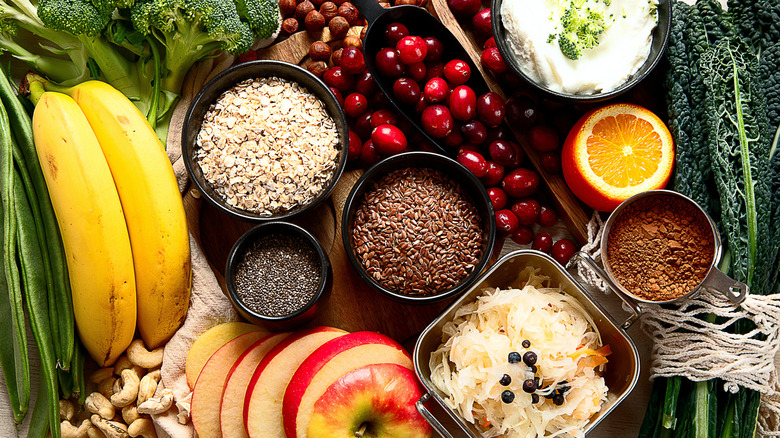
There's considerably more butyric acid in your gut than there is in butter. And that's a good place for it. But how does it get there? One way that butyric acid ends up in your gut is through the foods that you eat — and that goes way beyond butter. Other foods that contain butyric acid include milk (cow, sheep, and goat), sauerkraut, parmesan cheese, red meat, and vegetable oils. This famous fatty acid is also present in good old-fashioned Hershey's chocolate — giving the chocolate that well-known love-it-or-hate-it Hershey tanginess. Yet these foods have only limited amounts of butyric acid — most of the acid that's in your gut was made right there in your gut.
Butyric acid is produced when the helpful bacteria inside your body break down the foods that you eat, releasing the acid as they do. Those hungry bacteria are especially fond of fiber and healthy starches, so eating more of those types of foods will result in a higher production of butyric acid. Starchy, fiber-rich fruits and vegetables, beans and legumes, and whole grains like oat bran are harder for your body to digest on its own, leaving them available for the butyric-producing bacteria to feast on. If you put more of those foods on your plate, it's a surefire way to get your body to create more of the butyric acid that could keep you healthy — and leave the vomit where it belongs.