

What These 13 Plant-Based Meats Are Actually Made Of
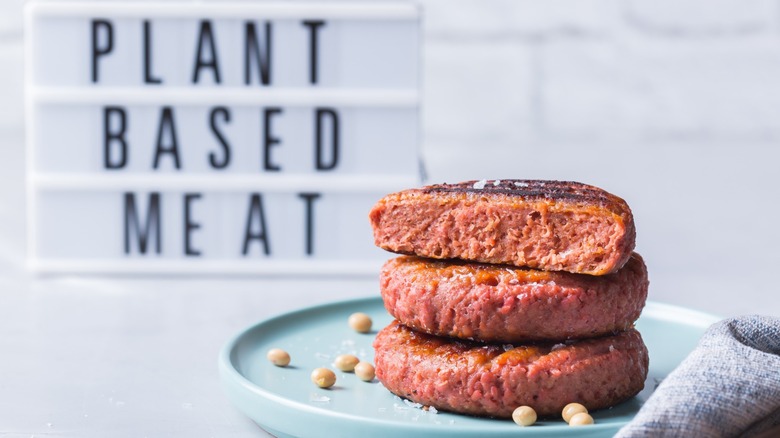
A vegan and a meat-eater walk into a bar. There was a point in time when that would have been an unlikely scenario, at least if both parties were looking to leave equally satisfied with their meals. Meat alternatives used to be limited to veggie sandwiches and bean-based burgers. While those options are tasty in their own right, they don't come close to the array of plant-based meats available today. Now, plant-based meat brands are tapping into not just the meat-free market, but the meat-eating one as well.
Targeting meat-eaters, and even those new to a plant-based lifestyle, means creating meat alternatives that walk the walk, not just talk the talk. Brands like Impossible and Beyond are among the companies making plant-based meats that look, feel, and taste like the real thing. This modern revamp, coupled with increased awareness around the fact that plant-based meats are often more eco-friendly, makes the future of plant-based eating look bright. But how do you get a burger with no animal products in it to mimic the original?
Each brand has its own uniquely crafted recipe, but there are some common factors involved. Mimicking meat requires carefully selected seasonings to achieve the right flavor, binding agents for the perfect texture, and special machinery to get the look on point. We looked at 13 different plant-based meats and peeked behind the label to see how they applied these strategies. From nuggets that spotlight simple ingredients to patties that "bleed," the creativity knows no bounds.
1. Impossible
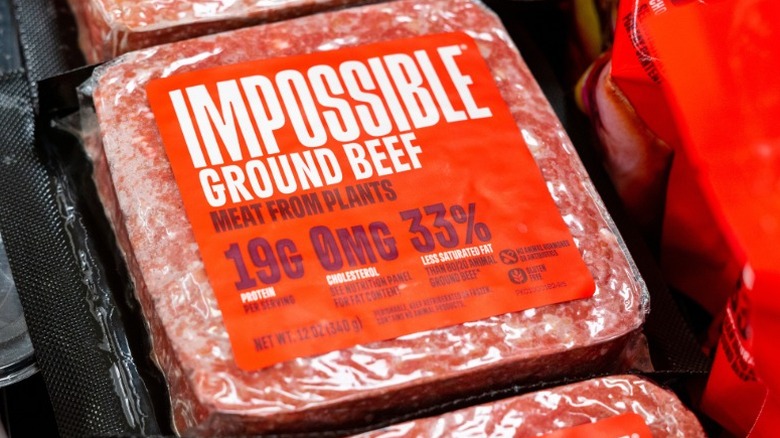
It's impossible to not have heard of the Impossible brand if you've explored plant-based alternatives, and especially if you've tasted Burger King's Impossible Whopper. At this point, even if you've walked into a grocery store looking for actual meat products, you've likely passed a pack of Impossible nuggets in the freezer section or accidentally reached for Impossible ground beef in the meat aisle. Since 2011, the company has been succeeding in its mission to create meaty faux meat with a reduced carbon footprint.
Most Impossible products rely on soy protein as a key ingredient. The beef patties and grounds, in particular, use both soy protein concentrate and soy protein isolate. These ingredients provide the protein you would normally get from the meat, and they also contribute to a chewy, meaty texture. Soy protein is also a good source of fiber and minerals.
Another essential component in these impossibly meaty products is called soy leghemoglobin. This is a relatively new, genetically engineered ingredient used for the heme it contains. In animal meat, the protein myoglobin is what carries the iron molecule, heme, which gives meat its signature flavor and cooking characteristics. Impossible created a yeast that produces enough soy leghemoglobin to match its product output. You have this to thank for your plant-based patty's uncanny juiciness and sear.
2. Beyond
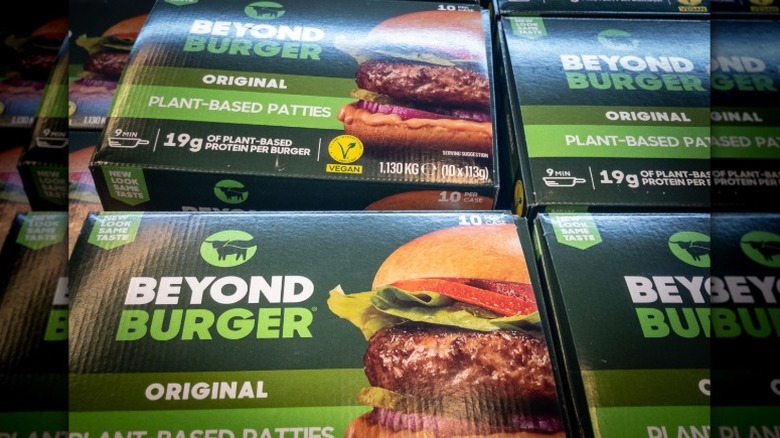
Before there was Impossible, there was Beyond Meat. The company was founded in 2009 with a goal similar to that of its soon-to-come competitor: Make realistic plant-based meat that is better for the environment. Since then, Beyond has created plant-based products that impress even omnivores, including a meatless jerky that is shockingly good. Its ingredients share some similarities with Impossible's. For example, both companies use methylcellulose as a binder and to achieve a meaty chew. They both also include fats via various oils that improve flavor and give the mock meat that signature sizzle.
However, the protein of choice is where these two product lines diverge. While Impossible opts for soy, Beyond goes the route of pea protein. Derived from yellow peas, this protein is hypoallergenic and considered a complete protein, meaning it contains all nine essential amino acids. But Beyond lives up to its name, going beyond just one source of protein. It also turns to red lentils, faba beans, and brown rice for an extra boost.
To achieve the appearance of meat, Beyond takes a less complex route than Impossible's heme-extracting methods. Instead, the brand relies on red-hued fruits and veggies like beets and pomegranates to tinge its products just the right shade.
3. Gardein
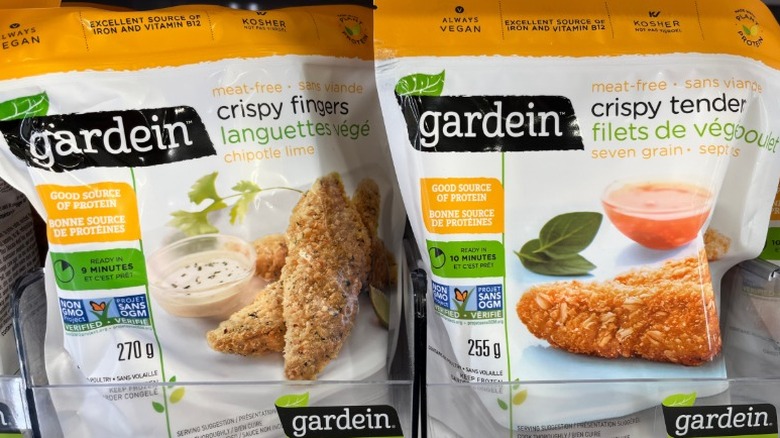
With its leafy motif and cleverly modified product names, Gardein is not trying to hide its plant-based nature. The brand produces a variety of meatless products that mimic real meat, ranging from chicken and beef to fish filets. The base of most of Gardein's vegetarian products is textured soy protein, also known as TSP. This protein comes from defatted soy flour, which goes through a process of heating and pressurization before being dried or baked. You can actually buy bags of TSP at grocery stores and cook up your own meat-free creations at home — or choose Gardein's products, which use the texturized soy protein to (as suggested by the name) add a meaty texture.
Vital wheat gluten is another key ingredient that Gardein utilizes. This ingredient is not new by any means. In fact, bakers have been using it for years to achieve elastic doughs and high-rising breads. What the plant-based meat industry found is that vital wheat gluten doesn't just give breads a boost. It works wonders to build better plant-based meat alternatives by binding products together, providing a meaty chew, and trapping water so that each bite is juicier than the last.
4. Quorn
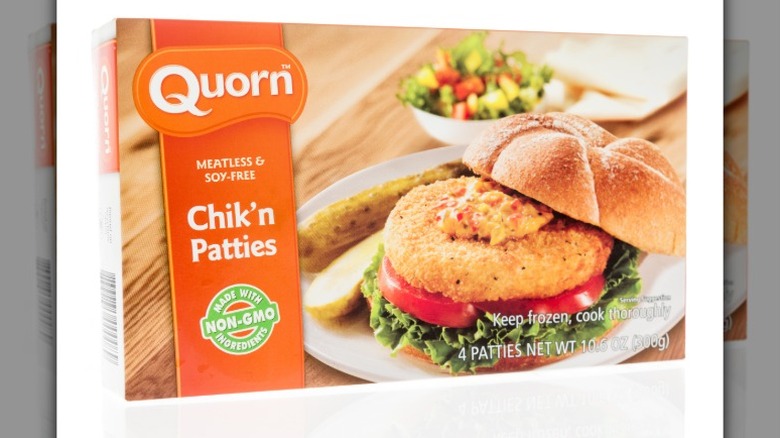
The future of food is fungus, and Quorn is leading the way with its fungi-based product line. The star of the show is an ingredient called mycoprotein. This is a protein derived from a fungus known as Fusarium venenatum, which undergoes a process of fermentation to grow the mycoprotein. It contains all nine essential amino acids and has a protein value comparable to that of dairy milk. Not only does it give Quorn products their unique taste and texture, but it also boasts a significantly reduced carbon footprint when compared to standard meats. In fact, the Carbon Trust even certified Quorn's impact in 2012.
Keep in mind when buying Quorn's meat-free alternatives, though, that many aren't suitable for vegans. A good number of its meatless patties, nuggets, and grounds contain egg whites. Eggs are frequently used to bind standard burgers together, and they serve a similar purpose in these meat-free varieties. Some of Quorn's alternatives also contain milk protein, so if you are a vegan consumer, make sure to read the labels carefully.
5. MorningStar Farms
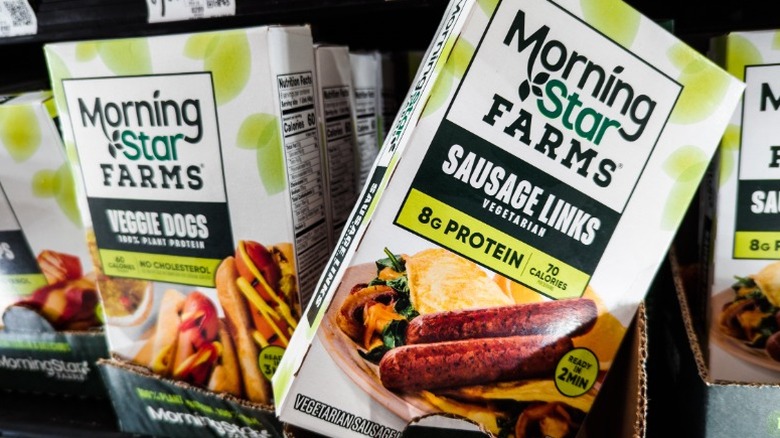
If variety is what you're craving, MorningStar Farms has you covered. This brand churns out almost every kind of plant-based meat you can imagine. You have the classic beef or chicken-style patties and nuggets, but MorningStar also crafts meatless bacon strips, corn dogs, and even pepperoni pizza bites. The protein source of choice varies slightly across these products. Most use soy protein, but the veggie hot dogs and corn dogs utilize pea protein instead.
Much like with Quorn's products, vegans should take care to read the labels before buying because not all of MorningStar's offerings are vegan. The classic beef-style patties contain egg whites, for instance. You may also notice an ingredient called calcium caseinate, which is not vegan-friendly. This is a protein derived from the casein present in dairy milk that is used in nutritional supplements and in food products as a stabilizer or thickener.
Other ingredients you'll find while perusing MorningStar's labels are gums, namely xanthan gum. These types of gums are used as thickeners and stabilizers, not just in plant-based meats, but in sauces, ice creams, and baked goods. Perhaps unexpectedly, some of MorningStar's products also contain food dyes. The original bacon strips once contained red dye No. 3, but that seems to have been replaced with red 40 and other artificial colorings like blue 1. These dyes are used to achieve a more authentic, meat-like appearance.
6. Tofurky
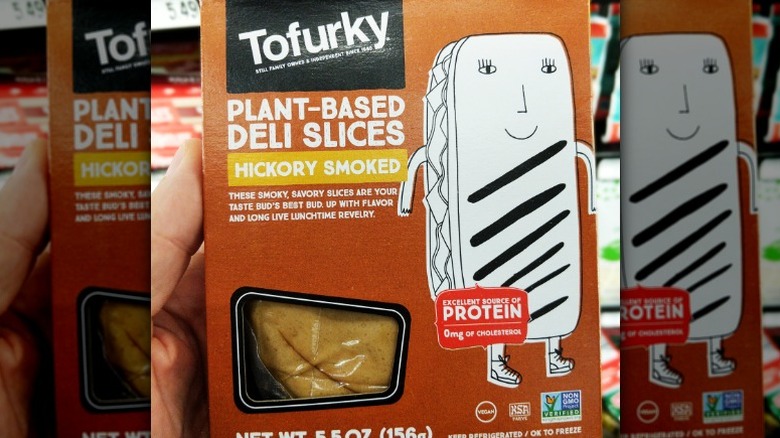
This next brand is about as classic as you can get for plant-based alternatives. If you've ever attended a vegan Thanksgiving dinner, you can probably thank Tofurky for the roast that held center stage on the table. That roast got its start in 1995 as the Tofurky Feast, and even got a shout-out from a vegan zombie on "The X-Files." Since then, its product catalog has expanded from plant-based roasts to deli slices, pepperoni, and more.
The main ingredient in Tofurky's products is, of course, tofu. Despite its popularity in vegan recipes and products, tofu hasn't always been just a meat alternative. Tofu has been enjoyed for centuries in countries throughout East Asia in all of its forms. Many Tofurky products, like the chicken-style pieces and roasts, contain vital wheat gluten in addition to tofu to build a better texture. If you opt for the brand's deli slices instead, you'll notice an ingredient called carrageenan, a type of thickening agent derived from algae. Though it's become controversial due to its potential to cause inflammation, carrageenan can be found in many preserved meats and dairy products.
If you're wondering how Tofurky captured an elusive gas to create "natural smoke flavor," it's simpler than it seems. It is made by burning wood and condensing the smoke. This flavoring channels the smoky flavor of meat, and if you can get your hands on a bottle, this same sort of liquid smoke will give a bowl of chili a kick of flavor, too.
7. Field Roast
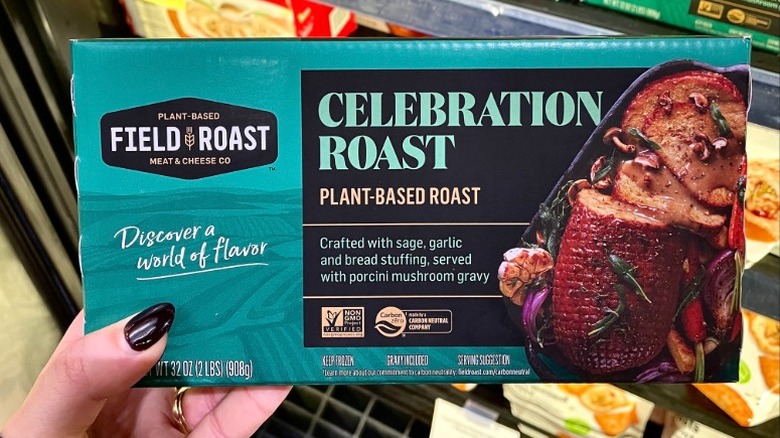
Some diners may have experienced what Field Roast has to offer without even realizing it. When Portillo's launched a vegan hot dog, the fast-casual chain known for its Chicago-style dogs did so in collaboration with Field Roast. Along with classic stadium-style dogs, the company produces plant-based sausages in flavors like smoked apple with sage, and Italian garlic and fennel. It also makes meat-free burgers, crumbles, and more. Unlike other brands on this list, Field Roast's products use vital wheat gluten — not as a supplementary ingredient but as the main one.
This vital wheat gluten contains no starches left from the wheat flour, so it is a pure protein. Field Roast products also contain wheat protein isolate, which can have a 90% protein content when dry. Some of Field Roast's plant-based alternatives list pea protein among their ingredients, and vegetables are common additions. Ingredients like carrots, celery, mushrooms, and tomato paste work to build a complex flavor profile and add texture to each bite.
Another ingredient that Field Roast uses might garner a double take from shoppers. Palm oil is listed in a few of the brand's products and is an ingredient that has been associated with deforestation and other negative environmental impacts. However, according to Field Roast's website, the palm oil it uses is sourced from a family-owned company that produces organic, sustainable oil.
8. Daring
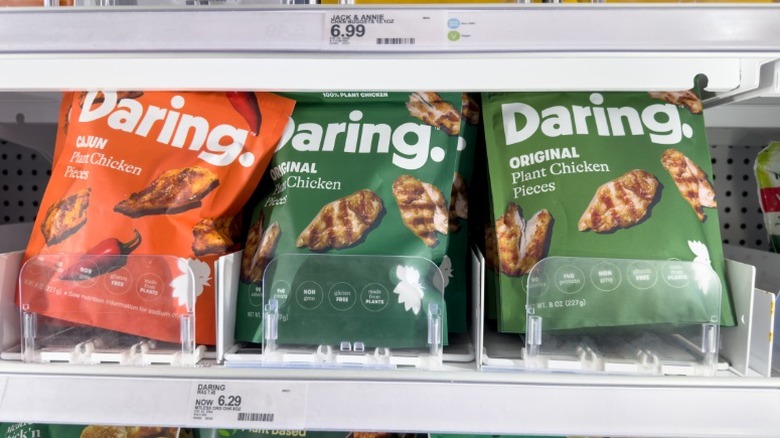
Making plant-based meat alternatives in a meat-heavy market is indeed a daring feat. Daring is one company ready to take on the challenge, and do it a little differently. The brand focuses specifically on crafting chicken alternatives, and is dedicated to cutting down the ingredient list by focusing on simple components. This means Daring products contain no artificial flavors or GMOs. Each does contain soy protein, specifically soy protein concentrate, which has at least 65% protein content when dry.
Daring chicken contains anywhere from 9 to 14 grams of protein per serving, depending on the specific variety consumed. The brand's original flavor of plant-based chicken has a very short list of ingredients: The soy protein is complemented by vegetable oil (sunflower or canola) and simple spices like paprika and nutmeg. The breaded varieties, meanwhile, have only a few additions. The original breaded chicken pieces use corn and potato flour, along with cornstarch, to form a crispy outer coating. This product also contains xanthan gum, but if you compare it to other meat alternatives on this list, you'll see that Daring does stay true to its mission of shortening labels.
9. LightLife
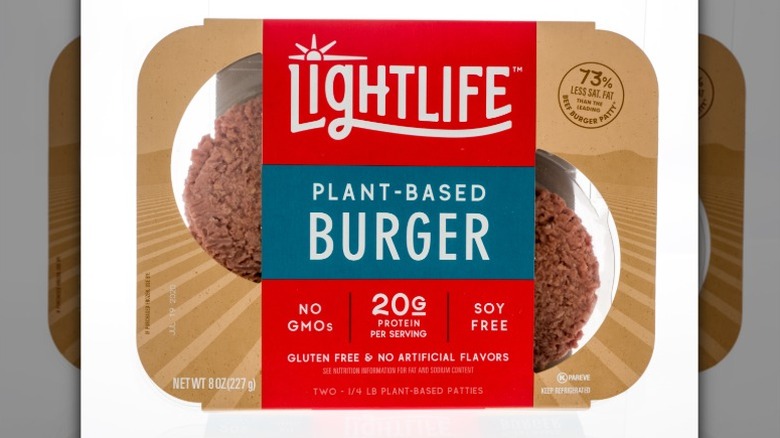
LightLife began making tempeh in 1979, operating out of a repurposed car wash. Since then, it's gone on to produce a wide range of meat alternatives, including its best-selling, plant-based smart dogs. Today it remains a company that prides itself on being non-GMO, and that aims for carbon neutrality sooner rather than later.
LightLife products use soy as the protein source, and derive their colors from natural sources like paprika, red rice flour, and vegetable juice. The importance of color in plant-based meats shouldn't be downplayed. A food's coloring reportedly impacts consumer preference, as it contributes to what looks delicious, and what decidedly does not. The red hue of LightLife's ingredients helps to attract omnivores to the products, and convince shoppers to give them a try because they look familiar and thus more appetizing.
Some additional ingredients you might find in LightLife's products are gums like xanthan gum and gum acacia. Xanthan gum is derived from fermented sugar, while acacia gum comes from acacia trees and was used by ancient civilizations in both medicines and foods. Acacia gum is approved by the FDA as a good source of fiber, and it has other health benefits as well. Both gums are often used as thickening and stabilizing agents.
10. Meati
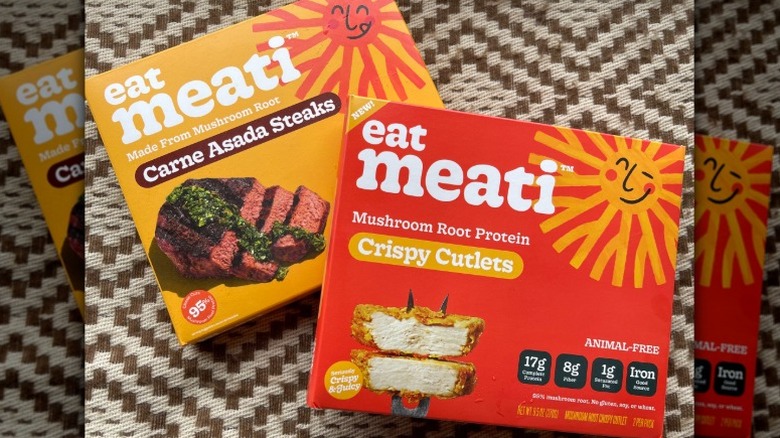
When it comes to combining innovation with simplicity, Meati takes the cake. According to its mission statement, its focus is on prioritizing real ingredients and eliminating additives such as binding agents. What makes up most of the brand's products is something called mycelium, which is essentially the root structure of fungi. Mycelium transports nutrients to fungus like the mushrooms we all love (or hate).
The specific species of fungi from which Meati derives its mycelium is called Neurospora crassa. It was chosen for its efficient growth and high nutritional value. Meati cultivates its own mycelium in stainless steel tanks, feeding its development with simple fuel like water, sugar, and nutrients that mimic an outdoor environment. The filaments that make up mycelium's structure come together to mimic the texture of meat without much human interference.
Meati's classic cutlet is about as simple as it gets. The two ingredients are mycelium and salt, nothing else. Other varieties like the steak have the addition of oat fiber, "natural flavors," and coloring agents like vegetable juice and lycopene, which is a natural pigment found in tomatoes. The sparse ingredients list makes these meat alternatives a blank canvas that consumers can riff upon to their hearts' desire, but it also garners mixed reviews. Some appreciate the taste and simplicity, while others find it too bland to enjoy.
11. Karana
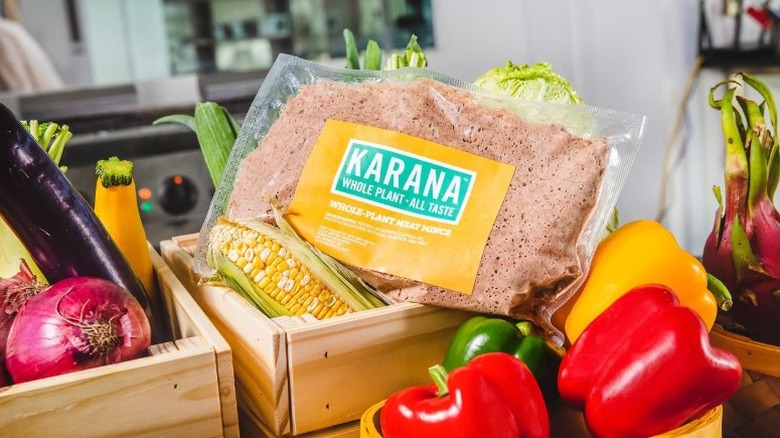
Most vegetarians and vegans are not strangers to getting creative in the kitchen. If you follow a plant-based diet, you've probably used all kinds of ingredients to mimic meat, ranging from beans and tofu to store-bought soy curls. You may have even learned how to cook jackfruit into a flavorful dish akin to pulled pork. Jackfruit is a tropical tree fruit that is filled with dietary fiber and vitamins, so it's not only tasty but also quite nutritious. However, preparing jackfruit at home from scratch can be intimidating. If you're wary of graduating from tofu to jackfruit dishes, you can buy ready-made jackfruit-based meat alternatives like those from Karana.
Karana chose jackfruit as its star ingredient for its sustainability and nutritional value. It is a crop that doesn't require annual replanting and has high yields. Karana specifically uses young jackfruit in its plant-based meats. This unripened jackfruit has a more neutral taste as it's not yet sweet, and a firmer, fibrous texture that more closely mimics meat. Other ingredients in Karana's products include pea protein, methylcellulose for thickening, yeast extract, canola oil, and vegetable juices for color.
12. Dr. Praeger's
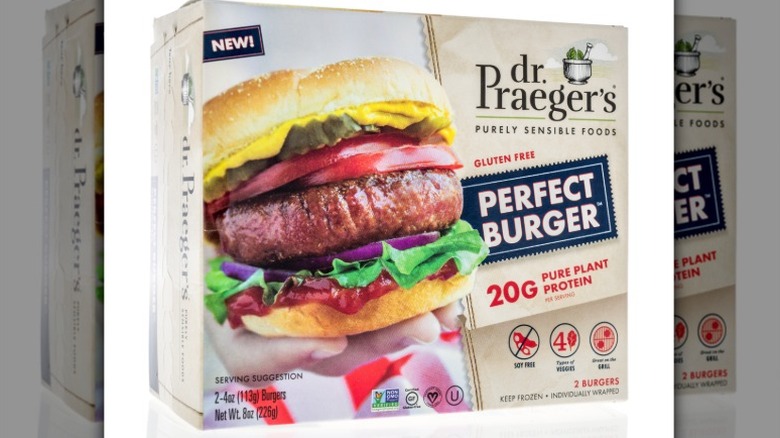
Dr. Praeger's doesn't agree with other brands' practice of hiding the vegetables in plant-based products. Instead, the company — which was founded by two heart surgeons trying to create healthier options — brings out the best qualities of the veggies it uses in order to make them accessible to consumers young and old. At the same time, the brand does hide behind alternative labels every once in a while. You may be surprised to learn, for example, that Aldi's frozen spinach bites are actually Dr. Praeger's in disguise.
When Dr. Praeger's is not making kids' snacks, it produces a range of meat-free patties. Some — like the sweet potato, super greens, and mushroom risotto varieties — are clearly veggie-forward. Cooked brown rice, beans, and other whole food ingredients give these patties structure and flavor. Other options look a little more like a classic burger patty, though the Dr. Praeger's packaging still proudly advertises the veggies within.
Dr. Praeger's Grillhouse Burger uses textured soy protein, while the Drive-Thru Burger and Perfect Burger both opt for pea protein. Oat fiber — which is found in the oat hull, processed to an edible form, and used as a thickener, texture enhancer, and to prolong shelf life — is used in all three. Oat fiber has high levels of soluble fiber, so these patties might just come doctor recommended.
13. Abbot's
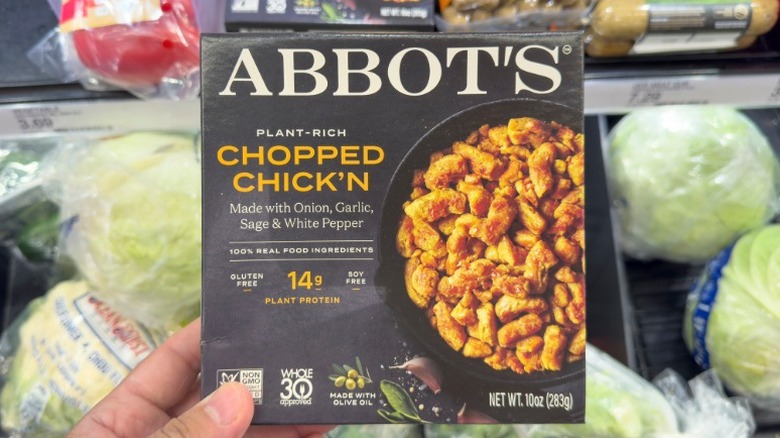
Abbot's is another company that focuses on using whole food ingredients. While Abbot's ingredients lists might be longer than those of some other brands on this list, they contain little to no additives. In fact, Abbot's products are all soy-free, gum-free, and methylcellulose-free. There are also no artificial flavorings in these meat alternatives. The protein of choice here is pea protein, which is supplemented in products like the Classic Smokehouse Burger with ingredients like chickpea flour, mushrooms, sunflower seeds, and oats for texture and structure.
The spices used in each product vary based on the intended flavor profile. Those like Abbot's chopped imitation chicken contain nutrient-dense nutritional yeast for a cheesy flavor. This is an inactive yeast that can be purchased in bags at the store and used in cooked dishes or to top off a bucket of vegan popcorn. Abbot's likely uses it to give its meat alternatives a rich, umami flavor. Other flavor boosters the company draws upon include aromatic herbs like coriander, smoky spices like paprika, and tart vinegars. Altogether, the result is a meat alternative that isn't shy about being plant-based — and that doesn't shy away from flavor.