

The Biggest Mistakes You're Making That'll Destroy Enameled Cast Iron Pans
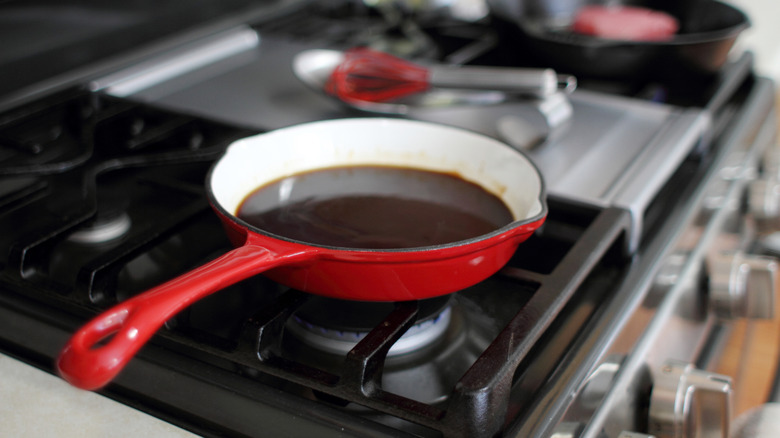
Classic cast iron pans are a cult favorite, and for good reason. But cast iron, in its bare-naked form, is a demanding and high-maintenance material. Enameled cast iron helps bridge the gap. The pans can handle acidic ingredients and don't need to be seasoned. You can even toss some of them in the dishwasher. Plus, they come in pretty colors. The pans have their own set of rules, though: Enameled pans are prone to chips and cracks, so they should be treated with care.
Overheating an empty pan is a big blunder, Sarah Hill, the recipe developer behind Real Food with Sarah, told The Takeout. "High temps can cause enamel discoloration or even cracking." While it's perfectly fine — even preferable — to add oil to a plain cast iron once it's hot enough, different rules apply to enameled pans. "Always add oil or food before it gets too hot, and preheat gradually," Hill said. You shouldn't heat it too quickly, but you shouldn't cool it too quickly, either: Glass can shatter under rapid temperature changes, so don't run a hot pan under cold water.
Food blogger and television personality Megan Keno spoke to us and recommended treating enameled cast iron with care, whether you're actively using it or not. Rough treatment of the glass enamel coating can do a lot of damage. "Using improper tools will do wear over the long term, but the other thing that will do damage is improper storage," she said. "Because these [pans] are heavy and can bang around when loading them into the cupboards, I recommend placing paper towels or paper coffee filters in between your enameled cast iron if you need to stack them."
Why enameled cast iron needs special care
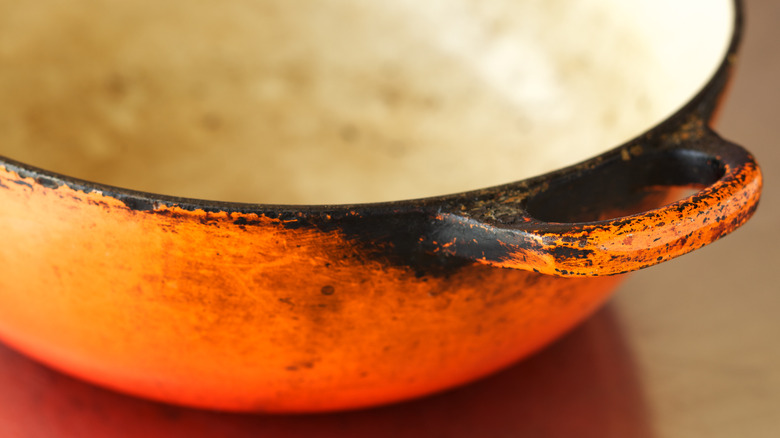
Standard cast iron pans can theoretically last centuries. As long as they don't break, they can recover from all kinds of use. You can restore cast iron that's been through the dishwasher and bring rusty pans back to their former glory with a little elbow (and bacon) grease. Enameled cast iron is another story. While you can clean a stained enameled pan, chips and cracks are difficult to repair — and brands like Staub and Le Creuset don't come cheap.
Remember, the enamel on your cast iron is made from glass. Treat it accordingly. Avoid banging utensils on the edge of your enameled pan, and avoid metal utensils entirely. If the edge does chip, you can keep using the pan. Rub the spot with oil to prevent rust, just like you would with standard cast iron. The same goes for any chips on the outside. Stop using the pan if the enamel cracks or chips on the inside, though. The chip will likely keep getting bigger, which could mean glass shards in your food. Reach out to the manufacturer instead: Many enameled cast iron pans come with generous warranties.