

11 Tips For Smart Online Grocery Shopping

The promise was to make things easier. And, while online grocery shopping has in many ways made things simpler, there are also pitfalls to having every little thing only a finger tap away. As many of us are finding out, it's surprisingly easy to overspend and under-plan from the comfort of your armchair at home. It's not all doom and gloom, though. The same features that make online grocery shopping convenient can be used to your advantage. The trick is knowing how.
With this is mind, we sought out experts from a range of fields. From Amy Shapiro, MS, RD, CDN, and lead nutritionist at ButcherBox to Melanie Marcus, MA, RD, trained chef and Nutrition and Wellness Manager at Dole Food Company, we discovered online shopping habits that have the potential to derail any health or savings journey. Carlyne Remedios, Registered Dietitian at JM Nutrition along with Kristen Kuminski, RD, CDN, a specialist in metabolic health and nutrition at The Rx Index, helped us break down the ideal online shopping process into simpler steps. Avery Zenker, MAN, RD at MyCrohnsandColitisTeam, brought a nutritionist's prespective to the specific ways online shopping changes what we choose to buy and what we should ignore. And, finally, Melissa Cid, consumer savings expert at MySavings.com, and Gabriele Vitke, Product Marketing Team Lead at Decodo, rounded out our list of how to shop smarter and play the system to your advantage.
1. Shop your kitchen before you shop online
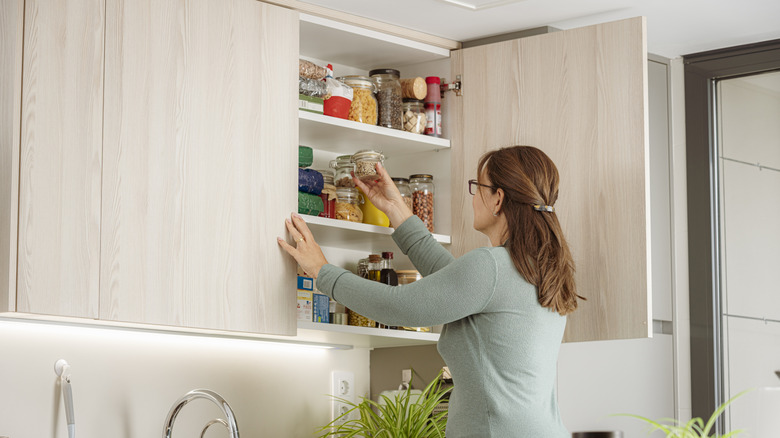
Before you even open any online grocery app, there's something you need to check off your list.
Amy Shapiro calls it the freezer-first approach. When you sit down to plan your week's meals (and if you are not doing that, then maybe that's where you should start), she advises us to first open the freezer to check to what is already available in-house. Don't make a move online unless you have a clear idea of what you are working with.
Carlyne Remedios takes it a step further and asks for a full kitchen sweep before any shopping session. Check your fridge, freezer, and pantry for what you have (there's probably a dinner already hiding in there). There may be items that are nearing expiry, or many that have been relegated to the back of a shelf. Her simple trick is to bring those items to eye level so they're visible and get used first. For her, this small habit goes a long way toward reducing food waste and preventing duplicate purchases. Kristen Kuminski goes so far as to put a time on it. "A five-minute check before you open the app cuts duplicate purchases significantly," she says. Avery Zenker flags substitutions as something shoppers rarely think about until it's too late. When a platform substitutes an item, it might not fit into your dietary needs and preferences so, manage your substitution settings accordingly before you shop, not after.
2. Always shop with a list
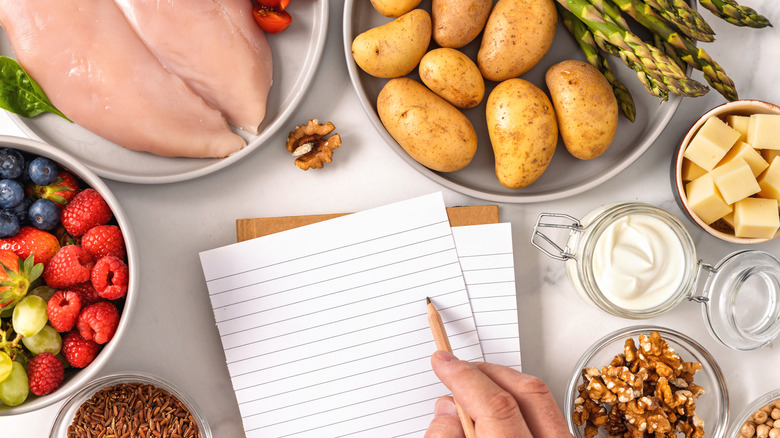
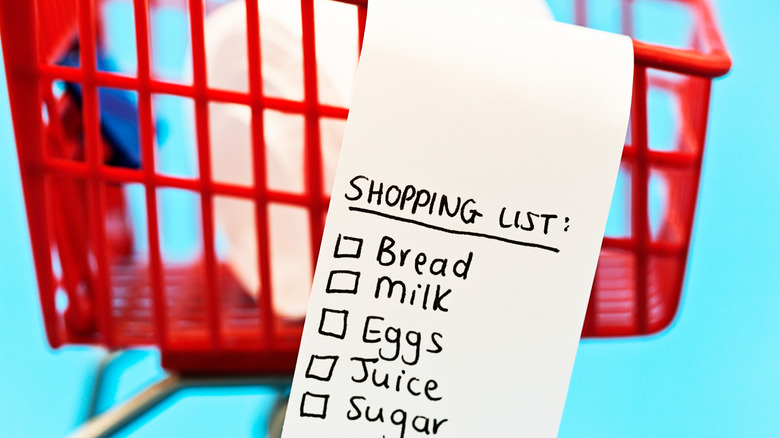
If you love making lists (especially shopping lists), you are already ahead in this race. For others who prefer to wing it, our experts have the numbers to convince you to change your approach. Melanie Marcus helped create and administer a 2024 national survey on America's grocery shopping habits and indicates that only 56% of respondents said they regularly shop with a grocery list, yet close to eight in ten of those who do, say they are less likely to overspend when they have one. "Since shopping online is easier than in-store shopping, it's more important to keep a list by the computer when buying food and groceries," Marcus reiterates.
One huge reason for having a list (and sticking to it) is pop-ups. For online marketers, impulse buying is what gets the sales pushed even further. When you see personalized suggestions or promotions, it becomes easier to veer off track from your intentions. Marcus also notes that impulse purchases, whether online or in-store, tend to be nutritionally negative ones. No surprises there. There's another subtler risk worth building your list around. Avery Zenker points out that physical grocery stores are deliberately designed with produce first, but online grocery store apps remove these visual cues entirely. Many times, you need to actively search for the produce you need. A well-built list that explicitly includes your fruits and vegetables ensures you are working with your health goals, rather than with the app's strategy.
3. Never shop hungry, tired, or stressed

Whether you are shopping online for food or clothes, your state of mind reflects your shopping strategy. And, no one knows this better than the people behind the apps. Melanie Marcus points to hard numbers from Dole's 2024 national shopping survey to prove this point. She indicates that people who shop on an empty stomach spend an average of $26 more per trip. Close to six in ten respondents said they were more likely to deviate from their health goals when shopping hungry.
But, hunger is only one of the triggers worth watching. Carlyne Remedios flags tiredness and stress as equally compromising states. Ones that can significantly increase the likelihood of impulse purchases. She doesn't mince her words when it comes to her recommendation: If you're not in the right headspace, don't open the app. If you find yourself online and are tempted by something that wasn't on your list, simply move it to a "save for later" section. Revisit it again before checkout and most of the time, that pause is enough to break the impulse.
4. Shop by meal
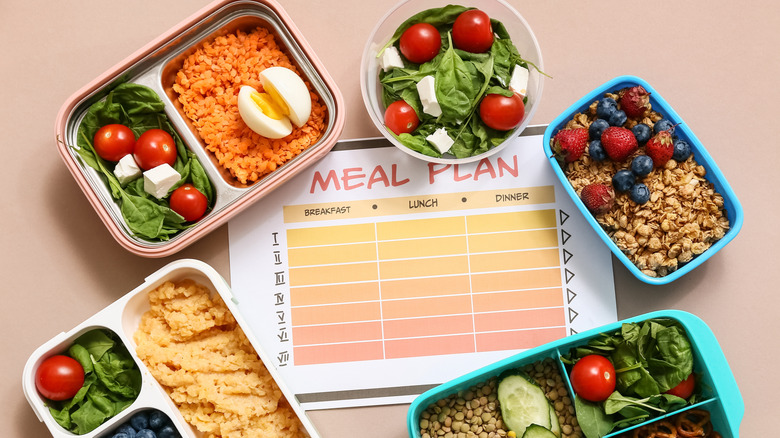
Kristen Kuminski is a strong believer that the next tip makes all the difference between a grocery cart that optimizes versus one that wastes. The habit she recommends: Planning your meals before you open the app, not while you're in it. "Shop by meal, not by ingredient," she says. Before you even start adding items to your cart, make sure you have thought out three or four meals in advance. Then, buy only what those meals actually need. Vague lists like "some vegetables," are, as she puts it, how produce dies in the crisper drawer.
Amy Shapiro takes this a step further with her framework that has the power to turn meal planning into a natural (and healthy) framework. Instead of approaching your weekly shop as a free for all where items are added without any real forethought, she recommends you base your list around a 3-3-2-2-1 method that puts proteins first and lets everything else follow. "Anchor your list around protein," she says, and the rest of the cart builds itself. This keeps decision-making simple, minimizes waste, and removes careless browsing that leads to items you might never use. So what does a well-planned cart actually look like? Avery Zenker recommends you think of your cart the way you'd think of your plate. "A balanced cart prioritizes whole foods and limits ultra-processed foods," she says.
5. Be strategic with perishables and bulk buys
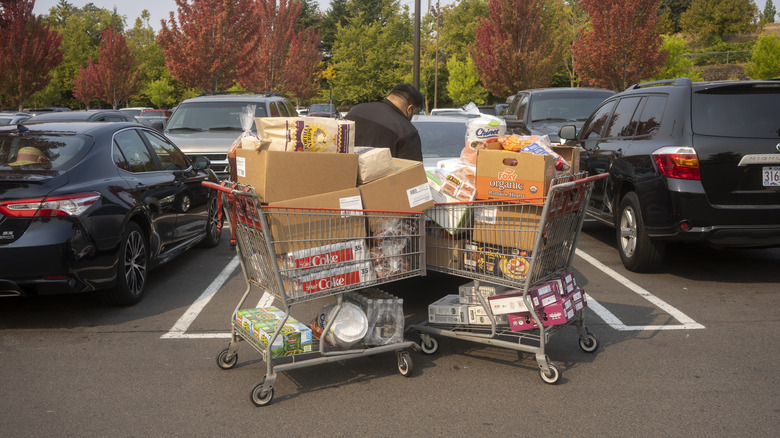
Buying in bulk can feel like a win and it can be, but only if you've thought it through. Carlyne Remedios explains her rationale. Before you add to cart, she has a simple test for any bulk purchase: " What will you cook? How will you portion it? What will you freeze and when?" Without a clear answer to all these, she says, bulk purchases easily become waste purchases. If half of your bulk-buying ends up in the bin a few weeks from now, any savings on paper disappear.
Remedios flags highly perishable items,such as salad greens, berries, or soft vegetables, as the category where online shoppers most consistently overbuy. Odds are if you shop in person, you will pick up a bag or a punnet and move on. Online, it is easier to lose track of size and quantity. Her rule includes buying only what you know you'll use within the next few days. Amy Shapiro has a smarter long-term strategy if you insist on bulk buying. Rather than overstocking fresh items that can lead to waste, she recommends choosing high-quality frozen proteins and vegetables that extend shelf life without sacrificing nutrition. Stocking the freezer deliberately means you always have a reliable foundation for the week without the pressure of using everything before it goes bad.
6. Stop letting the algorithm shop for you

Every grocery app has the same goal: To get more items into your cart than you planned for. Gabriele Vitke is unambiguous about how it works. Recommendation algorithms serve "frequently bought together" prompts and personalized suggestions based on your purchase history. And, she is here to tell us that they are not there to help you eat well or spend wisely! These exist to convert browsing into buying. Basically, you are fighting a system, she says, that is specifically designed to turn hesitation into a purchase.
Avery Zenker adds a nuance worth noting: Some online grocery shops make it genuinely easier to shop for healthy meals thanks to better filtering and clearer nutritional information. Therefore, the platform you choose matters, and it's worth paying attention to whether your preferred app is working with your intentions or against them.
Carlyne Remedios confirms that filtering categories based on your list rather than browsing through multiple sections is the best way to shop smart. Avoid "recommended for you" and "you might like" sections entirely. Her rule is simple: If it's not on your list, it doesn't go in your cart. Melissa Cid points to one genuine advantage online shopping has over in-store: You're not being physically steered. "You're not impulse buying snacks at checkout or getting pulled in by displays you didn't plan for," she says. But, that advantage only holds if you treat the app like a list to execute, not a store to browse.
7. Understand dynamic pricing and how to spot real deals

When you discover a crossed-out price sitting next to a lower number, it's natural to feel like you are getting a better deal. But, let's take a pause, as more often than not, it's rarely the savings you were hoping for. Gabriele Vitke has the data to back up her skepticism. Her team's Dynamic Pricing Index tracked over 542,000 price changes across U.S. retailers alone. "Prices on these platforms change constantly," she says, "and the crossed-out 'was' price next to a lower one creates artificial urgency."
Dynamic pricing, you may be surprised to know is the underlying operating model for most online grocery retailers. This is not to say that genuine savings do not exist, but, they're time-sensitive and require attention rather than assumption. When shopping, you need to be aware that a price that looks low today may have been lower yesterday and could be even lower next week.
8. Time your shop for the best prices

When you shop matters almost as much as what you buy. Gabriele Vitke, during her research, discovered clear and consistent patterns regarding when prices drop. No surprises, these directly co-relate to consumer behaviour. On days when online traffic is low, platforms tend to push orders by lowering prices as compared to high-demand days and surge pricing. It also comes down to which retailer you are engaging with. Walmart, Kroger, Publix, and even Amazon, all show their deepest discounts on different days. On this front, consistently shopping with one retailer will help you optimize your online grocery shopping days accordingly.
The time of day also matters, and it runs in the opposite direction to most people's habits. Late-night mobile browsing — the type where you are scrolling mindlessly through your grocery app on a Sunday night — is exactly the time when you tend to make the most indulgent decisions. And, make no mistake, platforms are built to capitalize on this. This reduced impulse control and the frictionless convenience of mobile checkout makes night shopping one of the most expensive habits an online grocery or any shopper, for that matter, can have.
9. Stack your savings: Coupons and cashbacks

Online grocery shopping is not completely out to get you. Many apps come with a savings toolkit that most people never fully use or are not even aware of. Melissa Cid breaks it down into a simple pre-shop checklist. First, check whether the platform is offering a first-time promo code. It's worth looking into, as these are rarely prominently displayed. Then start adding items (as per your pre-made list), and finally, cross-check your list against cashback platforms. A lot of these savings stack, she says, but you have to actually look for them.
Delivery fees can also be manipulated to your advantage. Cid points out that fees vary significantly depending on when you schedule your slot. Maybe picking a less popular time can reduce the fee by a few dollars or eliminate it entirely. It's a small adjustment, but could result in consistent savings.
That said, Gabriele Vitke urges shoppers to use cashback and loyalty tools with awareness. The business model behind these schemes depends on you spending more overall. "The moment you start building your shopping list around what offers rewards rather than what you actually need," she says, "the scheme is working for the retailer, not for you."
10. Watch the hidden costs that inflate your bill

When shopping for groceries online, your final sticker price can often come as a shock unless you are aware of how eCommerce platforms operate. According to Gabriele Vitke, free delivery threshold is one of the most effective nudges built into online grocery platforms. "Platforms set a minimum spend for free delivery, and suddenly you're adding items to avoid a fee rather than because you need them," she says. The result is a cart that costs more than you accounted for.
Then there's the psychology of getting a "deal". When you come across a sticker with a "was" price sitting next to a lower one, you can easily fall for the trap of once again adding on more than you budgeted for. To counter this, Vitke has a three-point rule for reading prices online: Always check the unit price rather than the headline figure. A deal on a smaller pack is often more expensive per kilo than the full-sized product at a regular price. Treat "was" prices with healthy skepticism. And, finally, "a 30-second cross-check before you pay for your basket," she says, "is the simplest habit that actually saves money," she states. Carlyne Remedios recommends avoiding auto-saving your card details and taking a deliberate pause to review your cart before paying. Melissa Cid agrees with this and advises: "Seeing the total before checking out lets me make any necessary adjustments to avoid overspending."
11. Build a repeatable weekly system
Every tip we have received so far, works better when it's part of a system rather than a one-time fix. According to our experts, shoppers who consistently spend less, waste less, and eat better aren't doing anything dramatically different. What they do have going for them is a repeatable rhythm that removes the guesswork from the weekly shop.
For Kristen Kuminski, this means starting with a standing cart. Most grocery platforms allow you to save a recurring order or a favourites list and she urges you to use this feature regularly. "It removes the browsing that leads to impulse buying and food that never gets used," she says. Amy Shapiro adds that "having a dependable source of high-quality meat, poultry, or seafood on hand reduces the urge to stockpile perishable items that may go to waste," she says. Carlyne Remedios closes the loop with the habit that ties the whole system together: The "use first" list. Alongside your standing cart and weekly additions, keep a short note of ingredients that need to be used up first. That half bag of spinach in your refrigerator or those leftover grains — shop to complement those items, not around them. A system that uses what it buys is the only system worth keeping.