

Aldi Is Cutting 44 More Ingredients From Its Products — So What's Getting The Axe?
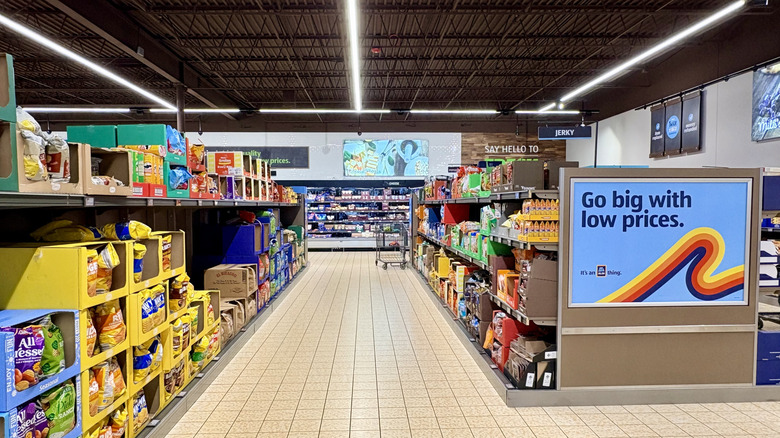
When Aldi removed synthetic food dyes from its store brand foods in 2015, the international grocery chain was well ahead of the curve. Now, as the FDA and major retailers like Target look to phase out synthetic dyes, Aldi is adding 44 more ingredients to its list of off-limit additives. The grocer plans to phase these ingredients out from its private-label food, vitamins, and supplements by December 2027.
"At the heart of our private label products is a commitment to listening to our customers and continually improving the products they bring into their homes," Aldi's Chief Commercial Officer, Scott Patton, said in a statement. "Based directly on customer feedback, we are proud to take meaningful steps to make it even easier for families to fill their carts with confidence by delivering simpler ingredients while continuing to provide the quality and value they expect from ALDI."
The list of now-banned ingredients includes sweeteners like advantame and cyclamates; preservatives like butylated hydroxyanisole and methylparaben; and azodicarbonamide, which is typically used to improve the texture of dough. The list also includes bromated flour, which (like other ingredients on the list) has been linked to cancer. Some of these ingredients are already banned in Europe, while others are considered safe in small quantities by both the United States and the European Union. The full list is below.
| ALDI will remove: | |
| Acesulfame K | |
| Advantame | |
| Anisole | |
| Aluminum sodium sulfate / Sodium aluminum sulfate | |
| Azodicarbonamide (ADA) | |
| BHA (butylated hydroxyanisole) | |
| BHT (butylated hydroxytoluene) | |
| Bromated Flour | |
| Butylparaben | |
| Calcium Bromate | |
| Calcium propionate | |
| Calcium sorbate | |
| Canthaxanthin | |
| Cyclamates | |
| Diacetyl (Synthetic) | |
| Dioctyl Sodium Sulfocsuccinate (DSS) | |
| Ficin | |
| Lactylated esters of mono and diglycerides | |
| Lye | |
| Methylparaben | |
| Morpholine | |
| Neotame | |
| Olestra | |
| Phthalates | |
| Potassium aluminum sulfate | |
| Potassium benzoate | |
| Potassium bisulfite/bisulfate | |
| Potassium Bromate | |
| Potassium metabisulphite | |
| Potassium nitrate | |
| Potassium nitrite | |
| Propylene Oxide | |
| Propylparaben | |
| Simplesse (brand name) | |
| Sodium aluminium phosphate acidic / Aluminum sodium phosphate | |
| Sodium ferrocyanide (Yellow Prussiate of Soda) | |
| Sodium hydroxide | |
| Sodium propionate | |
| Sodium stearyl fumarate | |
| Stearyl tartrate | |
| Sucroglycerides | |
| Talc | |
| Titanium Dioxide | |
| Toluene |
What should customers know about Aldi's ingredient ban?
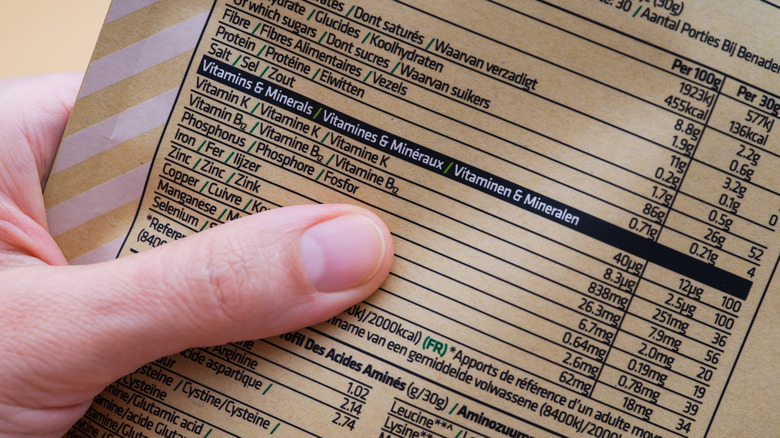
Aldi is clear that it wants to keep quality consistent. "We are working closely with supplier partners to ensure reformulations meet our quality benchmarks," says the statement. "We continuously evaluate our products, tasting them up to five times annually, to ensure our products meet or beat the quality of pricier national brands." The retailer plans to maintain "the same low prices shoppers expect," and notes that ingredient lists will be updated as the reformulated products launch. You might notice slight differences in taste or texture, or find that your food is spoiling faster than it used to — preservatives do help with preservation, after all.
Some of Aldi's banned ingredients are controversial. Did the retailer really need to axe monosodium glutamate (aka MSG) when it first started banning specific additives in 2015? Probably not, since MSG is widely considered safe. Other critics argue that preservatives help protect our food supply and limit food waste.
Still, customers are becoming more and more additive-adverse. One study found that, as of September 2025, 40% of health-conscious shoppers (and 39% of all Gen Z) said they spent more time reading processed food labels than they had six months before. Aldi is meeting the moment. We'll see if other major grocers join the trend.