

11 Hawaiian Desserts You Should Try
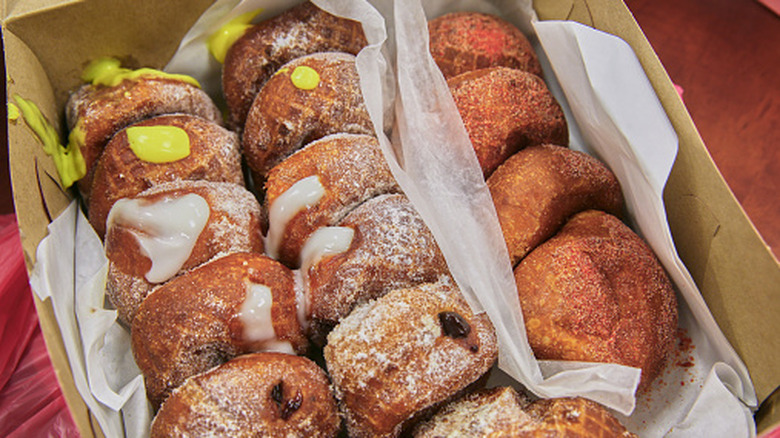
When people think of Hawaiian desserts, the pineapple always seems to pop up first. And that's fair, because it does indeed show up everywhere — like at Dole Plantation, based on Oahu. The pineapple also appears frequently in island-inspired menu items, like Hawaiian pizza (which is kind of a misnomer, by the way; many Pacific Islanders think that mess is pretty darn weird, too). But setting any strange fruit-and-tomato-pie tomfoolery aside, while pineapple is definitely used in (actual) Hawaiian drinks, cakes, and much more, the fact remains that desserts in the Islands offer so much more.
Spend a wee bit more time seeking and sampling the local fare, and you'll discover an exciting array of authentic flavors with roots tracing back to Japan, the Philippines, Portugal, and (of course) the Hawaiian Islands themselves. Not only are the palate-pleasing offerings delicious, but they reflect the unique cultural identity of the ethnic melting pot that is Hawaii. These creamy, crunchy, fluffy, and chewy culinary gems come together to create a distinct Hawaiian cuisine that both locals and visitors can't seem to get enough of — and that they won't find anyplace else.
Suffice it to say, while pineapple may be a star of many Hawaiian desserts, it's far from being the primo ballerina in this tasty island ballet. Here are 11 Hawaii desserts that prove there's so much more to love beyond the golden fruit.
1. Malasadas
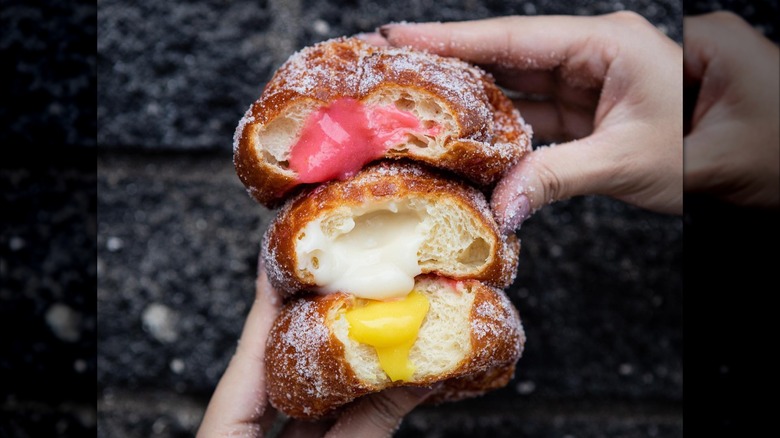
Among the classic Hawaiian comfort foods everyone should try are malasadas. If there's one dessert that's an ideal example of Hawaii's eclectic blend of cultures, it's this tasty treat. While it may appear to just be a basic donut, this Portuguese import puts your standard morning pastry to shame.
These deep-fried balls of yeasted dough turn up the wow factor by being completely rolled in sugar (after being fried to golden, crispy goodness, and while still warm). This creates a sweet, crust-like coating that helps to set malasadas apart from ordinary donuts. Another differentiating factor is that, unlike your run-of-the-mill donut, a malasada skips the telltale hole in the middle. This gives the lucky eater a whole, intact pastry that allows for maximum enjoyment of its ingredients. Speaking of those, they include eggs, butter, and oftentimes milk mixed right into the dough. Malasadas bring a decidedly richer, more indulgent quality with a custard-adjacent texture evident in every bite.
Malasadas were first seen in Hawaii in the 19th century, brought by the Portuguese immigrants arriving to work on the sugar plantations. Hawaii embraced this beloved traditional recipe, then put its own unique spin on it by adding exotic flavors and fruit fillings. Malasadas can be found at bakeries and food trucks across the state, and they're commonly sold at festivals and other events. Try one rolled in sweet-and-salty li hing mui (one of the best regional gas station snacks) or filled with haupia (coconut pudding).
2. Coco Puffs
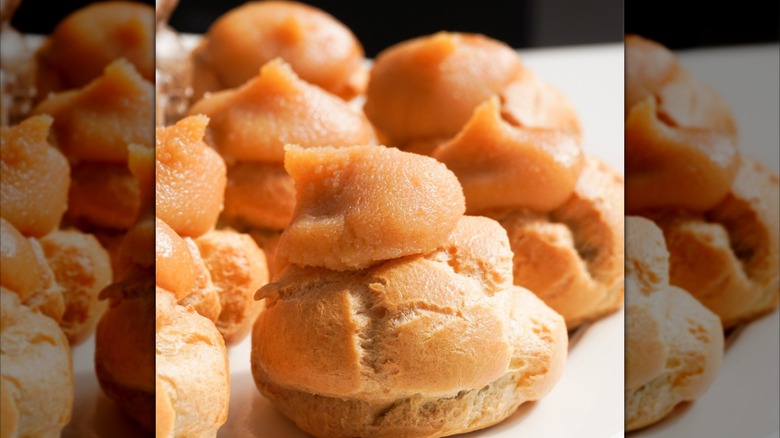
Coco puffs may not be stopping traffic with their aesthetics, but one bite is likely to stop words — as in, they'll render you speechless. Their out-of-this-world flavor has earned coco puffs a cult-like following in Hawaii. So what are they, exactly?
Coco puffs are essentially cream puffs or profiteroles made of choux pastry, chockfull of chocolate pudding that gushes out in all its glory the second you sink your teeth into them. But what you'll really remember is the topping: a fabulous slathering of Hawaiian-style Chantilly cream frosting that's unlike anything you'll see (or taste) anywhere else. What makes Hawaii's Chantilly different is its texture. This is not like the light, feathery whipped cream people think of (that's the French version). Instead, Hawaii's iteration is far richer and thicker, with a consistency almost like that of caramel. When paired with the chocolate filling of coco puffs, and the dainty choux pastry encasing it all, this Chantilly makes a Hawaiian dessert that is delicious and distinct.
What makes coco puffs extra special is their cultural connection to their place. Many Hawaiians grow up enjoying coco puffs at nearly every celebration or holiday. Some have even been known to swap out traditional cakes for boxes of coco puffs at big events, like weddings. They're a local treat that people go out of their way to find, and one that sparks instant nostalgia.
3. Guava Chiffon Cake
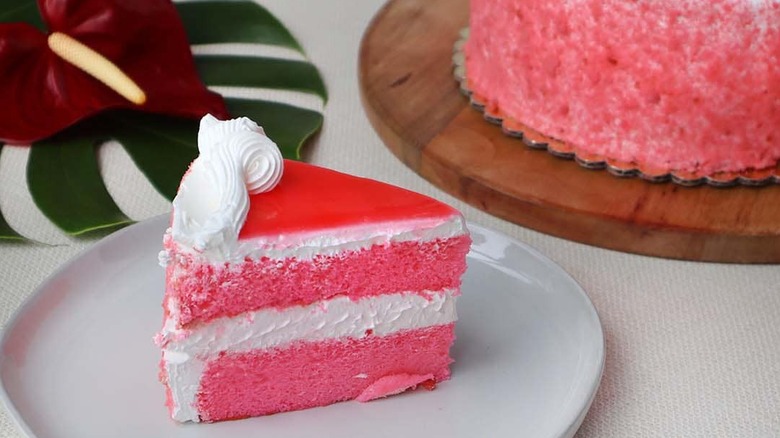
Guavas are among the foods with more potassium than bananas, but the bragging rights don't end there. The tropical fruit is also a key ingredient in one of Hawaii's best desserts. We're talking about the iconic guava chiffon cake, which (unlike coco puffs) instantly grabs attention with its appearance. Like, this cake might actually stop traffic, thanks to its signature pink hue and fluffy-as-a-cloud crumb — and that's just describing the aesthetic appeal. As for the flavor, it rivals — if not surpasses — the pretty-in-pink swoon factor.
Where did this stunner come from? It all started in Honolulu in the 1960s, when an innovative baker took the light and airy foundation of a classic chiffon cake, and infused it with beloved Hawaiian guava. The result was something completely unique: The cake stayed soft, fluffy, and almost sponge-like, while the guava flavor added a delicate, tart, fruity sweetness.
To make matters even more delicious, a guava chiffon cake typically features two layers of icing on top: One is a delicate cream frosting, and the other is a glossy layer of guava glaze. Together, they give each slice something indescribable that dessert lovers can't get enough of, or discover anywhere but Hawaii.
4. Kūlolo
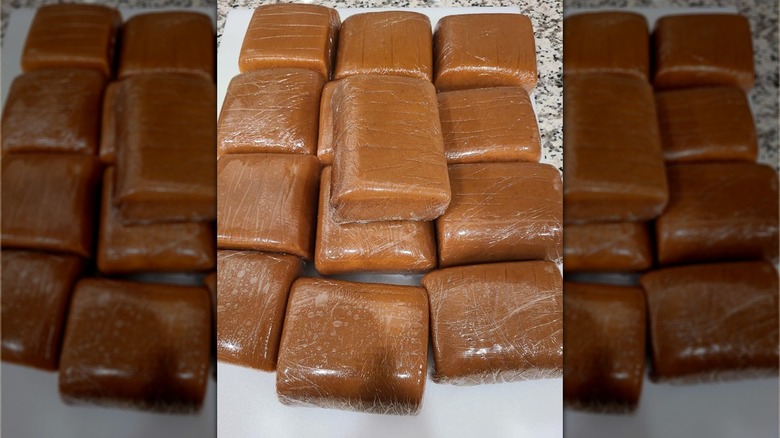
Kūlolo could absolutely be counted among the delicious desserts that don't look good but actually taste great. While it might not be winning any beauty pageants, the confection has no problem ruling Hawaiians' hearts. Kūlolo is an old-school dessert made from taro (also called kalo), coconut milk or meat, and sugar. The ingredients are slowly cooked until the mixture reaches a dense, chewy, almost fudge-like consistency. It's ridiculously rich, a bit earthy, and truly unlike anything you've probably tasted.
Traditionally, kūlolo is cooked in an underground oven called an imu, where it can be left to steam for hours. This longer cook time enables the treat to offer a one-of-a-kind texture and taste. While modern cooking methods like conventional ovens or instant pots can be utilized to speed things up and increase convenience, the core of the the recipe remains the same today.
Kūlolo's unique texture can perhaps be best described as living somewhere between mochi and fudge. It's firm but with plenty of give, and just this side of sticky ... in the most delectable way. The taro adds a slightly nutty note, while the coconut milk packs the sweetness we all seek in our desserts. The two of them together — both being locally found treasures — directly tie kūlolo to the Hawaiian Islands.
5. Chantilly Cake
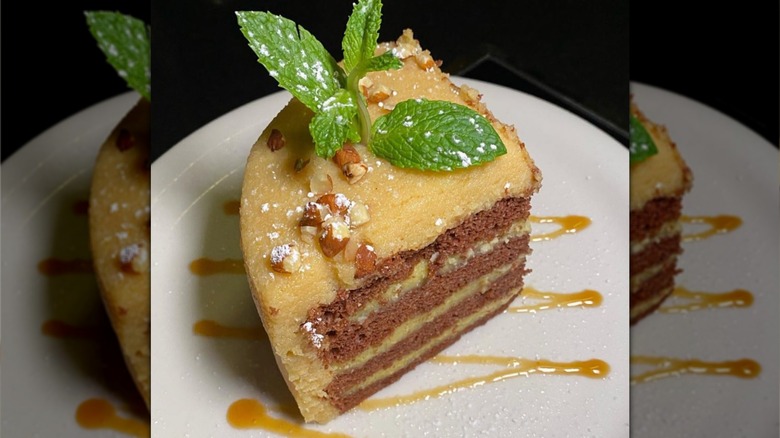
You may think you know Chantilly cake. But if what you're picturing is the commonly known dessert featuring a light vanilla sponge, whipped cream, and berries, Hawaii's version is about to rock your world. In fact, you're in for an anything-but-rude awakening by way of Hawaii's blissful, butterscotch-centric version.
While its name might (rightfully) lead you to envision something light and airy, this is a far richer affair. Unlike a traditional, European-style Chantilly cake, Hawaii's goes all-in on decadence with moist chocolate chiffon cake layered with an intensely indulgent, thickly applied, velvety smooth Chantilly cream. Anything but airy, this icing leans more toward custard or pudding in a way that will perk those taste buds up real quick.
The reason for all this richness is the frosting's core ingredients: butter and evaporated milk. These give it the flavors of caramel and butterscotch, which could tempt even the strictest dieter. And while you might think that this cake sounds pretty perfect already, there's still one more finishing touch that takes it to another level: a light sprinkling of toasted macadamia nuts for a bit of crunch that clinches the entire delicious deal. For many in Hawaii, Chantilly cake is a go-to dessert that's enjoyed on birthdays, at social gatherings, and brought out to mark special occasions. So go ahead, forget everything you thought you knew about Chantilly, and embrace this buttery chocolate variety.
6. Haupia Pie
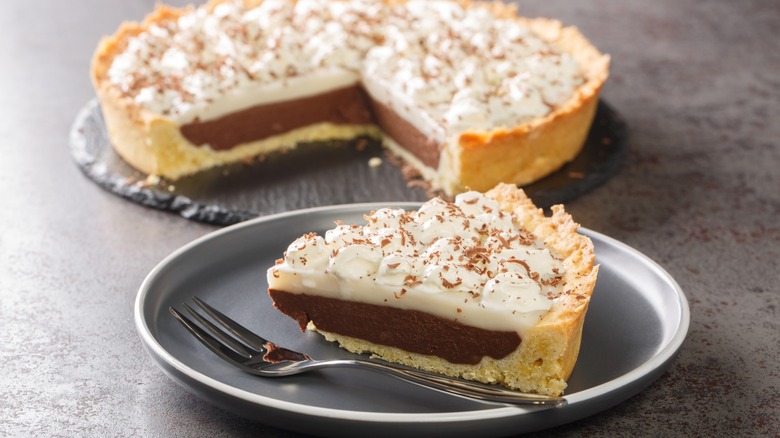
Haupia is considered by many to be the most popular dessert in Hawaii. The traditional coconut pudding is made with coconut milk, sugar, and cornstarch. It's loved and craved for its sweetly refreshing flavor and smooth, firm, near jello-like consistency, and it's often eaten as a dessert completely on its own. But one of the locals' favorite ways to enjoy it is via haupia pie.
When haupia is whipped up into pie form and served sliced on a plate, that ups the ante, turning an already mouthwatering Hawaiian treat into a completely new dessert that's nearly impossible to resist. To make matters even better, there are several common flavor variations of haupia pie to choose from, including ube and the much loved chocolate haupia pie. This local delicacy showcases a rich chocolate filling along with that iconic coconut haupia. The two taste bud teasers are layered upon one another and left to set within a flaky pie crust — and before this paradisiacal confection is served, many chefs will add a whipped cream crown as a final, sweet flourish.
If there's one must-try dessert in Hawaii, it might just be this one, especially if you're purchasing yours straight from the source (a locally owned bakery or grocer). Just be warned: Locals line up early for these slices, and they disappear quick. That's just another reason to nab your chocolate haupia pie pronto, or (as they say in Hawaii) wiki.
7. Andagi
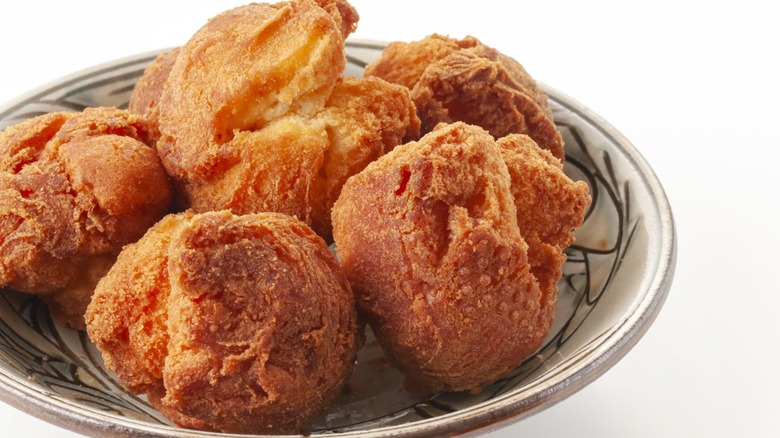
You may have heard of andagi. It is, after all, one of the fried Japanese foods you must try. But what you may not realize is just how popular it is in Hawaii. The Okinawan dessert has become a cherished mainstay in Hawaii, where it can be found everywhere from festivals to farmers markets, and even whipped up in home kitchens. And while andagi (short for sata andagi) may look ordinary, or like any other small ball of dough that has been deep-fried, the taste is absolutely extraordinary.
Unlike the airy, yeast-centric donuts that most Mainland bakeries boast on their menus, in Hawaii, andagi have a far more dense, even cake-like consistency that Islanders crave. That decadent texture —made even better by a crispy, golden-fried exterior that delivers a satisfying crunch — is a winning recipe.
Traditionally, these golf ball-sized pastries are prepared with only the basics: flour, sugar, and eggs. But Hawaii's version of andagi often adds milk or vanilla, which provides even more softness and sweetness in each serving. One thing that must also be mentioned is one very specific rule for eating andagi in Hawaii: For the optimal experience, these treats should be consumed while still hot, preferably fresh from the fryer.
8. Guri Guri
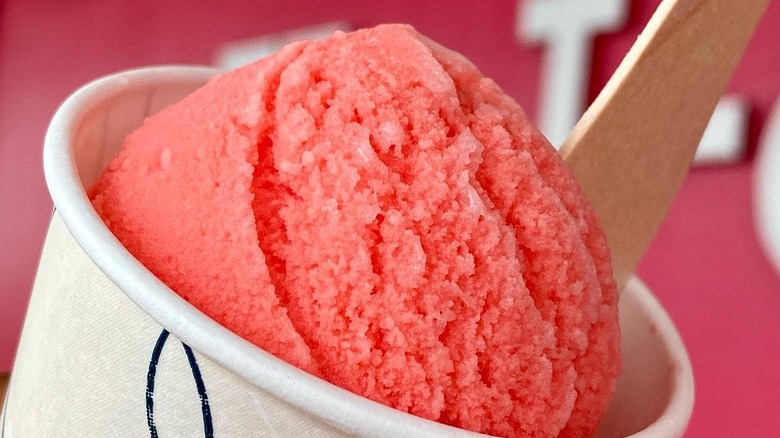
While shave ice may be the most legendary dessert in the state of Hawaii, guri guri is an equally beloved (though lesser known) frozen treat. Despite its popularity, when it comes to describing exactly what guri guri is, that's a bit of a quandary. You see, guri guri isn't a dessert that fits neatly into one specific category. It's not quite smooth and creamy ice cream, nor is it exactly sherbet, either. Instead, guri guri exists somewhere in the delicious middle of these frozen delights. Think of it as taking the very best parts of ice cream (rich and creamy) and sherbet (smooth and refreshing), and giving tasters all of that, one scoop at a time.
Characterized by its silky consistency and fruity flavors, guri guri is the perfect treat to be enjoyed in Hawaii's sunny, summery weather year-round. It's also an ideal thing to eat at the beach — sweet yet not cloyingly so, and not as rich or heavy as classic ice cream.
What really gives guri guri its special place in Hawaiian hearts is the nostalgia factor. For many Hawaii locals, guri guri is intrinsically tied to childhood memories. With those days behind them, adults wax poetic about how they ate the dessert over the years. Even its name has a story, stemming from a mispronunciation of the term "goody goody."
9. Bibingka
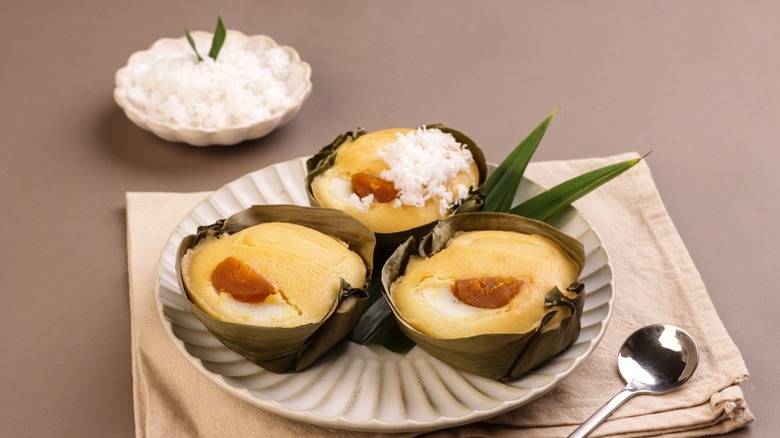
Bibingka is a lesser known dessert in Hawaii, originally brought to the Islands courtesy of Filipino immigrants. It's created with rice flour and coconut, making for a craveable consistency that's often compared to another local favorite: mochi. This is understandable, since both desserts are a bit sticky, a bit chewy, and more than a bit of comfort-food bliss.
While it can also be confused with Filipino rice desserts that share similar ingredients lists (looking at you, biko), bibingka brings to the table a decidedly different texture. What makes bibingka stand apart is its golden edges, which make it a little crispy (a beloved characteristic that mochi just doesn't possess). Besides this, the method of preparation is also not the same.
In Hawaii, where the names and styles of foods sometimes blend together, bibingka is a perfect example of the unique way food traditions evolve and adapt over time. It's gently sweet and rich, with a coconut-forward flavor profile that keeps it at the top of Hawaiians' favorite dessert lists. This would explain why, even though bibingka is traditionally associated with Christmas and it began as a sweet served mostly around the holidays, it's become a year-round treat in Hawaii that locals keep reaching for.
10. Ensaymada
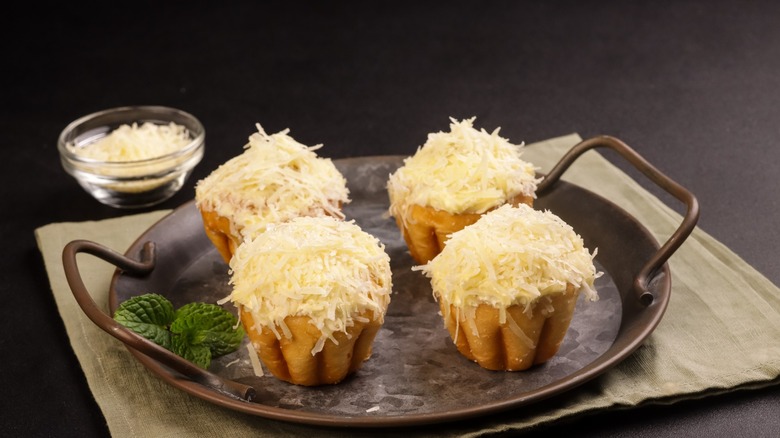
While one might find it daunting to knock back an entire slab of rich chocolate cake on the daily, the ensaymada is one pastry that some Hawaii locals say they could eat every single day without ever tiring of it. The brioche-style Filipino bread — characterized as being satisfyingly rich yet still soft and fluffy — has become a familiar sighting across Hawaii, especially at farmers markets, pop-ups, and local mom-and-pop bakeries.
Rooted in Spanish cuisine, but fully embraced and reimagined through Filipino culture, the ensaymada reflects Hawaii's diverse food scene to a tee. They've quickly become a fan favorite due to the contrast they bring to the table. The bread is feathery and light, and its generous addition of sweet, whipped butter is known to melt into every nook and crevice. Then comes the wild part of the recipe: a generous topping of grated cheese — traditionally a salty, aged variety like cheddar — that exquisitely cuts through the sweetness of the butter-infused bread for a balance that sings.
Now, we get that these elements blended together might sound a wee bit bizarre (and maybe not even that appealing) at first — but just sample it and see. Ask the majority of locals in Hawaii how they feel about ensaymadas, and they'll likely put them into the "would smash" category — no matter the flavor. While the original version is the one with cheese, you'll also find everything from ube to coconut and more, all piled high with tasty toppings, across Hawaii these days.
11. Mango Bread
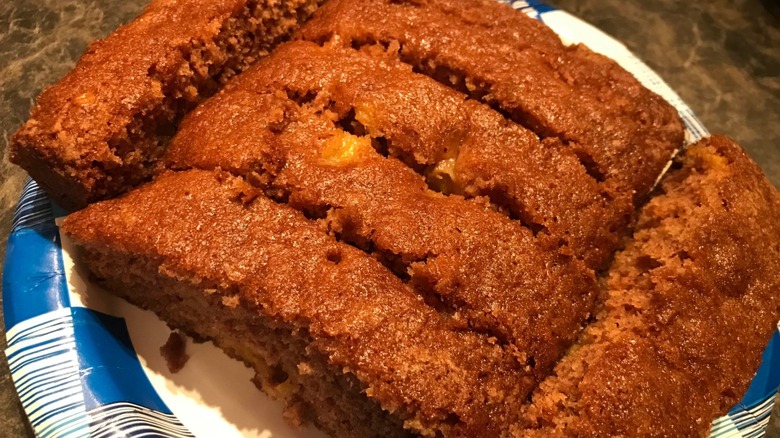
In Hawaii, mango bread is often found in the most charming places: Roadside stands and local markets feature homemade batches sold by vendors who've perfected their recipes over generations. If you're a fan of banana bread, and mango is a fruit that you find appealing, Hawaiian mango bread is definitely a dessert you'll want to check out.
This local favorite is a sweet bread that takes all the things folks love about banana bread — that moist, dense consistency and fruity flavor — and gives us another island iteration that leans into the warm, bright energy intrinsically tied to the land of rainbows. Fresh, perfectly ripe mango takes the wheel in this recipe, ensuring the bread stays moist beyond imagination while also showcasing a natural sweetness. There's a distinct yet subtle tartness that mangoes bring to the mix (Curious George's preferred peel-able fruit could never) and that really sets the tone for a whole new taste beyond the basic banana breads of the world.
Something else that mango bread manages to nail that banana bread just can't emulate? Mangoes have a more vibrant and fresh flavor that is synonymous with the Islands — more tropical beach vibes, less grandma's kitchen energy. Just ask yourself, which bread would be better enjoyed in the sunshine oceanside, with island breezes wafting by? Enough said. Now, pass another slice of that mango bread this way, please.