

When You Should (And Shouldn't) Swap Vegetable Oil For Olive Oil
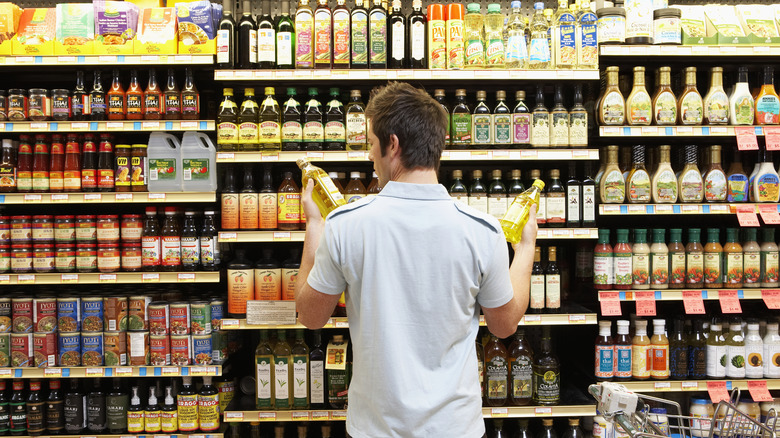
Olive oil has a reputation for being super healthy, and as a result online recipes seem to call for it almost exclusively. It's not the cheapest oil out there, however, so do you always have to use it? Not at all. In fact, there are certain circumstances in which a different oil might work better. To get some insight into the situation, we spoke with Patrick Martin, who owns and operates a California olive farm called Frantoio Grove.
Needless to say, Martin is a fan of his own product, declaring: "Olive oil is a fantastic choice for almost all cases of cooking." That being said, he admits there are a few exceptions. One is if it doesn't suit the cuisine (he'd opt for a different oil when cooking Indian or Thai food) and another is if you want a neutral-tasting oil. "When I make a homemade mayonnaise, I never want to use olive oil because the flavor can be pronounced and the polyphenols can present themselves in this situation in a more bitter way than you typically get," he explained. You also shouldn't use olive oil for deep-frying chicken — or deep-frying anything, for that matter. Deep frying calls for something with a higher smoke point, such as vegetable, canola, or avocado oil.
So, when should you stick with olive oil instead of using vegetable oil? As long as you're not deep-frying, it's a matter of personal preference. Of course, it's well-suited for certain cuisines such as Italian or Greek, and it adds more flavor than vegetable oil to roasted vegetables and no-heat dishes like dips and dressings.
Are some vegetable oils better than others?
The type of vegetable oil you pick as an olive oil substitute depends on the purpose. Not only do you need a high smoke point for frying, but you also want a compatible flavor profile, for example. "If you want something clean and neutral, make sure you're selecting an oil that is clean tasting and not overly nutty or fishy or otherwise unpalatable," Martin advised. He noted that the refining process tends to remove a lot of the oil's flavor, but this can be a good thing. "Virgin avocado oil actually has a pretty intense vegetable flavor," he said. He mentioned that canola oil, too, benefits from refining. As he explained, "These oils are made from the rapeseed plant, which is a relative of mustard/kale/cauliflower/etc., and the brassicas can have strong, pungent odors which translate into the oil."
Some people choose to steer clear of certain types of oil for health purposes, although you don't need to believe the cooking oil myth that seed oils are to be avoided at all costs. It's true that oils such as corn, safflower, soybean, and sunflower may contain high levels of omega-3 and omega-6 fatty acids, and, as Martin observed, "An imbalance of these types of fats tends to cause inflammation in the body." That being said, omega-3 acids also reduce inflammation, while omega-6 acids lower levels of bad cholesterol. Overall, the benefits may outweigh any potential drawbacks, so there really isn't any kind of "forbidden" oil, according to medical science. Even so, all types of oil (even olive) should be consumed in moderation.
Choosing a vegetable oil
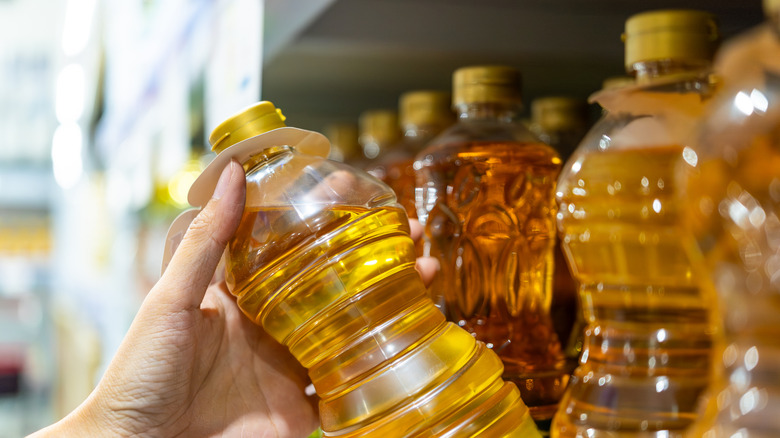
Apart from olive oil, Martin says, "I am a fan of cooking with refined coconut oil and avocado oil, as they tend to be more stable and have more of the good fats that we look for when choosing a healthy fat." He doesn't have any specific brand recommendations for these or other vegetable oils, however; instead suggesting that you shop around to find something that works for you. "If they have a smaller container, go for that, give it a small sip, taste it in your mouth, taste it on your palate. Refined oil should be clean and light, not heavy, greasy, or strongly flavored." If you enjoy an oil purchased in a small container, you can buy a larger bottle next time. "If you find one that you like, stick with that," said Martin, because another brand may not be to your liking.
Another thing you might want to do is to check the expiration date on the packaging, since over time it will tend to develop "off" flavors (for example, overly nutty or vegetal notes) that will translate to your food. Exposure to high temperatures, light, and oxygen also cause vegetable oil to deteriorate. According to Martin, "Refined vegetable oils tend to be pretty good about resisting rancidity, but if you find a brand that doesn't move on the shelf, they can go bad." Of course, the same can be said of olive oil. It has a shelf life similar to that of vegetable oil; both products can last up to 18 months if unopened but should be used within six months once the cap is loosened.