

The First Thing To Look For When Picking Out The Best Store-Bought Potatoes
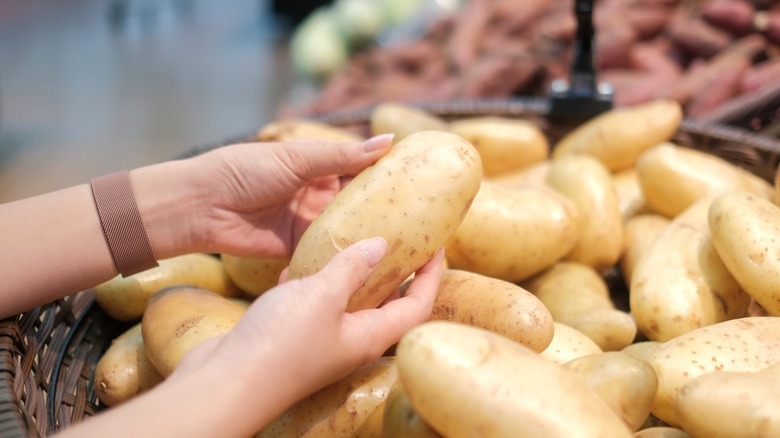
Even when you're buying produce from the grocery store, leaving anything to chance can be costly. I meticulously scrutinize peppers, mushrooms, asparagus, and just about any veggie I come across before it lands in my cart to ensure I'm getting the best quality. But potatoes? The first ones I see generally get tossed in without a second thought. Well, that's a mistake, according to the director of culinary at Potatoes USA, chef RJ Harvey. He revealed that folks should examine the condition of store-bought potatoes just like any other produce, and it all starts with inspecting how they're packaged.
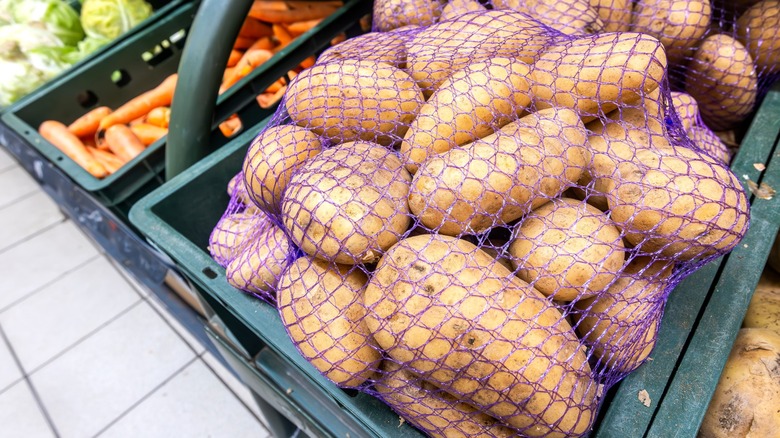
"When selecting fresh potatoes at the store, begin by looking for packaging made of perforated plastic or paper," Harvey said. "Those materials are great for ventilating the potato and keeping it from becoming damp (the key to keeping it fresh)." Moisture is the enemy of fresh taters, and even when they are allowed to breathe in the supermarket, they need to remain dry once your shopping trip is over.
"Once you get them home, keep potatoes in a cool, dark, well-ventilated place such as a pantry or cabinet," Harvey said. "There is no need to store your potatoes in a bag; you can store them loose. If you store potatoes in a bag, make sure there are holes so the potatoes can breathe." Making sure you're buying dry spuds and keeping them dry is key to baking a delicious, crispy, cheesy baked potato. But there are some other things to look for in terms of quality.
Store-bought potato issues besides packaging
Chef RJ Harvey stressed that packaging plays a major role in potato quality, but there's more to store-bought spuds than a ventilated bag. If they look like they've been put through the wringer at the supermarket, it's best to keep looking. "You want to choose potatoes that look clean, smooth, and firm-textured with no cuts, bruises, or discoloration," Harvey said. "These will cook — and taste — the best."
Of course, there are exceptions to any rule. If you're not able to inspect the tubers sitting in the middle of the bag, don't be too concerned — you're just signing up for a little more prep work. "That said, if you are planning to cut your potatoes for, say, a roasted potato dish, you can select imperfect potatoes, which are just as good; you'll just need to cut away any bruises or blemishes," Harvey said.
Still, there is one characteristic you should carefully inspect store-bought spuds for. "You'll want to make sure there isn't a greenish color to the potato," Harvey said. "That can indicate a bitter taste and is a sign that the potato wasn't stored properly at the store (for example, exposed to too much light)." More than that, they can make you sick. Green spots indicate high amounts of solanine, a toxin that can cause a host of digestive issues in some cases. Potatoes are proof that green isn't always good, but if they were packaged and stored correctly in the first place, it's unlikely you'll see any colors that don't belong.