

The Keurig Mistake That's Leaving You With A Subpar Cup Of Joe
We may receive a commission on purchases made from links.
A Keurig might be the best coffee maker for your morning routine, but coffee snobs won't hesitate to tell you it doesn't make the greatest-tasting cup out there. Is there a way to upgrade the experience while keeping the same machine, though? (Not everyone wants to futz with all of the complications involved in making an Alton Brown-style pour-over.) According to ex-barista Matt Woodburn-Simmonds, there is, although it will take a bit more time. He shares his coffee expertise on a website called Home Coffee Expert, and he also spoke with The Takeout to provide his opinions on the topic. The way he sees it, you can make the best coffee in a Keurig by swapping out premade K-Cups for home-ground beans packed into a reusable single coffee filter. (You can purchase the GoodCups four-pack for $8.95 on Amazon.)
"Using freshly ground coffee is one of the simplest ways to elevate any brewing method if you're currently using pre-ground," Woodburn-Simmond opined. "Although a sealed K-Cup will do a decent job at keeping the grounds fresh, the length of time between grinding and sealing, and the time spent in the pod, will impact the flavor." He went on to explain that grinding your coffee beans fresh each time you brew a cup allows them to retain more of the oils and compounds that give coffee its flavor, as these are volatile and will start to dissipate once the coffee is ground. As he sees it, "Your freshly ground coffee should be more vibrantly aromatic and have a richer and more complex taste than from a normal K-Cup."
You need to use the right-size grind, though
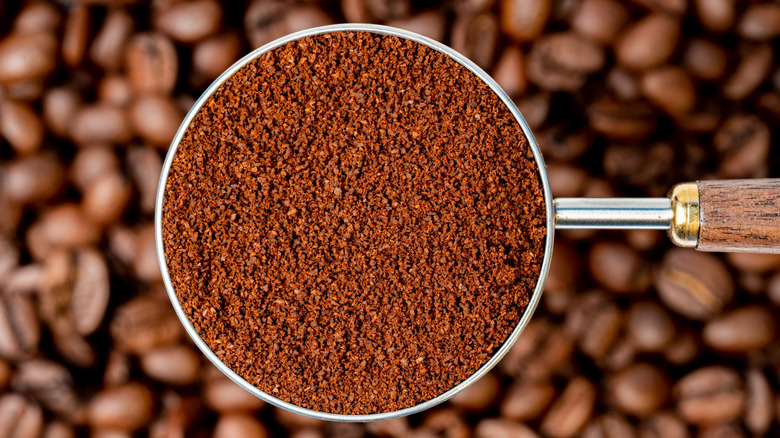
You can't just toss any old grind into a reusable K-Cup and make it work in the machine, though. Not only does grind size make a difference in the flavor of your coffee, but it also impacts how the Keurig works. "If you grind too fine, then your Keurig may clog as it won't have enough pressure to force the water through the densely packed grounds. If it's too fine but not so fine as to clog the machine, then it'll taste bitter and muddy as it will be over-extracted," Matt Woodburn-Simmonds warned. While the reverse situation is less problematic since it won't cause a clog, he cautioned: "If the grounds are too large, too coarsely ground, then you'll get thin, weak, acidic coffee."
Woodburn-Simmonds advised starting with a medium grind about the consistency of coarse table salt or sand. (This equates to 600 to 800 microns, if you're measuring.) As he explained, "This should allow for the pressurized extraction to get enough surface area of the grounds for proper extraction without clogging or being watery. You'll probably have to adjust a little coarser or finer as you work out the ideal size, but medium ground is a great place to start."
And don't grind too far in advance
Unfortunately, grinding your own coffee beans isn't something you can do too far in advance, since that kind of defeats the whole purpose of the coffee being as fresh as possible. As Matt Woodburn-Simmonds cautioned, it very much matters how soon you brew coffee beans you've ground at home. "As soon as coffee is ground, various compounds start reacting with the oxygen in the air, the moisture, heat, sunlight, and all sorts of environmental factors, which cause the flavor to deteriorate. This also happens with coffee beans, just much slower. So whole beans may take two to three weeks to go stale while grounds take just minutes," he told us.
So how much time do you have to use your fresh-ground coffee beans before they start to go off? Not much at all, as it turns out. "Ideally, you should be grinding your beans immediately before you use them, the fresher the better, as they start to deteriorate as soon as they're ground. Anywhere up to around 30 minutes after grinding is generally considered to be fine, though," said Woodburn-Simmonds. So, maybe keep a package of ready-made K-Cups for use on weekday mornings when you're in a rush and every second counts, and you lack the patience to tinker with finding the right grind. Fresh-ground beans can make for quite a treat on days when you have the leisure to prepare and savor an upgraded (if slightly more time-consuming) cup of coffee.