

3 Types Of Beer That Are Always A Little Overpriced (And One That Isn't)
Beer is, for the most part, a more or less affordable luxury, which is why the alcohol industry has typically held up well during troubled times. Lately, however, it's sales have been slumping; with craft beer, in particular, being less popular than it was earlier in the still-young century. There are a number of factors at work here, including the fact that many people are cutting back on alcohol due to perceived health risks, but economics also plays a major role. The less discretionary income we have, the fewer beers we can buy and the more value we want for our money. With beers available at all price points, why waste time on the overpriced ones? Beer educator Geoff Bragg shared some thoughts with The Takeout on just what types of beers might fit into this category.
Now, whether you consider a beer overpriced depends entirely on your individual circumstances, but the way Bragg sees it there are some key factors that help contribute to driving up a beer's price. Some of these have to do with the expense of production, while others are more of a marketing thing. In particular, he's not a fan of hard-to-find beers, the kind you practically have to get on a waiting list to obtain. Sure, this scarcity (whether real or perceived) may cause some people to whip out their wallets, but Bragg isn't among them. He offered a few suggestions for beers he feels are better worth spending your money on.
Beers that are aged
If a beer takes a longer time to produce than average, you would expect the price to go up a bit. As Bragg explained, "Any beer with extra processing adds cost." He mentioned that some aged sours have high price tags for this reason, as is the case with The Bruery's Mango Charm'd and Strawberry Charm'd. Both of these fruited sour ales sell for $17 per 375 milliliter bottle. They're still not the most expensive aged beers, however. "Russian Imperial Stouts aged in spirit barrels tend to be the priciest," said Bragg, and indeed you can expect to pay $20 for a half-liter bottle of North Coast Brewing's XXII Barrel-Aged Old Rasputin Stout.
The way Bragg sees it, "Many of the barrel aged beers seemed to be overpriced. I know that there is time invested in letting a beer sit in a whiskey barrel but should we be paying $28.95 for a 500 milliliter bottle?" He didn't name a specific beer, but he did call out a particular brewery: Bottle Logic. And indeed, it does sell several barrel-aged beers that come close to this price point.
Higher-ABV beers
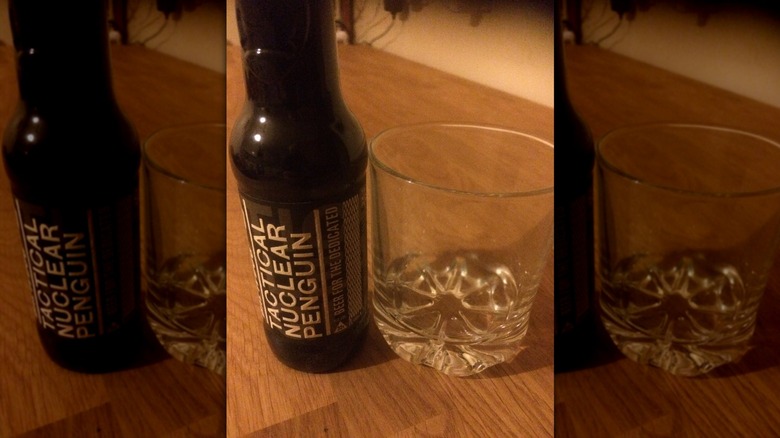
Many high-ABV beers are on the expensive side. Among them are BrewDog Brewery's Tactical Nuclear Penguin, which weighs in at a whopping 32% ABV and costs $166 per bottle, as well as Dogfish Head's 120 Minute Imperial IPA Beer, sitting at 15.5% ABV and costing $41 for a four-pack. Could it be that the ingredients necessary to produce higher-alcohol beer drive up the price? Well, not really. According to Bragg, "Higher ABV beers use more grain but not necessarily more hops which are a more expensive ingredient comparatively."
As Bragg pointed out, "Higher ABV beers aren't always more expensive, but it does correlate sometimes." In fact, assuming that a high ABV beer is going to come at a premium price is a false syllogism. Yes, a large number of premium beers do have a high alcohol content, but so do many cheaper ones. "Malt liquor is a higher ABV beer but isn't really expensive unless you add in the cost of the requisite brown paper bag to drink it from," quipped Bragg. As an example, Steel Reserve comes in at 8.1% ABV and sells for $5.15 per four-pack at Dollar General, which isn't exactly a beer snob's go-to retailer. Then again, a lower ABV doesn't necessarily mean a lower price since non-alcoholic beers often cost just as much as full-strength ones.
Limited-edition beers
Certain beers bear a high price tag because they are extremely hard to find or don't come out too often. Among the latter is the notorious Sam Adams Utopias, which is barrel-aged and also one of the strongest beers in the world at 30% ABV. It's usually released only once every two years and the current release (2025) sells for around $300 per bottle. Past releases can sell for a lot higher; you might pay as much as $4,000 for the 10th anniversary edition that came out in 2012. When that batch released it was priced at a mere $190. This means if you've held on to a bottle for all these years, you could see a 2,000% increase in your investment should you choose to resell.
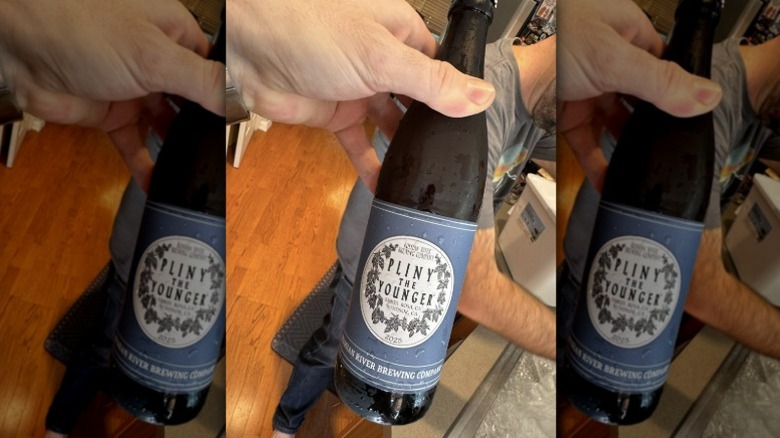
If you're not buying beer for investment purposes, though, are these rarities really worth it? Bragg thinks not. There's one type of beer in particular that he feels overdoes it on the special releases, saying: "I struggle with a Triple IPA. I'm definitely not waiting in line for a Pliny the Younger. I love their beers but I'm not going to wait in the rain for one. I think the folks at Altamont Beer Works got it right with naming their triple IPA Scarcity." Neither of the beers he names seem to be available for online purchase, although you can order a kit to make your own Pliny the Elder double IPA at home to score five gallons of the stuff for a mere $50. Sure, double IPAs tend to be somewhat less malty, hoppy, and alcoholic than triples, but they're stronger than regular IPAs.
Some beers are worth the higher price
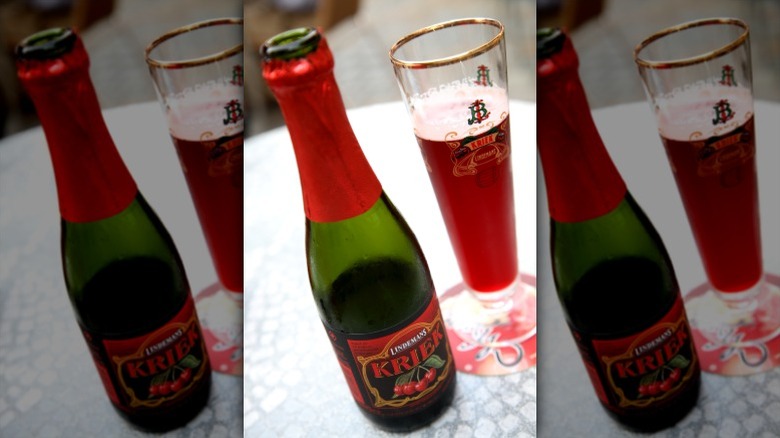
So, what beers are worth paying more for in Bragg's opinion? Beers from Belgium, it seems. "For me, Belgian gueze and fruited lambics are worth the cost of entry. You are paying for something that is very difficult to replicate with many times some of the freshest fruit on the planet. These beers have been made in the same places for generations," he declared. One of the best-known lambics is Lindemans, with a four-pack of mini beers (8.45-ounce bottles) available for $18. Lindemans also makes a gueze called Cuvée de l'Amitié that can be found for $23 per 750 milliliter bottle.
Bragg also recommended a Belgian beer that, while not exactly cheap, is a bit more budget-friendly than the gueze; and stronger, too. The Lindeman's gueze has an ABV of 6%, while Westmalle Tripel Trappist Ale can be purchased for $14 for a similar-sized bottle and has an ABV of 9.5%. "Interestingly, we can look at Belgian Tripel as an example of a high ABV beer but at a very reasonable price point. There's serious bang for the buck in a Westmalle Tripel," said Bragg.