

Mamdani Announces NYC's First City-Run Grocery Store — Here's How It'll Work
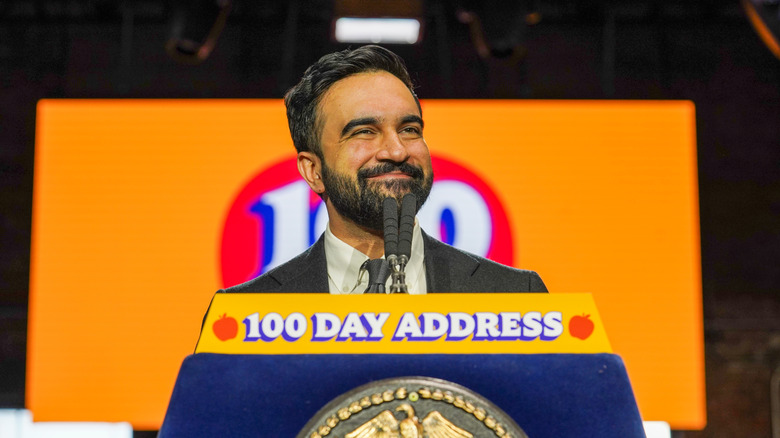
After months of anticipation, Mayor Zohran Mamdani has officially announced the site for the first city-owned grocery store in New York City, a massive step forward for one of the most ambitious campaign proposals the new mayor introduced. The grocery store will be located in the East Harlem neighborhood of Manhattan, with La Marqueta (a city-owned retail market in the area) set to house the new store. Because it takes a lot of time and money to build (just look at Chili's stagnant expansion in 2026), this first store is expected to open near the end of 2027 and will cost the city $30 million.
Mamdani announced the first city-owned grocery store during his 100 Day Address, promising, "Stores where prices are fair, workers are treated with dignity, and where New Yorkers can actually afford to shop. At our stores, eggs will be cheaper. Bread will be cheaper. Grocery shopping will no longer be an unsolvable equation."
As far as its location is concerned, it's hard to argue there's a better place to open up the first city-run grocery store than La Marqueta. The retail market was officially opened for business in 1936 by Mayor Fiorello LaGuardia, a politician who Mamdani has long said influenced his progressive style of governing. And don't you worry if you're from any of the other four boroughs in New York — including Queens, Andrew Zimmern's food capital of the world — there are plans to open more locations in the coming years. Mamdani's team is intent on opening all five city-run grocery stores by the end of his first term in 2029.
How will Mayor Mamdani's city-owned grocery stores work?
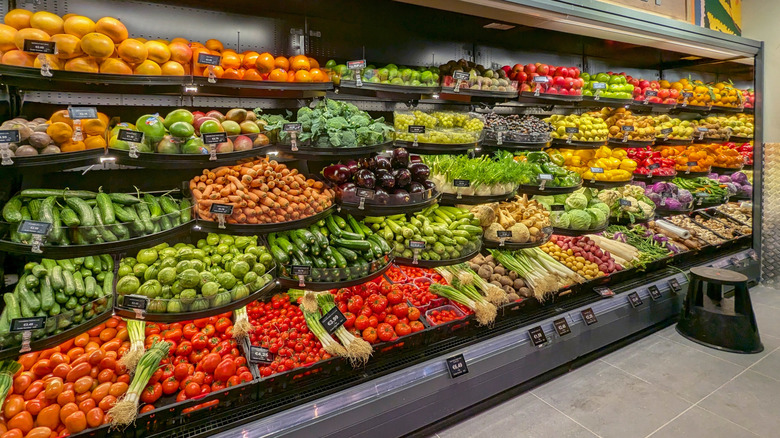
While the announcement of the East Manhattan grocery store was met with thunderous applause, many still question how Mayor Mamdani's unbelievable plan will be executed. Unfortunately, Mamdani hasn't laid out a thorough outline for how the stores will be operated as of yet. However, the mayor has expressed a desire to make the city-owned grocery stores akin to public libraries which sell food at wholesale prices to ensure that each and every product costs as little as possible.
There are models to consider where local governments have subsidized private grocery stores to help carry out their plans, but Mamdani's model will likely be more akin to the military commissary system, whereby the Department of Defense owns and operates grocery stores on military bases both domestically and internationally. These stores sell food at prices that are roughly 25% cheaper than private supermarkets despite a 5% surcharge on wholesale prices to cover overhead costs.
Nevertheless, the implementation of city-owned grocery stores in New York City unsurprisingly has plenty of skeptics, especially due to the failures of similar systems elsewhere in the country over the years. However, as grocery prices remain insurmountably high in the years post-COVID, Mamdani sees the public option as a great way to give New Yorkers in need a helping hand. "Some will insist that city owned businesses do not work, that the government cannot keep up with corporations. My answer to them is simple — I look forward to the competition," Mamdani added. "May the most affordable grocery store win."