

14 Puerto Rican Foods You Should Never Pass Up
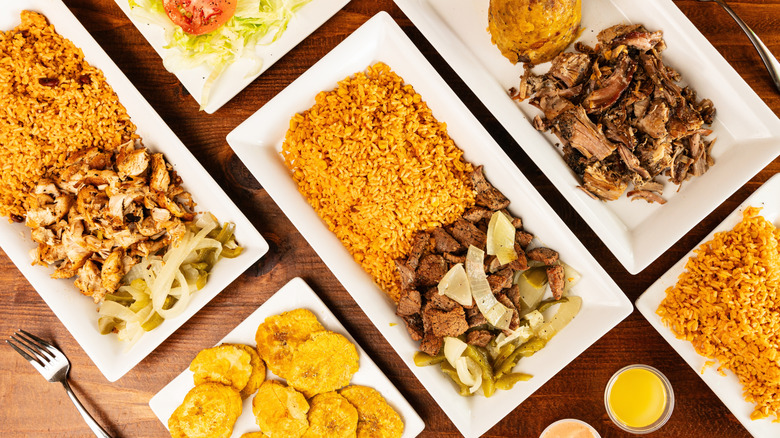
Forget everything you think you know about Puerto Rican food. Ditch those lies you've been fed that it's too spicy, basic, or limited. Our experts are here to tell you that this island's food is built on centuries of exchange — on influences and traditions, migrations and collisions, leaving behind a table that is unmistakably Puerto Rican.
Chef Daniel Lugo, Executive Chef at Trova at Wyndham Palmas Beach & Golf Boutique Resort, grew up in Mayagüez and spent a decade heading kitchens across multiple concepts. Now back on the island he loves, Chef Lugo describes his work at Wyndham Palmas as "a love letter to Puerto Rico." Chef Roberto Pérez brings a different and equally essential perspective. A chef, musician, and researcher of Afro-Caribbean traditions, Pérez is also the co-founder of Urban Pilón, a culinary movement dedicated to honoring and preserving Puerto Rican cooking traditions. Between them, these two chefs cover the full range of Puerto Rican food — from the fine dining table to roadside eats — and what follows is their guide to the dishes you must not miss.
Arroz Con Gandules With Pernil
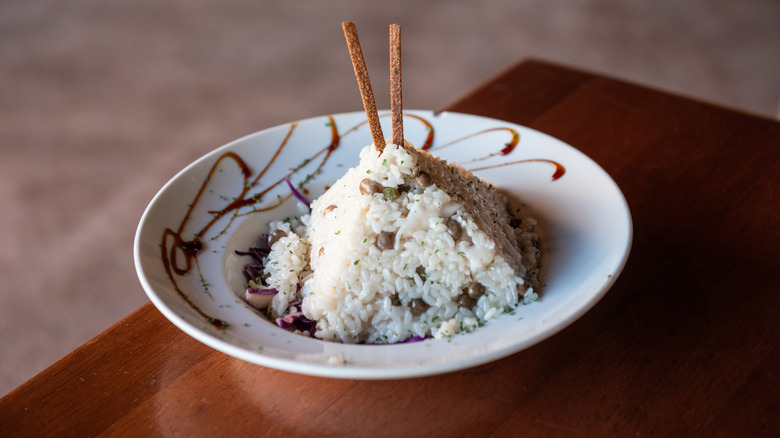
When a Puerto Rican chef tells you to order one thing, it's time to listen. For Chef Daniel Lugo, the list of must-not-miss foods will always begin with arroz con gandules with pernil. For him, "that plate captures the heart of Puerto Rican cuisine ... It brings together the flavors, aromas, and sense of celebration that define our food."
As a concept, the dish could not be simpler. Mix rice with pigeon peas and serve alongside slow-roasted pork. However, every element pulls its own weight to create a delicious blend of textures and flavors. The rice is cooked in sofrito — a base made by blending herbs and peppers into a fragrant concentrate — which Lugo considers a foundation of Puerto Rican cuisine. Then comes the pernil, a whole pork shoulder or leg, marinated overnight and slow roasted for hours. What results is a crisp, crackling meat so soft that it falls effortlessly from the bone. "Arroz con gandules ... and pernil carry a deep emotional significance, especially around Christmas," he explains. "Those dishes are tied to family, tradition, and celebration. For many Puerto Ricans, they are as much about memory and identity as they are about flavor."
Mofongo Relleno
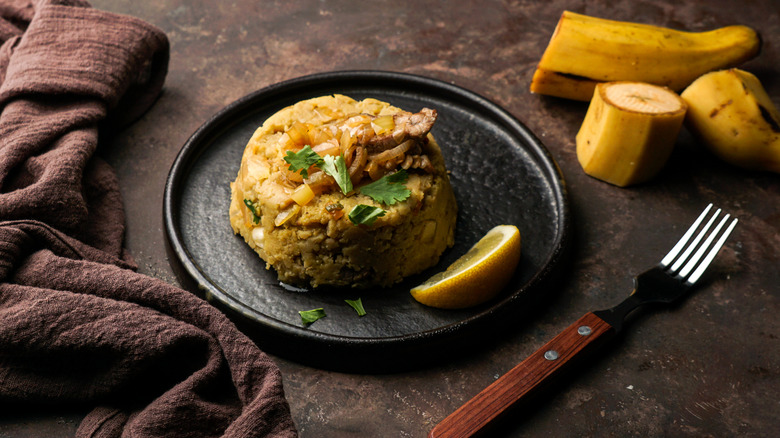
Where arroz con gandules could be considered Puerto Rico's soul food, mofongo is the country's iconic dish. According to Chef Roberto Pérez, mofongo will always be his first recommendation for any visitor. He points to it as the dish that best represents what he calls "la cocina criolla." This refers to Creole cooking or the hybrid cuisine native to the island, and mofongo is the dish that captures this mix of cultures better than anything else.
To understand the history behind mofongo relleno is to understand that phrase — la cocina criolla. Mofongo traces its roots to West Africa. Enslaved Africans arrived in the Caribbean and popularized a dish called fufu made from pounded starchy vegetables. In Puerto Rico, fufu transformed using green plantains as the base, and over time, Spanish garlic and pork rinds worked their way in. The pilón — the iconic large wooden mortar and pestle — became the essential tool to make mofongo, and the resulting delicacy belongs entirely to the island. When eating mofongo, it's important always to enjoy it made to order. Mofongo firms up fast, and a pilón working in real time in the kitchen is a sign you're in the right place.
Pasteles
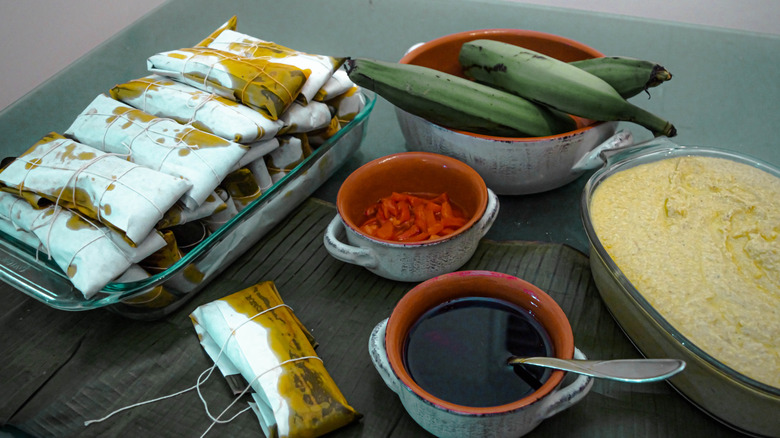
The first time you see Puerto Rican pasteles, you may not know what to expect from these parcels wrapped in banana leaves and tied with kitchen string. Once you unwrap one, however, it's a whole different story. The aroma hits you first — earthy and almost herbal. Inside is masa made not from corn but from grated green banana, yautía (a starchy root vegetable), and sometimes potato. The filling is typically a slow-cooked meat stew spooned into the center before the whole thing is wrapped, tied, and boiled, not baked.
"They may seem humble," says Chef Daniel Lugo, "but they require a lot of skill, patience, and balance. From preparing the masa to seasoning the filling properly and wrapping them correctly, it is a labor of love." It is this labor that brings generations together. Pasteles are usually made in large batches, traditionally by families gathered together in the days leading up to Christmas. The finished pasteles are then frozen in dozens and pulled out through the holiday season as needed. This process is why Chef Roberto Pérez points out, "pasteles are unfortunately being made less and less. They are labor intensive and disappearing from menus."
Bacalaítos and Alcapurrias
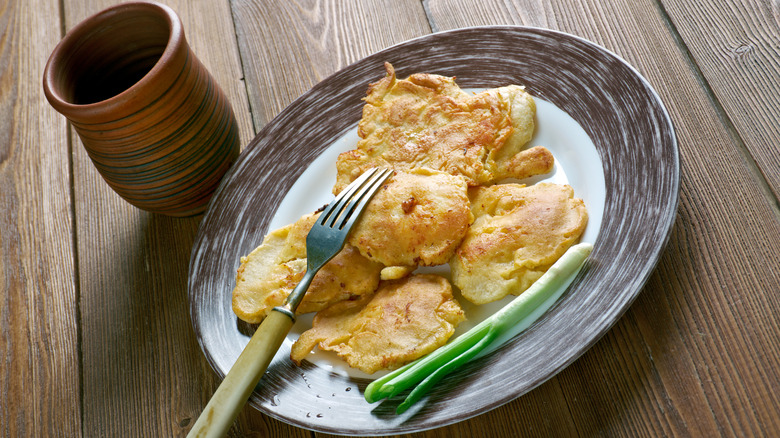
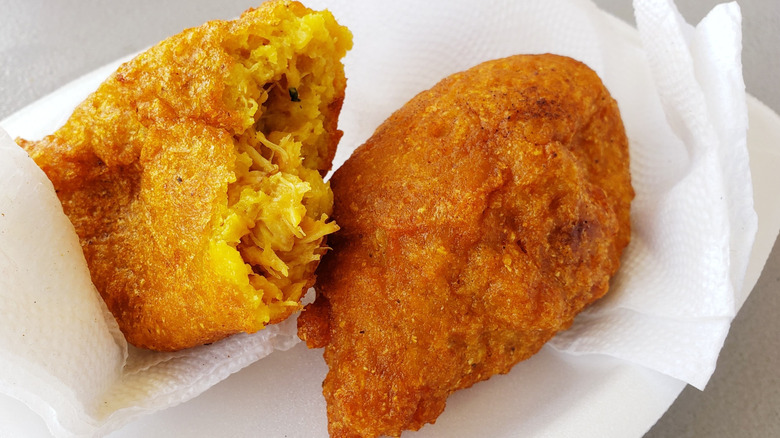
After speaking to our experts, it's very evident that some of the best food from Puerto Rico is eaten on the side of the road, usually standing up, and without a menu to consult. It's the whole experience that makes it so special. Chef Roberto Pérez is adamant about his recommendations: "Some of my favorite foods are the frituras along Piñones on carretera 187. Cooked over firewood, you'll find alcapurrias, bacalaítos ... that have a special smokiness. It's roadside, it's humble, and it's a real Puerto Rican experience."
Bacalaítos and alcapurrias are two types of frituras worth acquainting yourself with. Bacalaítos are salt cod fritters. While they may look delicate and crepe-like, their crispy edges belie a soft, savory center. Alcapurrias, on the other hand, are altogether more substantial. The outer shell is made from a masa of grated green banana and yautía, and the inside is usually a filling of picadillo (a seasoned ground meat stew) or sometimes blue crab. The whole thing is deep fried until the exterior is dark golden and slightly crisp. Both bacalaítos and alcapurrias are best eaten hot straight from the fryer as per Chef Pérez's advice. Ideally, with a cold Medalla in hand, the island's own beer, served "vestidita de novia," meaning so cold that it frosts over "dressed like a bride."
Chicharrón and Cuerito
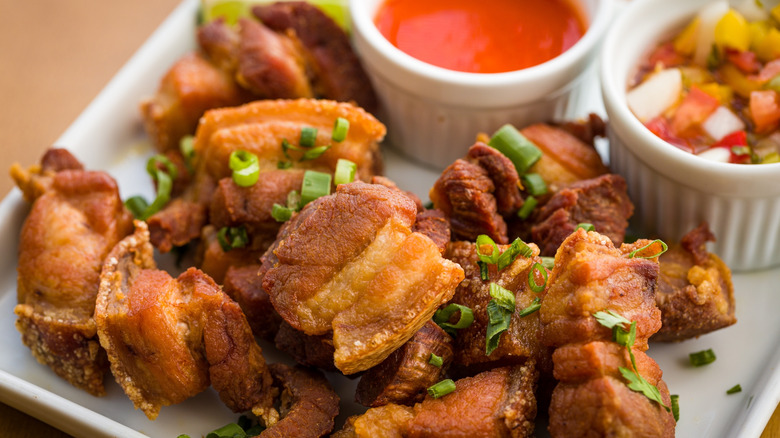
Puerto Rico and pork have a deep relationship. Pork products can be found at all levels of the cuisine, from the lard that enriches masa to the slow-roasted pernil at the center of every celebration. And then you have the crowd favorites: the chicharrón and cuerito. Chicharrón refers to deep fried pork belly, while cuerito is pork skin fried until it puffs and blisters into something amazingly crunchy. Both of these can be eaten as snacks (hello, Super Bowl party snacks) or served as sides. Sometimes they're even a seasoning element in sandwiches or mofongo.
The art of the chicharrón and cuerito is almost entirely technical. Chef Roberto Pérez makes no bones about the fact that "chicharrones, alcapurrias, and pork skin 'cuerito' all need proper temperature control and technique for the proper crunchiness." That crunch is the entire point, and it is harder to achieve than it looks.
Bistec Encebollado
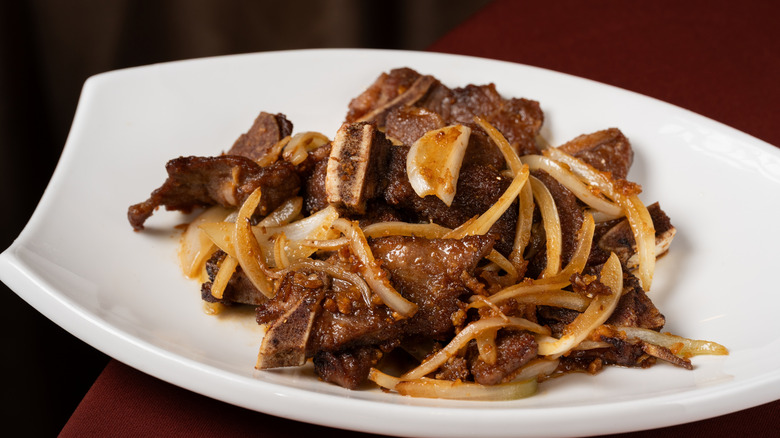
When we asked our experts what combination of dishes they would recommend for a well-rounded Puerto Rican experience, Chef Daniel Lugo included one dish without hesitation in his ideal menu: "Arroz con habichuelas with bistec encebollado with a side of avocados and tostones."
There is a special significance in choosing this dish. This is not a celebratory plate. Rather, it is an everyday Puerto Rican lunch — a workday choice, eaten in a simple restaurant. The fact that a
seasoned executive chef reaches for it when asked what to eat, says everything. The dish itself is straightforward in the best possible way. Order a bistec encebollado and you will receive a plate full of thinly sliced beef steak served with caramelized onions and rice. Avocados and tostones (smashed and fried plantains) on the side just add crunch and creaminess to an already rounded meal. This is the kind of food Puerto Rican home cooks have made and loved for decades.
Arroz Con Jueyes (Crab Rice)
Jueyes are blue land crabs, native to the coastal areas of the Gulf of Mexico and the Caribbean, sweeter and more delicate than ocean crabs. These crustaceans are a deeply embedded part of Puerto Rican food culture and one that Chef Roberto Pérez puts at the top of his list of overlooked ingredients: "It's often stewed into arroz con jueyes, used as a stuffing in alcapurrias, or simply served alone." From what Pérez tells us, it's evident that these crabs are not a novelty but more of a building block of Puerto Rican cuisine.
Arroz con jueyes is the dish that best shows off the crab meat. The lightness of the crab is lifted further by a sofrito base. When sofrito uses key ingredients such as recao — a long-leafed herb native to the Caribbean — combined with ajícitos — the small, sweet peppers fundamental to Puerto Rican cooking — the difference is immediate. When made from scratch, these ingredients beat anything that comes out of a jar, says Chef Pérez. Knowing where to find the best version of these dishes is its own local knowledge. "Regulars know which spots make them fresh, and that's where they go," he adds.
Pescado Frito
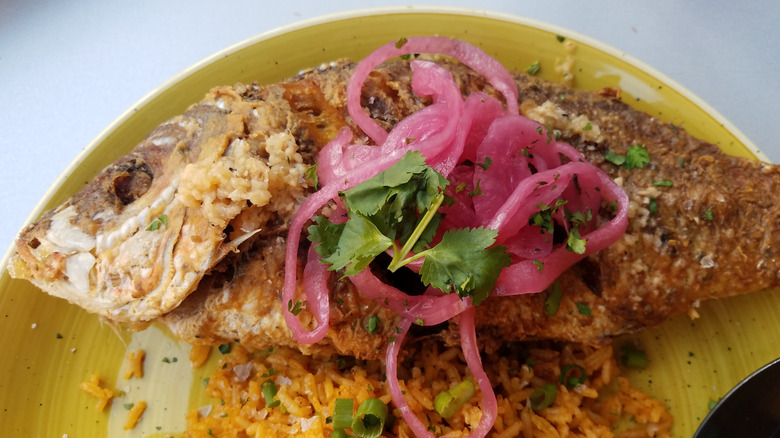
Chef Roberto Pérez leads his ideal Puerto Rican meal with pescado frito, or the humble fried fish. But his recommended accompanying dishes are also worth paying attention to. According to him, a well-rounded Puerto Rican meal must include pescado frito, ensalada fresca (fresh salad), and "an order of rice and beans." Just three things, with the implication that this is not a dish that needs fancy garnishes and elaborate sides. Instead, it needs only to be done correctly.
In Puerto Rico, the fish is generally served whole. The preferred fish are chosen for their firm flesh and clean flavor, then fried in enough hot oil to render the skin crisp and golden. This crunchy, crispy exterior is the perfect foil for the moist, sweet flesh within. On the plate, along with the fish is the ensalada fresca — typically a simple arrangement of lettuce, tomato, red onion, and avocado to cut through the richness and reset the palate between bites. Chef Pérez's consistent emphasis on pescado local — local fish — is not incidental. Freshness is the entire foundation of this dish.
Viandas
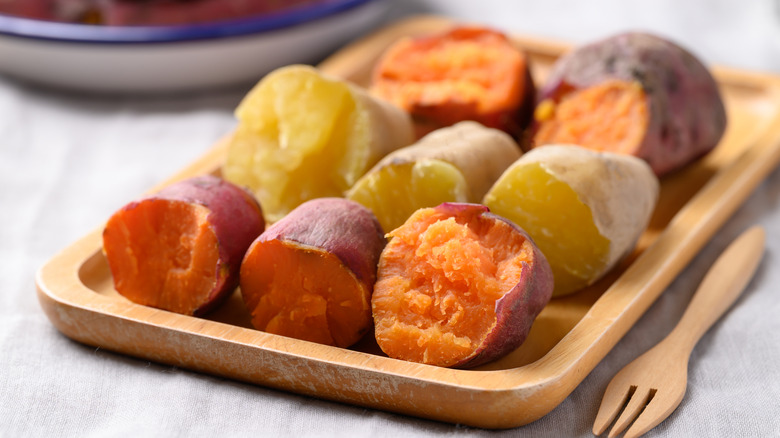
Before plantain became the word du jour for Caribbean food and mofongo popped up on every other menu, there were viandas. Traditional recipes for starchy root vegetables that fed the islanders long before colonization changed the cuisine are largely ignored by visitors today.
The word viandas refers collectively to the root vegetables and starchy produce that form the carbohydrate backbone of traditional Puerto Rican cooking. These can be boiled, mashed, or fried, and sometimes even served as an escabeche: a sharp marinade made with onions and olives. Chef Daniel Lugo points out a whole family of these ingredients that are deeply rooted in Puerto Rican cooking but rarely make it outside the island. These include pana — a tropical breadfruit that may be the staple crop of the future — and yautía, which is similar to taro. He also mentions ñame, a dry fibrous white yam, and guineítos, small unripe green bananas. For Chef Lugo, a plate of viandas is the penultimate culinary test. "A simple plate of viandas ... [reveals] the soul of a kitchen," he states.
Habichuelas Guisadas
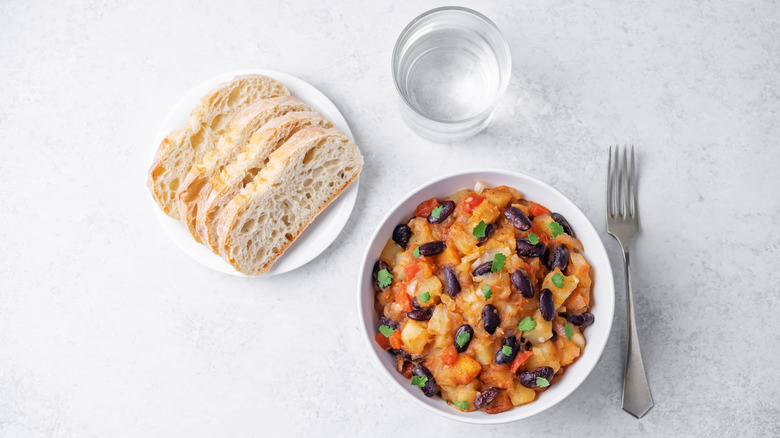
Habichuelas guisadas (stewed beans) are served with rice and eaten at nearly every table, every day, across every part of Puerto Rico. It is possibly the most ordinary thing on any Puerto Rican menu, but also one of the most delicious. Both chefs are united on this point. Chef Daniel Lugo says, "Locals know that if the beans and roots are done well, the kitchen understands Puerto Rican food." Chef Roberto Pérez arrives at the same conclusion from a cook's angle: "I like good arroz guisado con habichuelas. These are good indicators on whether fresh sofrito is used."
The dish begins, as almost everything in Puerto Rican cooking does, with sofrito (which is different from salsa). This is the base and where the dish is won or lost before a single bean hits the pot. The rice that accompanies it is no afterthought either. Arroz guisado is rice cooked in a seasoned broth that develops a crust at the bottom of the pot during cooking. Known as pegao, many Puerto Ricans consider it to be the best part of the meal with its crispy texture and intense flavor. Scrape it from the bottom, eat it with the beans, and reconsider any former ideas you had about boring old beans and rice!
Tembleque and Arroz Con Dulce
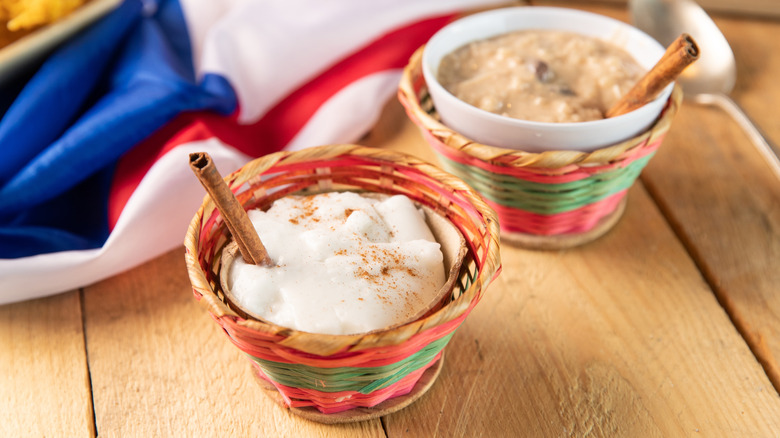
For many, the best part of any meal is the dessert, and in Puerto Rico, it's no different. However, when it comes to sweet endings, you may need to adjust your expectations. Chef Daniel Lugo frames the island's desserts as the natural (and only) conclusion to any meal, no matter how casual or festive: "For dessert, something like tembleque, flan, or arroz con dulce. That gives you a full picture of Puerto Rican cuisine, from fritura to comforting mains to traditional sweets." Think crunchy bacalaíto, the comfort of spooning up a slow-braised bean stew, and ending with cool mouthfuls of coconut pudding. And speaking of coconut pudding, tembleque is the dessert to start with. This is a coconut milk pudding with no synthetic flavorings and one of the most elegantly simple desserts across the Caribbean.
Arroz con dulce is rice pudding, but Puerto Rican style. And by this, we mean it's cooked in coconut milk with a heavy note of spices like cinnamon, cloves, and ginger. Flan completes this trifecta of Puerto Rican desserts not to miss. Here, the caramel is darker and the custard sweeter than traditional Spanish flans, but still as compelling. Pro tip: Order whatever is made in-house and savor each bite slowly as the perfect ending to a fulfilling meal.
Tostones (and Tostones de Pana)
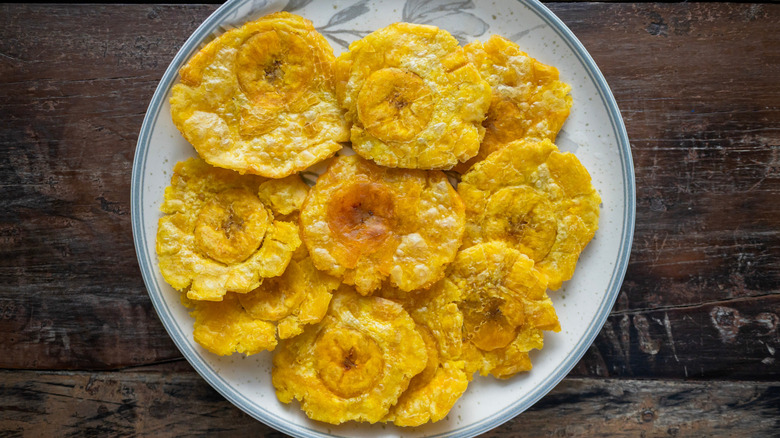
If there is one item on every table in Puerto Rico, it's tostones. You will find them served with your mains, tucked beneath your fried fish, and stacked precariously beside your rice. They are so omnipresent that it would be easy to treat them as a background dish. But that would be a mistake.
Chef Roberto Pérez is unequivocal: "I always order freshly made tostones." Fresh being the operative word here. Tostones are made from the island's ubiquitous green plantain. Thick, sliced plantain rounds are flattened by a tostonera (the traditional press) and double-fried to crispy perfection. The trick here is getting and eating them hot off the press. For something richer and less common (though equally loved), Chef Pérez points to tostones de pana. Made with breadfruit instead of plantain, this is a creamier, denser version.
Chef Daniel Lugo includes tostones in his ideal Puerto Rican meal, pairing them naturally with bistec encebollado and avocado for a trio where each element balances the others. Finally, Pérez suggests asking "if there's an in-house homemade 'pique' hot sauce." Pique is Puerto Rico's own hot sauce. Every kitchen that makes its own has a slightly different version, and a tostón dipped in a good house pique is a complete thing in itself. Do not skip it.
Puerto Rican Chinese Food
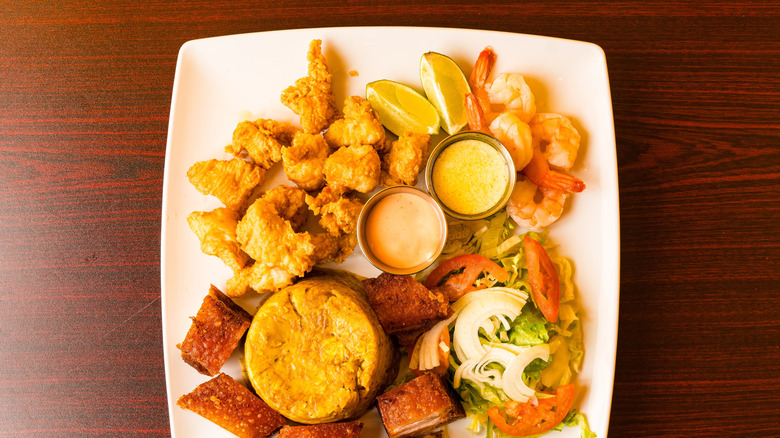
Every food culture is the sum of the people who live within it. The island of Puerto Rico has done this with its own brand of generosity. The Chinese community that arrived in the Caribbean can be traced back to the 19th century, with workers originally brought over as laborers. Over generations, the Chinese Caribbean community developed its own particular way of cooking and eating that made its way to Puerto Rico. What emerged was not pure Chinese or Puerto Rican food. Instead, a delicious synthesis emerged and soon became an inseparable facet of the island's identity.
Chef Roberto Pérez says it plainly: "Puerto Rican Chinese food. It's its own thing. The tostones you'll get at these spots are some of the best anywhere, and the menus reflect a cultural blend that's uniquely Boricua." By Boricua, he refers to the term Puerto Ricans use for themselves and their culture. What this looks like on a menu is an amazing blend of categories. Fried rice may arrive at your table alongside a helping of tostones. Chow mein noodles share space with arroz con habichuelas. Dishes are seasoned with both sofrito and soy sauce. To eat at any of the Puerto Rican Chinese restaurants is to enjoy a meal where several cultures live in harmony and create culinary magic.
Ice cream
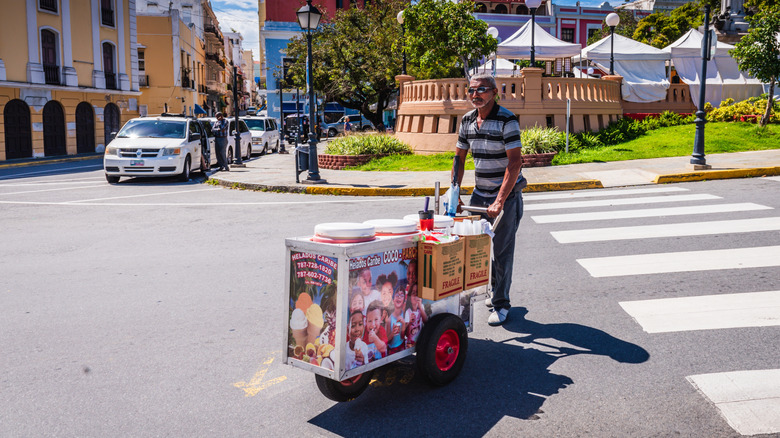
Puerto Rican ice cream is never a footnote to any meal. Ice cream has a surprisingly long history, and on the island, it is a tradition with its own lineage. The ice cream is the result of a history that stretches across countries and influences. Chef Roberto Pérez speaks with such warmth and nostalgia that the urge to hunt down the next flight to Puerto Rico is inescapable. "This is something people often miss out on ... specifically the [ice cream] from the lineage of Chinese ice cream makers who came through Cuba in the 1950s and settled in Puerto Rico. They created a style that's now part of the island's fabric."
The Chinese Cuban ice cream makers brought with them a method that was both novel and creative. And it's the flavors where the Puerto Rican influence truly shines. You can find iconic varieties such as soursop, pineapple, parcha (the local passionfruit), acerola (Caribbean cherry), coconut (obviously), and even tamarind. These are not flavors made to impress but are the fruits of the island, served up without elaboration or explanation. The best ice cream parlors are the old, family-run ones and are not hard to find if you ask the right people. And, as our experts have revealed, the right people are the ones who grew up eating here!