

The French Restaurant Red Flag That Should Have You Saying Au Revoir
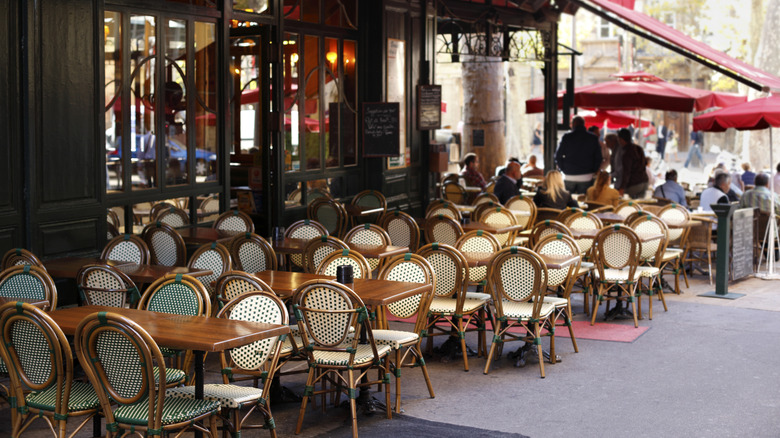
A giant menu at a restaurant is always an intimidating affair, but particularly at French restaurants. There are tips for navigating restaurant menus with too many options, but should you have to? A commonly held belief is that large menus are a restaurant menu red flag since it implies the kitchen is spreading itself too thin. This can be especially alarming at French restaurants, which tend to have a reputation for fresh, deliberately assembled dishes. We asked Zoilan Ruiz, the executive chef at Le Rêve Restaurant & Raw Bar in Sheridan, Wyoming, who explained that struggling with French cooking fundamentals can be a much bigger red flag than the menu.
On the question of whether an oversized menu at a French restaurant is alarming, Ruiz answered, "Yes and no. I believe French cuisine is the foundation of modern cooking. It's not about quantity, it's about quality. The strength of the kitchen ultimately reflects the answer to this question." In other words, a large menu isn't always a dealbreaker. Ruiz focuses more on how a traditional French restaurant handles the bread-and-butter staples of French cuisine when determining quality. "For me, it's about sticking to the fundamentals while allowing for spontaneity, without doing the techniques an injustice," Ruiz said. Notably, this does leave room for different kinds of menus. This can include "classics like cassoulet, rillettes, daube de boeuf, or a tartine;" all dishes which Ruiz believes require foundational French cooking knowledge.
Quality beats quantity in French restaurants
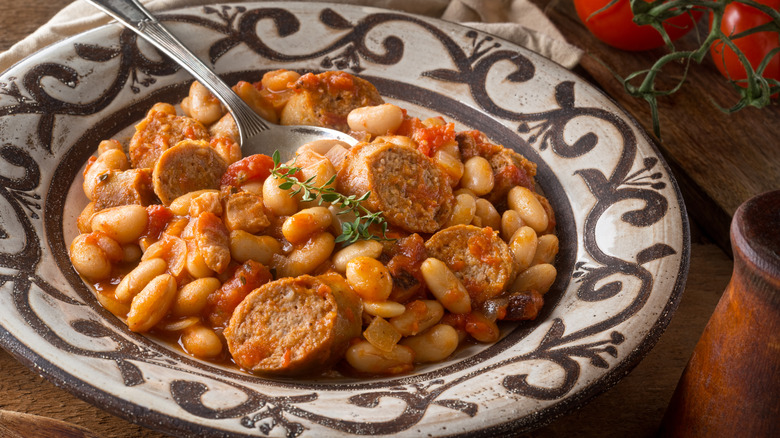
The dishes named by Ruiz aren't fancy or high-brow; cassoulet is a style of stew made from meat and beans which was originally considered peasant food, while daube de boeuf is also a stew. Rilettes are a slow-cooked, fatty meat which are sometimes used as sandwich filling, while tartines are open-face sandwiches. What these have in common is specific French approaches built around seasonal ingredients and minimal seasoning (instead building flavor through cooking techniques). A French menu should ideally show that to pass muster.
In any case, Ruiz does prefer small menus even if the kitchen is capable of handling more. "I do find it cumbersome to execute too many items on a menu," Ruiz said. "I'm after flow, a moment, an experience rooted in simplicity and elegance." A larger menu might also suggest the restaurant is using frozen ingredients, compared to a smaller menu built around currently seasonal ingredients. Even then, properly flash-frozen foods still have plenty of their freshness preserved, so it's not always so alarming to see nowadays.
When we asked if there are any dishes he'd never expect to see at all, Ruiz answered "paninis." He said he'd expect croque monsieurs, instead (French sandwiches made with ham, gruyere, and frequently béchamel sauce). That said, in France, everyone's eating French-style tacos as of late, so you shouldn't necessarily be threatened if a traditional French restaurant contains something more unorthodox too.