

12 Frozen Pizza Brands Made With Actually High-Quality Ingredients
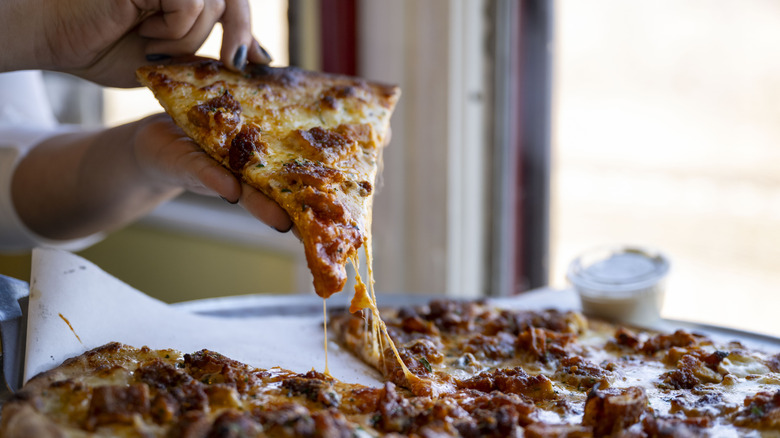
Frozen pizza didn't become a thing in the U.S. until the 1950s, when Americans actually started putting freezers in their homes en masse after World War II. This, combined with returning GIs having a craving for the pizza they enjoyed in Italy, sent the already existing cuisine into another stratosphere on these shores. Recognizing this, pizzeria owners started making refrigerated pizzas for their customers to take home.
It was a Philadelphian named Joseph Bucci who filed the first patent for frozen pizza, outlining everything you needed to do to keep the pizza from being ruined in the freezer. The template had been set. But frozen pizza sellers remained regional until Totino's entered the fray in 1962, mass-produced at a factory in Minnesota by husband-and-wife team Rose and Jim Totino. By the time Pillsbury bought the business in 1975, the frozen pizza industry was well-established. Two decades later, DiGiorno was released by Kraft, creating the first rising-dough frozen pizza. They've been at or near the top of the market ever since.
But not every pizza on this market is built equal. Nowadays, even the hyperlocal, authentic pizza places, from New York City to Chicago to San Francisco, have gotten into the mass-produced frozen pizza game. Pies you would only hear about from old-school eaters and food nerds are now available to anyone, anywhere. This has melded with the desire for health-forward frozen pizzas, which has made certain companies more and more popular. So, which frozen pizza brands use the best ingredients today? Well, here are 12 of them.
Table 87
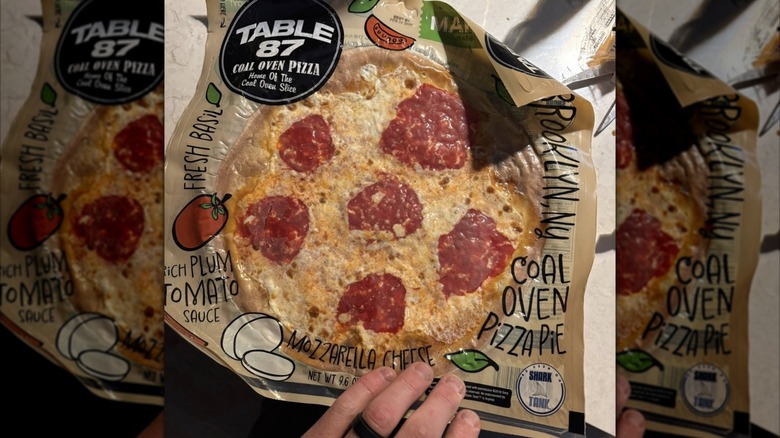
A pizzeria that's a Brooklyn original? Check. Pizza made in a coal oven? Check. Something you can pull out of your freezer that's as good as most pies you get delivered fresh? Check. Table 87 certainly isn't the only legit outer-borough slice house around, though it's a pretty damn good one. However, it's one of the few that seems to have not only entered the frozen pizza game but played it beautifully.
It all started in 2014 when the Brooklyn Heights-born joint started vacuum-sealing its perfectly charred fare. Two years later, it took it onto "Shark Tank." This wasn't your grandfather's boxed-up Stouffer's or whatever. This was the real deal in a transparent package, fortified to maintain its authentic taste experience. And it all starts with the ingredients.
Table 87's signature, handmade, 10-inch Margherita pie keeps it simple, like a great pizza should: mozzarella, sauce made with plum tomatoes, and basil, with the add-ins largely either non-GMO or organic. You can take the pizza out of Brooklyn, but thankfully, you can't take the Brooklyn out of the pizza. At least not in Table 87's case.
Amy's Kitchen
It was a pregnant Rachel Berliner and her grocery store-scouring husband Andy who, in 1987, decided to make the organic, vegetarian food they were struggling to find. They started by making pot pies. But their little, fledgling family business needed a name. They went with their newborn baby's, Amy.
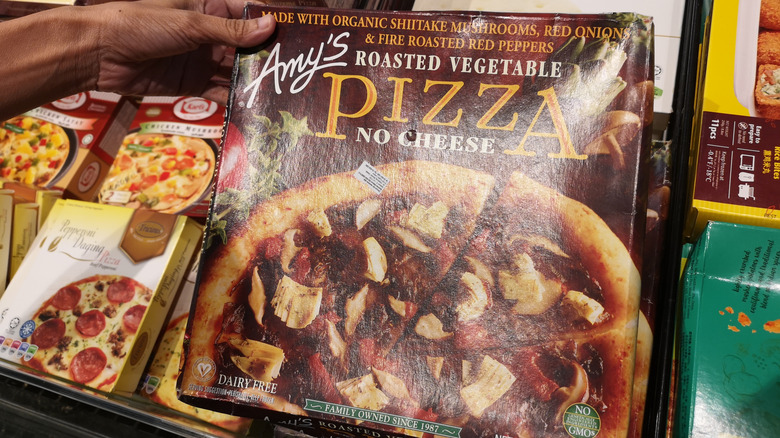
From the very beginning, Amy's Kitchen vowed to use only organic veggies, grains, and ingredients in whatever it made. Despite impressive growth, that hasn't changed decades later. In 1996, Amy's made its first pizza. And, like everything the Petaluma-born Amy's made, it was fully organic. Its basic cheese pizza contains part-skim mozzarella cheese, organic tomato purée, organic extra virgin olive oil, organic honey, organic red onions, and organic garlic. We sense a theme here.
This simplified, pure approach has paid off for Amy's — to the tune of $1 billion in retail sales for the company, to be precise. What started as a venture to eventually pay for namesake Amy's schooling has become something much more. Its health-forward pizza has a lot to do with it.
Rao's
The red-sauce Italian joint on a corner in East Harlem has a mythology all its own. Over its many years in business, Rao's has squeezed in everyone from the cream of society's crop to the most infamous personalities in modern history. Reservations practically have to be willed to you to have any chance of getting in. Rao's parlayed its name into a grocery-store red sauce that can be found nationwide. Now, they've come for frozen pizza.
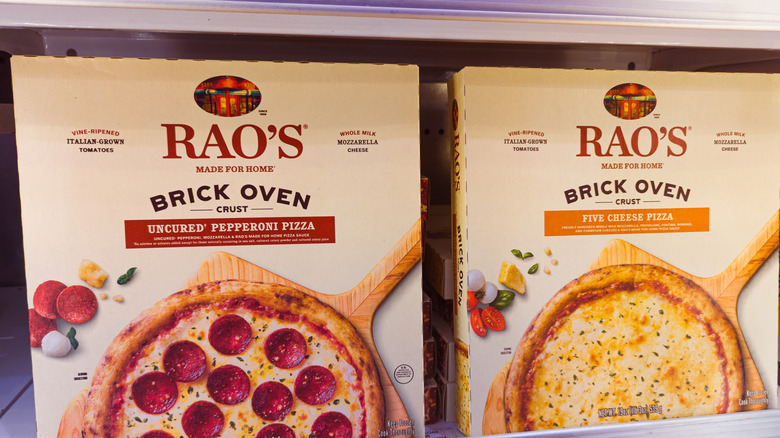
And like its sauce, consumers all over have become fans. This is due to the authentic ingredients it uses in its frozen pies. The pepperoni pizza, specifically, is made with uncured pepperoni, whole milk mozzarella, and Rao's homemade sauce. The sauce itself is made with vine-ripened tomatoes and fresh basil. No added nitrates, no garbage, no nuthin'.
Aside from the pepperoni pizza, Rao's has a five-cheese, a meat trio, and a fire-roasted vegetable offering (complete with bell peppers, red onion, tomatoes, and mushrooms). Who needs to trek to Harlem when you've got this pie in your freezer?
Newman's Own
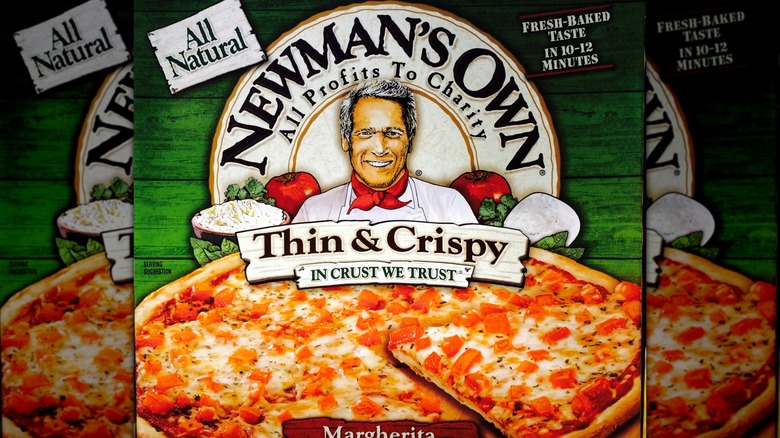
Not only is he an icon of American film and culture, but Paul Newman's other great legacy is Newman's Own. Started in 1982 with author A.E. Hotchner, it was a homemade salad dressing — first made for friends — that sparked the beginning of the label, with Newman himself decreeing that all profits go to charitable causes. The salad dressings have always been well-regarded and, like the company's ethos, focused on wholesomeness. This has extended to the frozen pizzas.
An offering like the four-cheese pie may not be the most traditional Italian pizza around (it uses, gasp, cheddar cheese), but it does use good, real ingredients. Aside from the crust (which is just wheat flour, water, and some vegetable oil), there's the aforementioned cheddar, mozzarella, Asiago, and Parmesan, along with a sauce made of tomato purée, red wine vinegar, salt, garlic, onion, and a few spices. That's about it.
All told, the entire pizza contains fewer than 1,200 calories. That's the equivalent of about three slices of a normal, delivery pie. It's a pizza that not only won't make a massive dent in your nutritional goals, but it'll make you feel good about where your money is going.
Cappello's
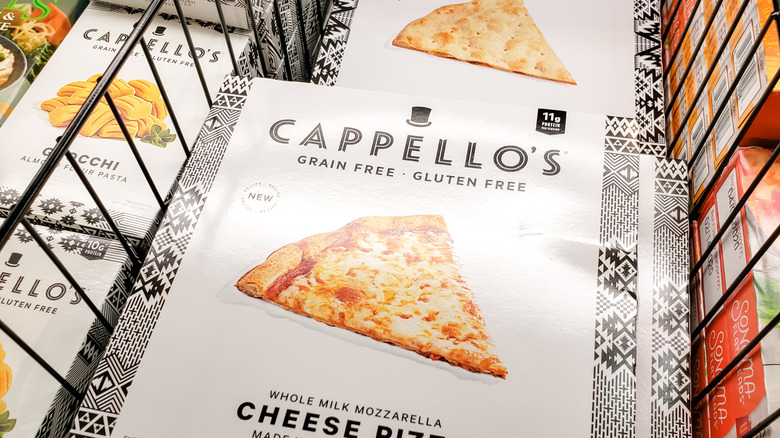
Cappello's is big on its ingredients. Or rather, its lack thereof. Born in Colorado from the work of two buddies, Ben Frohlichstein and Stacey Marcellus, Cappello's is gluten-free pizza done very well. Because why can't gluten-free stuff taste great, they thought. And after much trial and error, they figured out how. A decade after they started their business, Cappello's saw a 74% growth in sales from one year to the next, leading the charge when it comes to quality-focused brands in the frozen aisle.
Right on Cappello's website, it proudly shouts each pizza's essential elements: extra virgin olive oil, whole milk mozzarella, arrowroot flour, and cage-free eggs. But every component of the pie is made with gluten-free, authentic components, including organic coconut milk and pizza sauce made with water, crushed tomato concentrate, olive oil, red wine vinegar, tapioca starch, sea salt, roasted garlic, molasses, oregano, red pepper flakes, and basil.
The almond flour crust is also what makes Cappello's offering so unique, along with the entire attitude of the company. As part of the directions, they suggest sitting in front of the oven and meditating on the melting cheese. Sure, that can be an alternative to watching "The Pitt."
Wild Mike's Ultimate Pizza
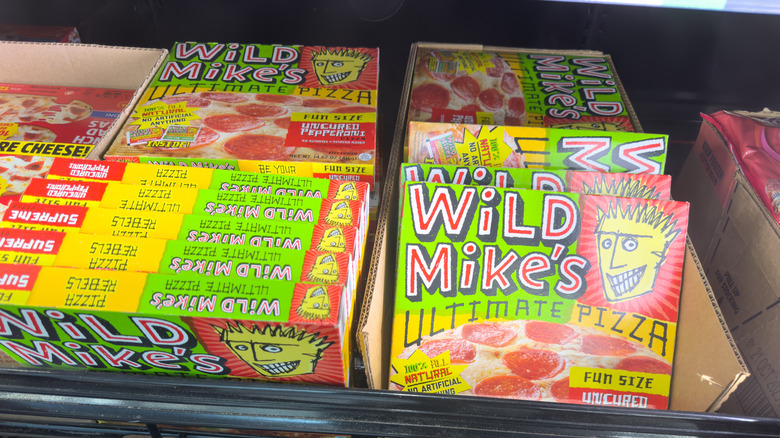
Founded in 1967 by Ron Piazza, a grocer who made pizzas in his store, Wild Mike's Ultimate Pizza is an Oregon-based company that has turned those humble beginnings into a frozen pizza-making machine, churning out 20 million of them every year. It's also entered the school cafeteria game, providing pizza, plus other frozen foods, to a number of K-12 lunchrooms. I'm sure plenty of older folks wish Wild Mike's was in their middle school cafeterias back in the day.
Wild Mike's steadfastly avoids filler stuff, such as L-cysteine, calcium propionate, sodium benzoate, ascorbic acid, soy lecithin, mechanically separated chicken (for those pies with chicken), monoglycerides, diglycerides, wheat starch, and potassium sorbate. The four-cheese pizza, for example, contains part-skim mozzarella, provolone, part-skim Parmesan, and part-skim Romano. You'll find no added nitrates or nitrites and no artificial ingredients anywhere in this, or in any other Wild Mike's offering.
The brand, like many others on this list, has an ethos and sticks to it. It's still family-run by Ron Piazza's son, Steve, who refuses to add any kind of unnecessary ingredients. All the better for those looking to enjoy a frozen pie at home without wondering what's going into their body.
Di Fara
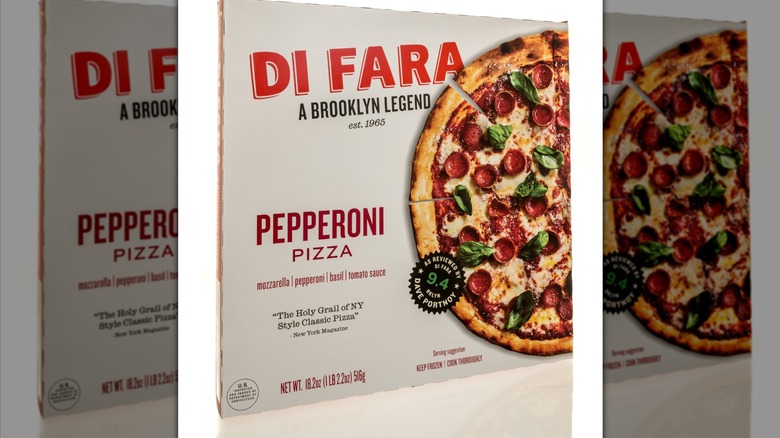
Methodical. That's what's always defined Di Fara. The original pizza joint was opened in 1965 in the Midwood neighborhood of Brooklyn by Domenico DeMarco, who continued to work behind the counter — clipping basil and hand-grating cheese — for decades. The humble spot on Avenue J became legendary.
It's only in recent years that the business has expanded, starting with shipping famed Di Fara pies nationwide in 2019. Unfortunately, Domenico DeMarco passed away in 2022. The man who, according to the New York Times, "defined the New York slice," wouldn't live to see his pizzas in grocery store frozen aisles. Whether the old school pizzaiola would approve or not is another thing. But his exacting ethic lives on, and has extended to the ingredients in its classic frozen pizza.
The tomato sauce is simply tomato purée, olive oil, water, salt, black pepper, and dried basil. The crust is just wheat flour with a little durum wheat sourdough, guar gum, malted wheat flour, and yeast. Otherwise, it's mozzarella, part-skim Parmesan, some basil leaves, and you're all set. Lucky people can sit in their homes now and enjoy the pizza that others used to have to wait in lines while an old man sprinkles on ingredients to eat. It was worth it then, and it's worth it now.
Banza
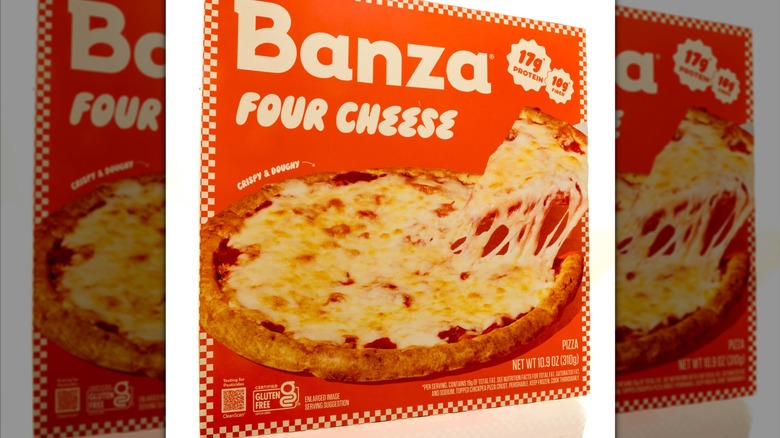
It was 2013 when Brian Rudolph used his kitchen in Detroit as a testing ground to fashion pasta — good pasta — from chickpeas. Rudolph loved eating pasta (who doesn't?), but he wanted a healthier, gluten-free version that just wasn't available. He chose chickpeas because of their superfood qualities, being both a protein and a starchy veggie. It's worked out beautifully for Rudolph and the brand, with this approach extended to frozen pizza. By 2023, Banza was being sold in 25,000 retailers around the country, including Whole Foods and Walmart.
All of Banza's pizza is, like the majority of its products, certified gluten-free. The plain crust and the vegan cheese, vegan roasted veggie, and vegan Margherita offerings are non-GMO, and the four-cheese, regular roasted veggie, and Margherita pies have a low glycemic index. The crusts are, of course, chickpea-based. Meanwhile, its sauce is made with a relatively simple combination of tomato purée, date powder, salt, basil, garlic powder, basil extract, and oregano.
Banza's pizza is considered the only gluten-free pizza out there that doesn't taste like disappointment and instead tastes like actual pizza. Banza has unlocked the key to food with good carbs, and it's taking pizza in a new, exciting direction. It offers a variety pack as well, which includes plain, four cheese, roasted vegetables, and Margherita.
Daiya
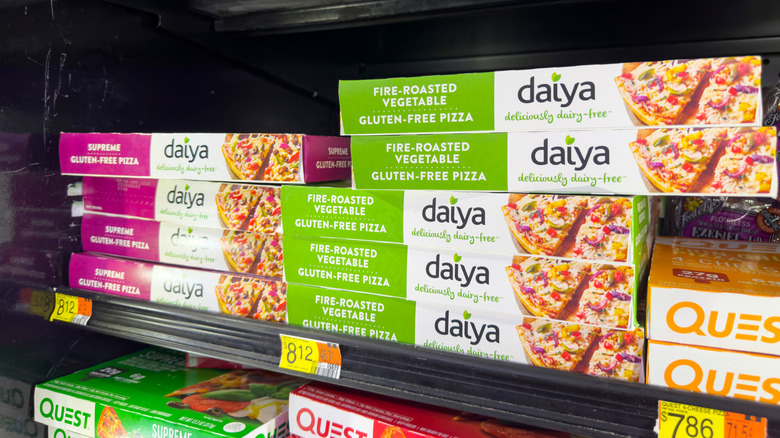
Hailing from British Columbia, Daiya is a Canadian plant-based food-maker founded in 2008. The company specializes in making non-dairy cheese substitutes, and even Amy's Kitchen uses Daiya ingredients in its products. Daiya's operations and goods have won numerous awards over the years, and that pedigree has been applied to its frozen pizza.
The classic cheese pizza offering is a perfect example of Daiya's whole approach: a gluten-free crust made from rice flour and millet flour to go with dairy-free mozzarella (made from its own proprietary oat cream blend). While Daiya does use a handful of additives in its crust and sauce, the primary ingredients include the likes of potato starch, rice flour, tomato paste, and olive oil. The crust is high in fiber, with an entire pizza containing 14 grams, which is half of your daily recommended intake.
Daiya markets itself as comfort food, giving you the cheesy experience you want without any of the possible downsides that come with real cheese for some pizza fans. These kinds of ingredients may call for some extra maneuvering in the prep, however. It's not ideal to microwave a Daiya pizza, for example, and if you want the cheese melty, Daiya recommends broiling it for a minute once the baking is done.
Milton's
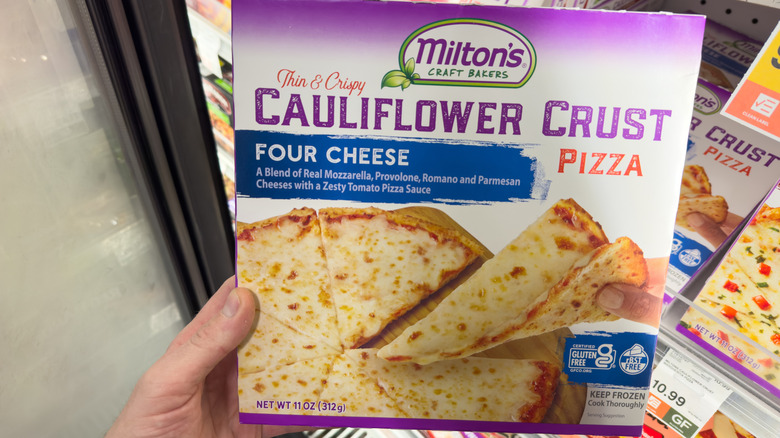
Milton's has an interesting history, spun off from a New York-style deli in Del Mar, California –- founded by a Chicago native –- that specialized in things like Reuben sandwiches and matzo ball soup. Today, it has an entire line of gluten-free and plant-based protein eats, including crackers, bread, and snack bites. But it's the cauliflower crust pizza that seems to stand out. Which is great, because as many of us have unfortunately found out, cauliflower-based pizza can go very, very wrong.
The company prides itself on responsibly sourcing its ingredients. Its crusts are made with cauliflower, mozzarella, and helpful additions such as rice flour and tapioca starch. While a small number of additives can be found in the sauce, it's primarily based on water, red and green bell peppers, onions, and cream.
Milton's — which sells some of its pizzas only at Target – offers a wide variety of gluten-free pies, including four cheese, roasted vegetable, grilled chicken and bacon, Margherita, uncured pepperoni, BBQ chicken, and Mediterranean (mozzarella, feta, red peppers, kalamata olives, and sun-dried tomatoes).
Talia di Napoli
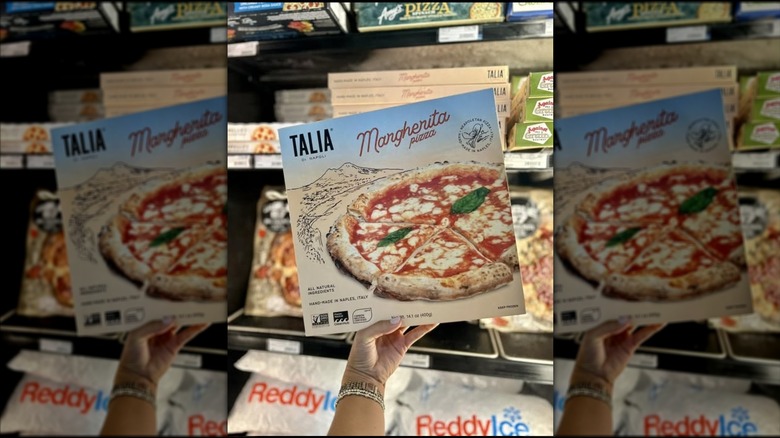
You're probably not going to find a more authentic frozen pizza on the market. Talia di Napoli is a direct product of Naples. The tomatoes are Pompeii-grown, and the mozzarella comes from the cows grazing on the plains of Mount Vesuvius. The olive oil is also as authentic as it comes. One bite and you might find yourself frozen in volcanic ash. That's how legit this pie is.
There's incredible homeland simplicity to this frozen pizza. It's so streamlined it's practically magic. We're talking six ingredients total. Total. Flour, water, mozzarella cheese, extra virgin olive oil, salt, and basil. That's it. (And just a friendly reminder here that fresh basil is always better than dry basil. Always.)
Talia even makes a vegan frozen pizza cut from the same cloth. The vegan mozzarella used is made from cashews and almonds to go with its sourdough crust, pomodoro sauce, and fresh basil. After something like this, how could you ever go back to Totino's?
Genio Della Pizza
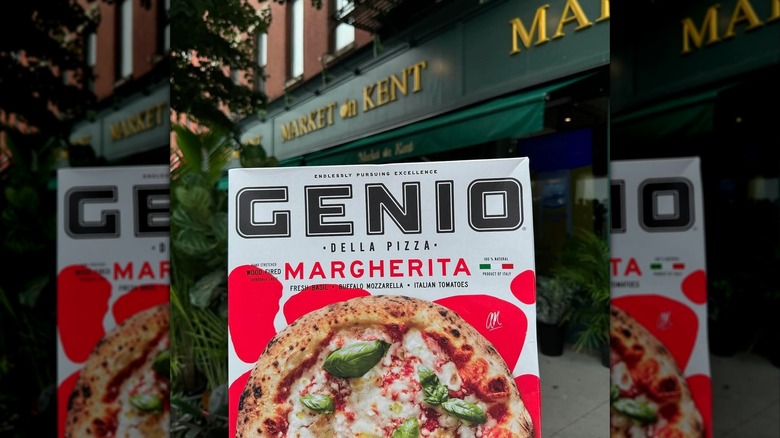
When Anthony Mangieri makes something, people are happy. The man behind Una Pizza Napoletana –- ranked the number one pizza in the world, among other heady acclaim –- launched a frozen pizza brand in 2023. Initially, you could only get it around New York City, but it has since expanded its availability. A big grazie for that.
Genio Della Pizza is made in Italy with Italian ingredients. The Margherita, for example, boasts flour milled in Italy, basil from Liguria, and sea salt from Sicily. All of its pies use buffalo mozzarella, and the dough is stretched by artisanal Italian hands. Even the micro-ingredients are simple and authentic. The crust consists of soft wheat flour, water, salt, yeast, and dry wheat sourdough. The sauce for the Margherita is just tomato passata, water, salt, and corn starch. That's all she wrote.
There are currently three varieties in the Genio Della Pizza line: Margherita, bianca (white pie), and uncured pepperoni. You can't go wrong with either of these. In fact, you can only go so very, very right.
Methodology
The entries on the list wound up falling into two categories: frozen pizzas that are made with "healthy" ingredients — be they cauliflower crusts or organic, vegetarian toppings — and frozen pizzas that are made from fresh, authentic components, such as uncured pepperoni and plum tomatoes grown in Italy.
To identify the pizza brands that made the cut, we pored over the ingredient lists of their most popular pizzas. The brands that used a high number of additives for their sauce, crust, and toppings alike were out of the running. While some of the brands on this list may use the occasional additive, each pizza is primarily made with high-quality ingredients.