

How A Quarter Can Tell You If Frozen Food Is Safe To Eat (Seriously)
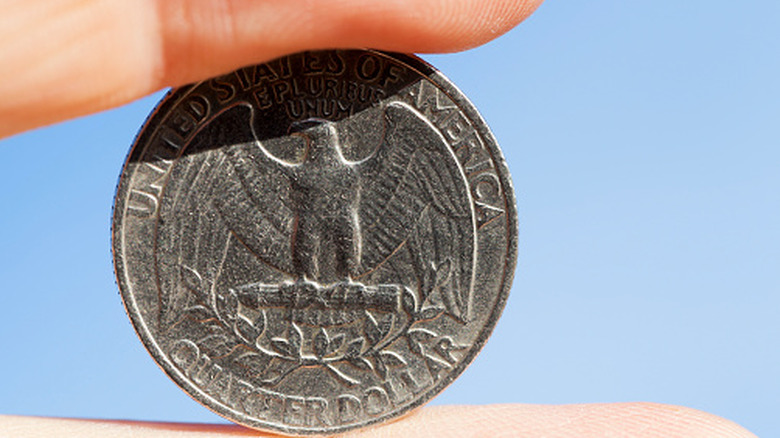
Picture it: You're just finishing a nice vacation and you get home only to find your microwave display blinking and none of the times on your digital clocks are correct. With a sigh, you realize your power went out at some point and you have no idea for how long. You could cross your fingers on your food still being good, but it's impossible to know for sure, right? Nope! You can ensure you're not eating gone-off food with the help of a cup and a quarter.
To do this helpful hack, get a cup and fill it up with water. Then, put it in the freezer and wait until it's frozen solid and place a quarter flat on top of the frozen surface. If you're away from home for a while and come back to find there's been a power outage, just check the cup. If the quarter is still on top, the food should be good to eat. If it's at the bottom of the cup, that means it got warm enough inside for the ice to fully melt, which means your frozen goods are now things you should toss from your freezer.
That's all there is to it, but it can be useful for more than just power outages. You can use the cup and quarter technique to see if your freezer is fluctuating in temperature or if there are warm spots due to leaks. It also helps you know what to do if your fridge dies. This is a straightforward trick that's not just handy but downright vital to ensure your safety.
Why this quarter hack is important
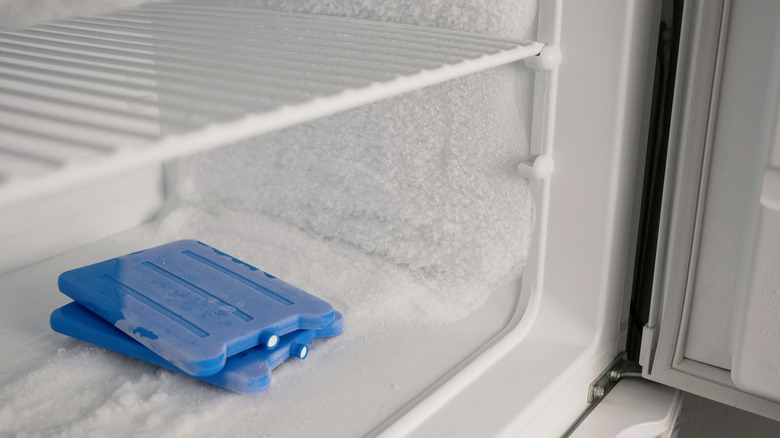
Although still cool inside and well-sealed, a powerless freezer can become harmful quickly. Raw ingredients and prepared dishes become a breeding ground for bacteria in just two hours, once they reach the "danger zone." In fact, if certain foods rest above 40 degrees Fahrenheit for as little as 20 minutes, bacteria can start to grow rapidly; even doubling. Some such bacteria include Staphylococcus aureus, Salmonella, and E. coli, all of which can make you sick and may even prove fatal in certain circumstances.
Once power is lost, ice usually stays solid in a full, well-insulated freezer for two days if left unopened, so keep that in mind. Some parts, like the door area, may heat up faster. That means that if the quarter is at the bottom of the cup, the interior has been in the danger zone for more than enough time to begin rapid bacterial growth. At that point, even if the contents of your freezer have been refrozen, they are likely no longer safe to consume.
If you are around during a power outage and see that your cup and quarter are beginning to look a little liquidy, there are a few things you can do. If you live near a place with dry ice, you can pack some of that into your freezer to keep the temperatures down. Just know that you shouldn't store dry ice there long-term. You can also transfer meat and dairy products to coolers with ice in them. Just remember that once they hit 40 degrees, it's time to throw them away.