

The Unusual Alcohol Rule To Keep In Mind Before Dining In Philadelphia
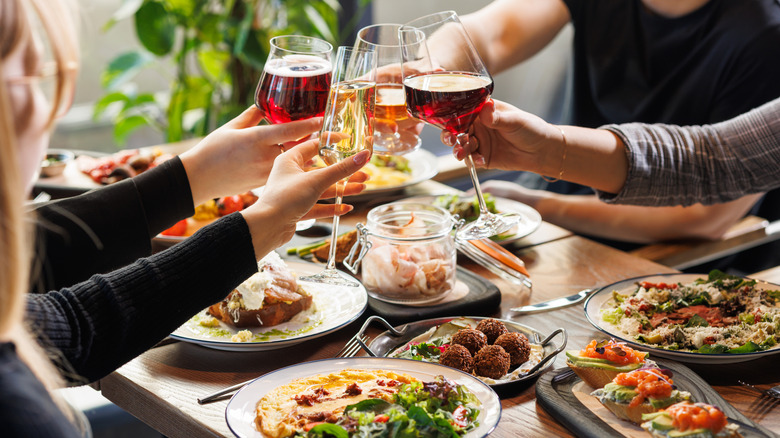
It's a scenario anyone who lives in Philadelphia is familiar with: While dining at a nice restaurant, some out-of-town visitors come in — tourists or business travelers, maybe — and they try to order a drink. It's a perfectly normal thing to do. It turns out, however, the restaurant doesn't actually have a liquor license, thus can't serve them beer, wine, or spirits. As locals, we love our BYOB (bring your own beverage) restaurants for the money they save us, but for those unfamiliar with the practice, it can be befuddling and perhaps even night-ruining.
As such, when planning a dinner out in Philadelphia — or anywhere in Pennsylvania, for that matter — it's crucial to determine if the restaurant has a liquor license. If it does not, it is most likely a BYOB, which not only allows but encourages patrons to bring their own beer or wine. (Hard liquor may also be permitted, though this is less common in practice.) Wine lovers in particular tend to prefer — and often prioritize — BYOBs, as they can enjoy quality wine pairings without the absurd markup that one often finds in high-end restaurants. The markup in Pennsylvania is typically even higher than other states because of the extreme liquor taxes. Dining at a BYOB does, of course, require extra planning, both to make sure there is enough wine or beer for the evening and to suit all of a group's preferences.
The hidden price of serving wine, beer, or liquor in Pennsylvania
The prevalence of BYOBs in Pennsylvania stems from the state's oddly restrictive liquor laws, created post-prohibition with the enactment of the Pennsylvania Liquor Control Board (PLCB), a government agency now involved with every sale of alcohol in the commonwealth. The PLCB code controls how many liquor licenses are available, which roughly corresponds to a quota of one license for every 3,000 residents. Though this isn't an exact science, and there are occasional exceptions, the number of available licenses in any given municipality can typically only change after an official decennial census.
As such, when a new restaurant opens, it must either purchase a liquor license from its previous owner — common when a restaurant takes over space that recently held a different restaurant — or at auction. And, because the state does not create new licenses on demand, their scarcity leads to prices becoming outlandishly expensive.
As a few examples, in a 2016 auction, four Philadelphia liquor licenses sold for prices between $129,500 and $175,100. In the same auction, a license in Carlisle, Pennsylvania — just outside of Harrisburg — went for $556,000. In 2023, as another example, Wawa paid $170,000 and $300,000 for licenses in Bucks and Delaware counties — both prominent Philly suburbs — respectively. (Because of a legal loophole, grocery and convenience stores use the same licenses as restaurants.) With prices like these, it's clear why many restaurants choose to open as BYOBs.
Philadelphia's evolving restaurant scene
The 2020 COVID-19 shutdowns, and subsequent slowdowns in restaurant business, hit BYOB restaurants in Philadelphia particularly hard. Once things slowly started to open back up, these businesses did not have liquor sales to sustain them in a still-sluggish economy plagued with labor constraints and high rental costs.
As such, some of Philadelphia's most prominent BYOBs have shut down over the past few years, and generally it has become more difficult for consumers to find high-quality ones in the region. In addition, those that still exist have had to figure out how to make up for the lack of liquor sales, often charging higher prices than other restaurants.
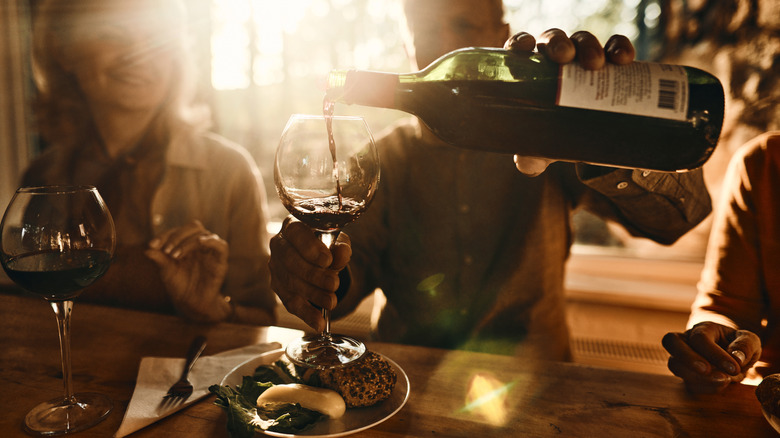
All that being said, the BYOB culture in Philadelphia makes it one of the most affordable cities in the U.S. for dining out. It remains an interesting quirk of the restaurant scene in Pennsylvania, and one that — with a little planning — allows diners to enjoy the best craft beers and interesting natural wines without the upcharge that comes with ordering alcohol away from home. Just don't forget the bottle!