

How To Clean Your Ice Maker And How Often You Should Do It
We may receive a commission on purchases made from links.
Whether you're enjoying a summer BBQ or huddling around the punch bowl at a holiday celebration, beverages that taste off tend to put a damper on the festivities. And nothing spoils a refreshing drink quite like funky-tasting ice. Bagged ice isn't as clean as some think and could be the culprit behind nasty beverages if you bought it in bulk before a get-together. Yet, for most folks, the problem is closer to home. Fortunately, foul ice is totally preventable if you know how often you should clean your ice maker.
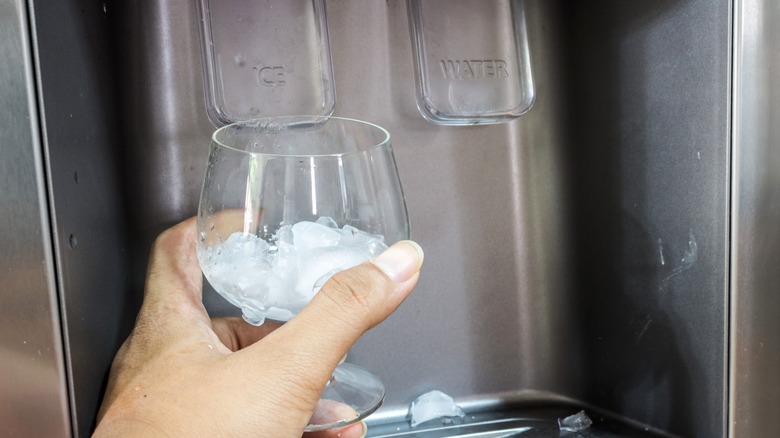
Most people who have ditched smelly ice cube trays get their ice from a dispenser on their fridge/freezer. To keep those units spitting out cubes that are fresh and clear, they should be cleaned about every six months. Once the refrigerator is unplugged, you'll want to take out the ice bin and give it some attention with warm, soapy water. Thoroughly rinsing it will hinder future ice from tasting like soap, and allowing it to air dry completely will prevent any moisture from freezing after you put the unit back in the fridge.
Next, create a vinegar and water cleaning solution (a 1-to-1 ratio should do the trick) and use something non-abrasive, like paper towels or a sponge, to wash all the other components of the ice maker (you may need a gentle brush to get into the dispenser chute). It's also crucial to replace the water filter. After everything is clean and dry, put the bin back, make a batch of ice, and throw out what is dispensed (it isn't a bad idea to repeat this step to be extra sure no soap or vinegar aromas are clinging to the ice).
How to clean a countertop ice maker
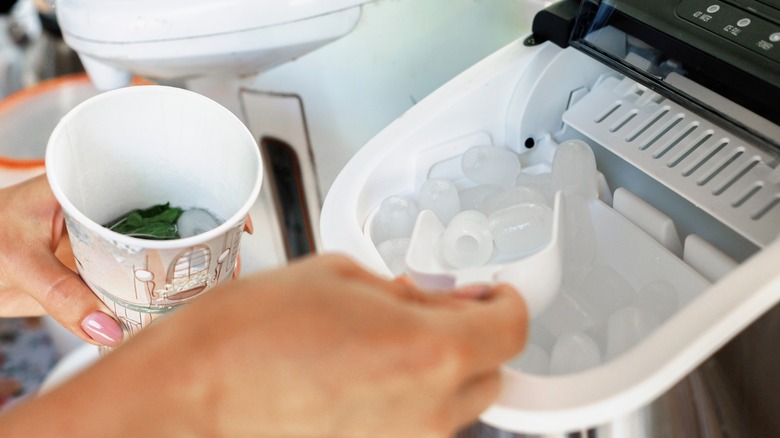
America's historied love of ice knows no bounds, which may be why we find tainted ice from the refrigerator dispenser so detestable. Unfortunately, the same build-up that turns ice from the freezer gross can also plague countertop ice makers. Part of the appeal of these appliances is that they generally make ice quickly if you need it on the fly (this EUHOMY Countertop Ice Maker claims to have bullet cubes ready in as little as six minutes). The drawback is that they need to be cleaned more often, and you should be washing them out every month if you want quality ice.
The method for getting countertop models clean is similar to that of fridge units, but there are some slight differences. After the machine is unplugged, all the detachable parts should be taken off, soaked and scrubbed in warm, soapy water, and rinsed thoroughly. While those are drying, use a vinegar solution like the one used on a refrigerator unit to clean the interior of the appliance, making sure to hit every inch.
Some countertop ice makers feature a self-cleaning function. If that's the case, follow the instructions in the machine's user manual to clean the internal components of the appliance before giving the outside of the ice maker a wipe down with the vinegar solution. Once everything is dry, put it back together and start making some ice to throw away. It's best to run it for two cycles, tossing the ice it makes each time, to ensure any residue from the cleaning agents is completely gone so your next beverage doesn't taste soapy.