

What Starbucks Does With Its Leftover Food
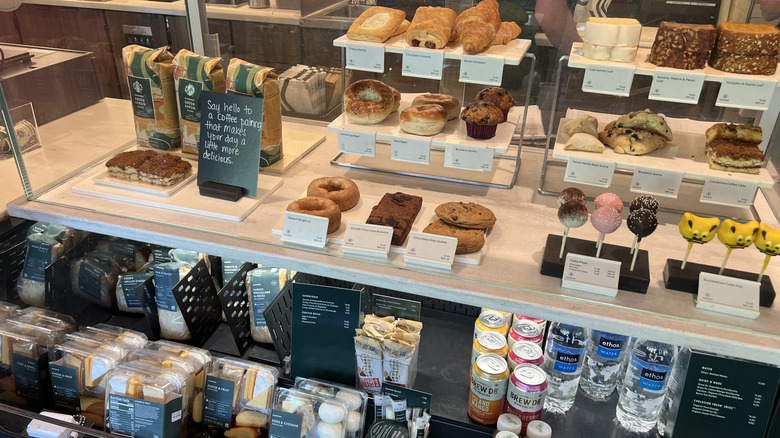
Starbucks may not offer as extensive of a food menu as other fast food places, but across its 18,000 locations in the United States and Canada, the amount of unsold food still adds up. A decade ago, when there were fewer locations, the surplus had nowhere to go except the trash. This wasn't unique to Starbucks, as grocery stores and restaurants across the country were (and still are, to some extent) doing the same.
The immediate and obvious question is: Why not donate it? For many companies, the answer has long been liability. Even though protections exist, concerns remain about the risks involved with donating items that are perishable and nearing expiration or otherwise deemed unfit for sale. However, when Starbucks baristas began voicing concerns about the food waste occurring, the company took action.
In 2016, Starbucks launched its food donation program, FoodShare, in partnership with Feeding America. Tasting Table spoke with a representative from Starbucks, who said, "Through FoodShare, Starbucks equips 100% of company-operated stores in the U.S. and Canada to donate eligible unsold food rather than sending it to landfills." The food is delivered by third-party trucks to a distribution center where it is reallocated to local food banks and pantries. Licensed Starbucks (those within other establishments like grocery stores, universities, and airports) operate under different management and regulations, and therefore aren't a part of the FoodShare program, but they are allowed to participate in alternative food donation initiatives.
Bridging the gap between surplus and scarcity
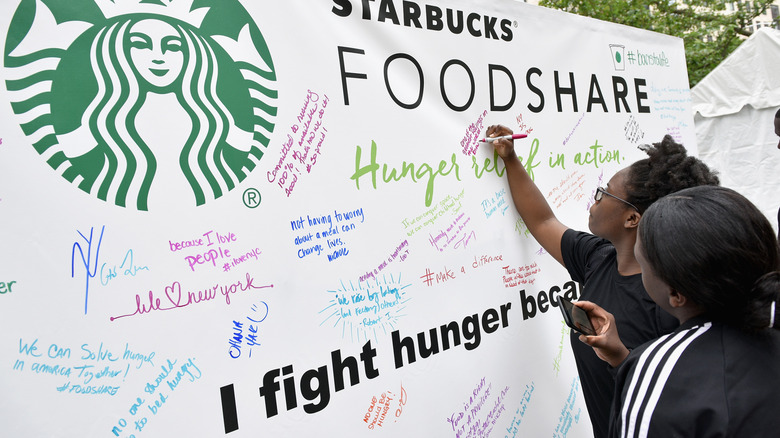
To date, FoodShare has redirected over 111 million meals' worth of unsold food from landfills to organizations that help fight hunger, according to the Tasting Table interview. The source admitted that Starbucks receives a federal tax benefit for donating food, but said the company reinvests those returns back into the FoodShare program. They went on to explain how Starbucks has invested more than $100 million toward the program's initiatives.
Food insecurity in the United States remains an ongoing issue despite decades of advances in industrialization and consumer access. Ironically, the abundance of food has increased food waste (especially from this U.S. state). While progress has been made since federal efforts in the 1990s helped improve how hunger is measured and addressed, the disconnect still persists. Logistical, economic, and liability barriers continue to make donating food a challenge for businesses.
Thankfully, Starbucks is not alone in its mission to reduce hunger and food waste. Among many other establishments nationwide, restaurants, wholesalers, and grocery stores are donating their unsold food through programs and systems. Together, these efforts help divert edible food from landfills — where an estimated 92 billion pounds of food waste goes each year— to instead put it in the hands of millions who need it.
Static Media owns and operates The Takeout and Tasting Table.