

The Bakery Red Flag That Should Make You Turn Tail And Run
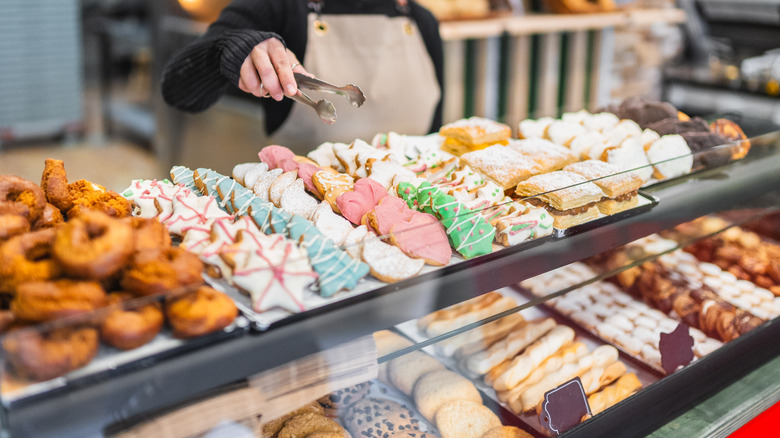
We all visit bakeries to get something we can't make ourselves — an edible piece of art that makes life feel a bit more elevated. The right bakery has a dazzling array of complicated pastries like fresh macaroons and baklava, cakes with dozens of layers, and chaotic, cream-filled Croquembouche towers. You should have high expectations when you walk into a place where pastry professionals do their work, but how do you know if you've wandered into a bad bakery? In an interview with Business Insider, "Ace of Cakes" star Duff Goldman said he looks for a subtle red flag when he enters a bakery — wrinkles on baked goods that shouldn't be wrinkly.
Soft bread, dinner rolls and buns, unfrosted cakes, and the fondant on decorated cakes should have smooth surfaces. If you see wrinkles, it means one of two things: either something went wrong in the baking process, or the case hasn't been refreshed in a while. The moisture inside baked goods evaporates as they sit on display, slowly shrinking as the minutes tick away. As they shrink, wrinkles appear. Goldman told Insider those wrinkles are a sign that pastries aren't as fresh as you might think.
Wrinkly bread and cakes can also mean the dough was made with the wrong flour or too much water, baked at the incorrect temperature, or cooled improperly. Fondant with creases and wrinkles is known as having "elephant skin," and that can be a sign of a baker who overworked the icing or handled it improperly (it doesn't make a pretty cake, either).
Look for these signs of a great bakery
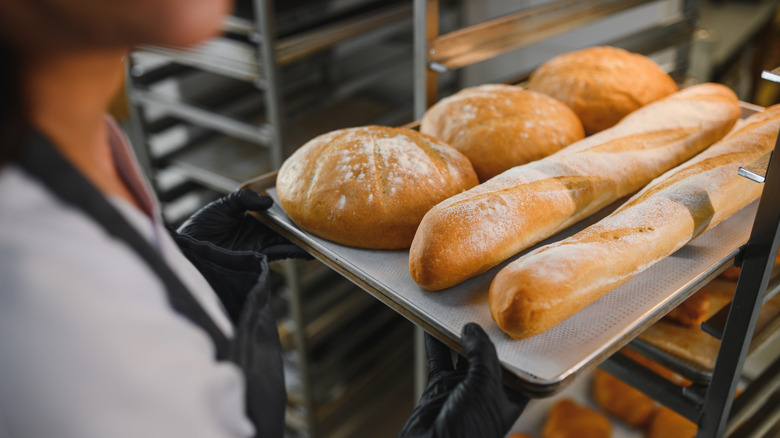
While wrinkly baked goods can be a warning sign for staleness, what should you look for to ensure you're buying a fresh loaf? Soft sandwich bread should have clean lines and a golden brown crust, baguettes should be nicely browned with a crunchy crust, and the bread rolls should be evenly shaped with golden, crack-free tops. If you're shopping for something on the sweeter side, unfrosted cakes should be smooth on top and slightly springy. Fondant-covered cakes should have a matte finish (unless there's a creative choice for a glossy coat) and should be uniform — not cracked, wilted, or wrinkled.
It's also a good sign if the staff is busy behind the counter. Bakeries don't constantly have something in the oven; there are usually set baking hours that happen later at night or early in the morning. But staff members are almost always somewhere in the baking process; mixing, shaping, and proofing all kinds of dough and batter, packaging orders, or planning the next day's baking schedule. You can ultimately tell if a bakery is doing its job if the final product of all that work is up to par.
Other signs of a great bakery include staff who are knowledgeable, passionate, and willing to take on larger orders. Items should be baked daily, and if a bakery is doing it right, there will be plenty of variety. Creativity is the mark of a great baker, so look for pretty pastries, unexpected flavor combinations, and unique cake designs — at the very least, everything should look vibrant and fresh. Look for shops with great reputations to give yourself an advantage in choosing the right place, like the San Francisco bakery with a cult following or one on our list of the best bakeries in each state.