

Want To Buy The Most Nutritious Canned Fruit? Look For This Type

Canned fruit is a great source of nutrients like fiber, minerals, and antioxidants. Still, it often gets a bad rap partly because the processing can cause nutrient loss in heat-sensitive vitamins, like vitamin C and certain B vitamins, but more often because of the liquid it's typically preserved in: added sugars in the form of high-fructose corn syrup, corn syrup, heavy syrup, or light syrup. That's why, regardless of the fruit, the most nutritious canned fruit is one that's preserved in water or 100% juice, with no added sugar. In other words, fruit soaked in heavy syrup are among the types of canned foods you should avoid at all costs.
Canning requires high heat, but this process can soften textures and dull fresh flavors. This is why fruit has historically been canned in water and sugar (syrup) — not only for added sweetness, but because the sugar helps preserve the fruit's color and flavor, while acting as a firming agent. However, research shows added sugar is associated with rising rates of obesity and metabolic disease. The Dietary Guidelines for Americans recommends limiting added sugar to less than 10% daily total calories (or less than 50 grams). A ½-cup serving of canned pears in heavy syrup contains 10 grams of added sugar. While this is within range, often most of us aren't eating the serving size — we're eating the entire 15-ounce can, which contains about 3.5 servings.
On the other hand, if you want canned fruit without the added sugar but nearly identical to syrupy stuff, canned fruit in 100% fruit juice is a win-win. However, for a little less sweetness and calories, go for canned fruit in water.
The most nutritious canned fruits
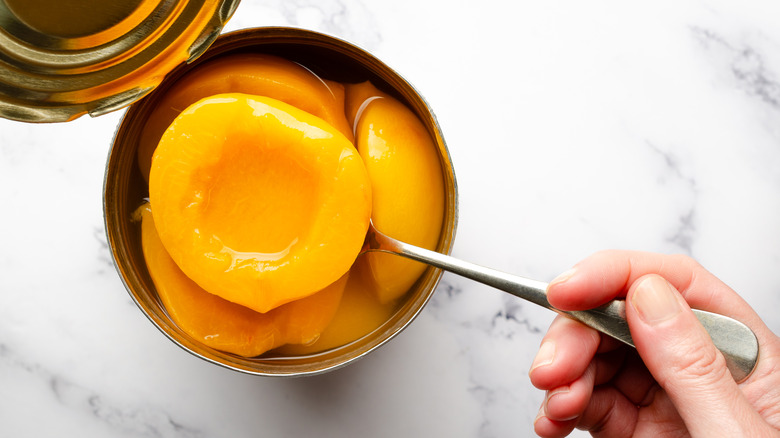
If you're looking to buy the most nutritious canned fruit packed in water or 100% juice, reach for peaches, pears, pineapple, or prunes. These fruits stand out for their fiber content, ranging from 1 to 3 grams per serving, as well as for containing minerals like potassium and copper. Peaches also provide beta-carotene (a precursor to vitamin A) and vitamin E, which research shows remains relatively stable during canning and storage — just make sure to avoid these mistakes when storing canned goods.
Although often treated as vegetables, canned tomatoes – here's the type Lidia Bastianich recommends – and pumpkin are botanically considered fruit and rank among the most nutritious canned fruits. Tomatoes are unique in that heat processing can increase the bioavailability of their powerful antioxidant, lycopene. Similarly, the carotenoid content in pumpkin also increases when canned.
While buying any canned fruit variety in water or 100% juice is the most nutritious option, the advantages can quickly be undermined if the fruit is processed in cans laced with bisphenol A, commonly referred to as BPA. This is a chemical found inside cans that can leach into food, with studies showing long-term exposure can cause health implications, including increased risk of cancer and a weakened immune system. When buying canned fruit packed in water or 100% juice, ensure the packaging also specifies, "BPA-Free."