

Why You Must Choose Your Bread Wisely When Making A Tuna Melt
We may receive a commission on purchases made from links.
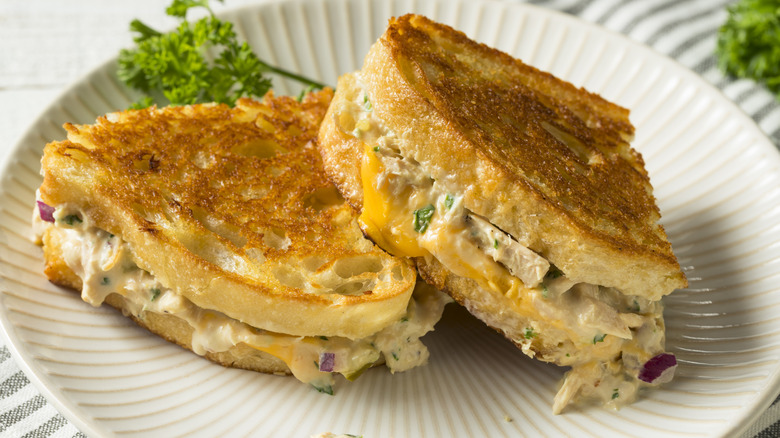
When we're talking tuna melts, there are a million ways to upgrade the sandwich (from the mix-ins to the seasonings to the cheeses), but it's absolutely imperative not to overlook the bread. Andrew Zimmern, Emmy- and James Beard Award-winning TV personality, chef, activist, and co-author of "The Blue Food Cookbook: Delicious Recipes for a Sustainable Future," shared the key qualities to consider when selecting the best bread for a tuna melt.
"You want structure and deeper flavor," Zimmern told The Takeout. "Anything too soft or too precious is a liability. Wonder Bread-style loaves turn to paste when placed under heat and exposed to wet ingredients like mayo." A primary factor in any bread's stability is the thickness of the slices, and Zimmern had different recommendations depending on if you're going for a standard sandwich or open-faced melt.
"Think ¾- to 1-inch thick. An open-faced melt has no top slice to protect it, so the bread needs enough heft to act as both plate and sponge," he advised. A thin base will get soggy and quite literally fold under the pressure. If you're opting for a sandwich, Zimmern said ½-inch slices of bread are okay. "A closed sandwich already has structural support from both sides, so thinner slices crisp more evenly and let the filling and cheese stay the star instead of turning the whole thing into a bread-forward, damp, handheld meal," he explained. Lightly toasting the bread before assembling the sandwich is another way to ensure structural integrity, making the bread more resilient against moist ingredients such as mayonnaise and the fat from the melted cheese.
The best types of bread to use for tuna melts
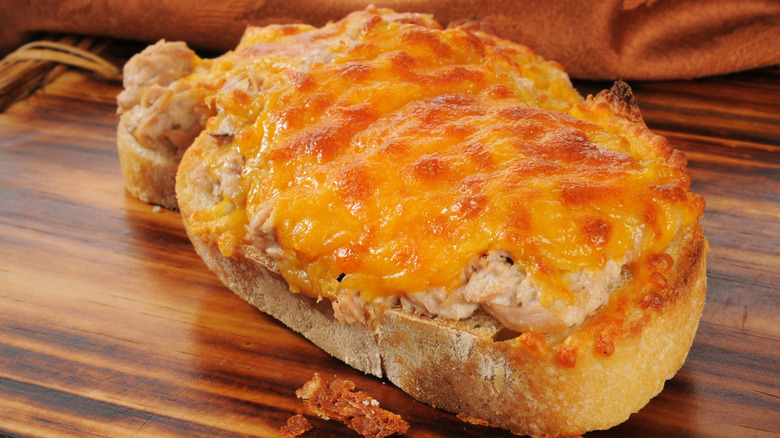
Clearly, you're making a mistake with tuna melts by choosing a subpar bread, but when it comes to which variety to select, there's no single right answer. Andrew Zimmern shared several options. "Rye is the classic because its slight sourness cuts through the richness of tuna and melted cheese," he shared. "Sourdough does the same job with more chew and a better crust."
If these varieties aren't your favorite or your go-to tuna salad has tangy ingredients like vinegar, pickled peppers, or Greek yogurt, you may prefer bread with a more neutral flavor instead. "A sturdy white pullman or country loaf works too, especially if you're chasing that diner-style nostalgia with crisp edges and a soft interior that soaks up just enough fat without collapsing," Zimmern said. For another solid choice, he recommended English muffins — Julia Child also made tuna fish sandwiches on this uncommon bread option.
As for which types of bread to avoid, aside from a squishy white supermarket loaf, consider the balance of flavors and textures. "Brioche sounds luxurious until the sugar burns and fights the fish," Zimmern cautioned. "Super-seeded, dense health breads can taste like you're chewing a bird feeder and overwhelm the tuna."