

Why Sourdough Is Easier To Digest Than Other Types Of Bread

Other than the fact that sourdough bread is delicious, the continued post-pandemic obsession with this fermented bread may come down to its digestibility. Unlike bread products made with commercial yeast for leavening, sourdough is naturally leavened with a sourdough starter (which is easy to make from scratch). It's essentially just a fermented mixture of flour and water. The starter becomes a living culture after it retains and develops the wild yeast and lactic acid bacteria (LAB) naturally found in the air, the flour, and the jar it's stored in; these microbes are everywhere. And while they play a key role in the bread's flavor and capacity to rise, they're also responsible for sourdough's digestive benefits.
Once the starter is incorporated into the dough, a process known as bulk fermentation occurs and the wild yeast, LAB, and naturally occurring enzymes begin to do some of the work our digestive system would otherwise do: Namely, breaking down gluten proteins and carbohydrates into simple sugars. The sugars are then fermented into carbon dioxide, causing the dough to rise.
There's another digestion-aiding benefit that happens during the slow fermentation. Phytic acid (a compound naturally present in grains and other plant foods) can inhibit our ability to absorb the minerals found within these foods, often contributing to indigestion. During sourdough's slow ferment, however, phytic acid is broken down; allowing more of the flour's minerals, like iron, zinc, and magnesium, to be better absorbed.
Misconceptions about sourdough's digestibility
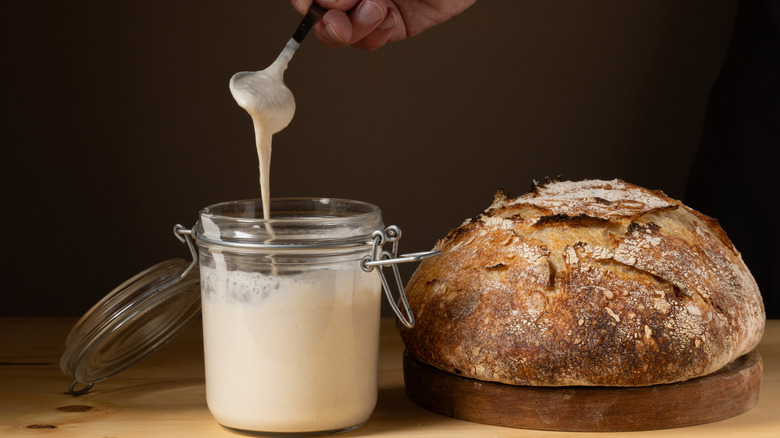
While a living sourdough starter is rich in probiotics (which are know to support gut health), those live cultures will die off from the high heat when baking. However, the presence of the probiotics during the bread's fermentation process still produces beneficial compounds in a finished loaf, like prebiotics and postbiotics, which also support gut health and reduce inflammation.
Not all sourdough breads are created equal. Although a starter and bulk fermentation are required, these steps don't necessarily guarantee every loaf of sourdough will be easy on your stomach. Some methods are better for this than others. Breads that are fermented longer with a cold proof, for example, allow the bacteria more time to break down starches and phytic acid, further improving digestibility. As a bonus, cold fermentation also develops a tangier, more flavorful bread.
The type of flour used in sourdough also impacts digestion. Organic flours are often best, as they support the breakdown of starches and phytic acid during fermentation without the potential interference of additives which are sometimes found in conventional flours. Ancient grains differ from modern wheat varieties in many ways, including how they're digested. Sourdough made with ancient grain flours (like einkorn) may be even easier on digestion.
Although sourdough may be a better option for those sensitive to wheat, gluten, FODMAPs (fermentable oligosaccharides, monosaccharides, and polyols), or other digestive disorders, it does still contain wheat and gluten. Those with celiac disease should avoid sourdough made with gluten-containing flours, while those with wheat allergies should avoid sourdough made with wheat.