

27 Types Of Beer And What To Know To Know About Them
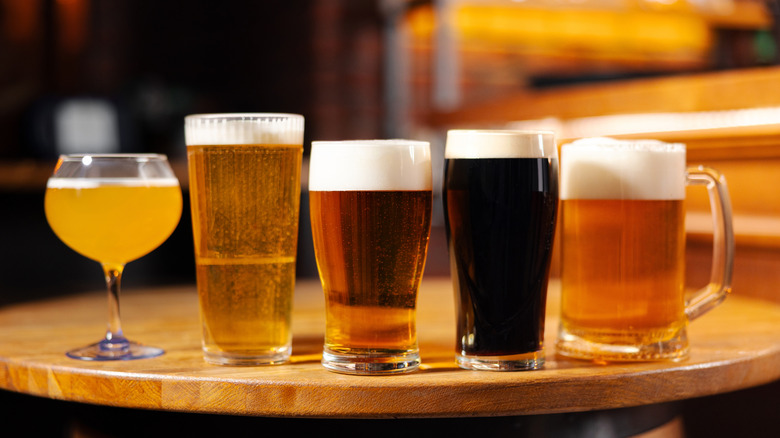
Despite the fact that the mainstream market in the United States is dominated by beers that share similar traits, there are actually dozens of alternative styles and flavors in the world of beer. Most of these fall into one of two general categories — ale or lager — and can also be described by their color, ranging from extraordinarily pale to pitch black, with quite a few levels in between.
The primary difference between ales and lagers is related to fermentation. Ales use a top-fermenting yeast, which rises to the surface of the wort during fermentation, and thrives at warmer temperatures, typically 60–75°F. Lagers, on the other hand, use bottom-fermenting yeast, which settles during fermentation, and works best in cool temperatures, usually 42–55°F. Generally, lagers tend to have a crisper, smoother flavor, whereas ales have stronger and more varied aromas and tastes, and are more likely to feature fruity and robust notes.
A beer's color relies on a number of factors, but is primarily driven by the type of grain used. Barley is most common, and the process by which it is malted determines both imparted color and flavor profile. Pale malt, for example, is only lightly kilned, thus adds minimal color and flavor to the final blend, whereas darker malts, such as Munich, produce more richly colored and flavored beers. We'll explore these ideas and more below as we review the most important global beer styles.
Pale lager
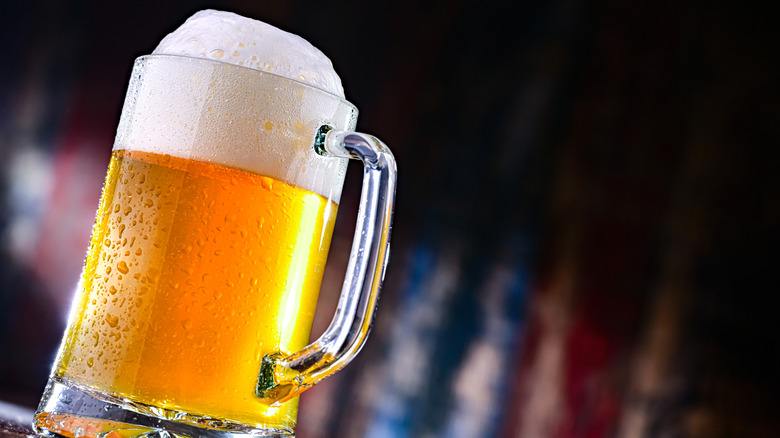
The American market is dominated by pale lagers, such as Budweiser, Bud Light, Michelob Ultra, Modelo Especial, and many more. To some extent this leads to a negative impression of the pale lager style among beer geeks, but this is perhaps unfair, as there are many valid reasons why pale lagers are so popular. When properly made, they're crisp and clean, easy to drink, and pleasant in a variety of contexts and food pairings.
Pilsner
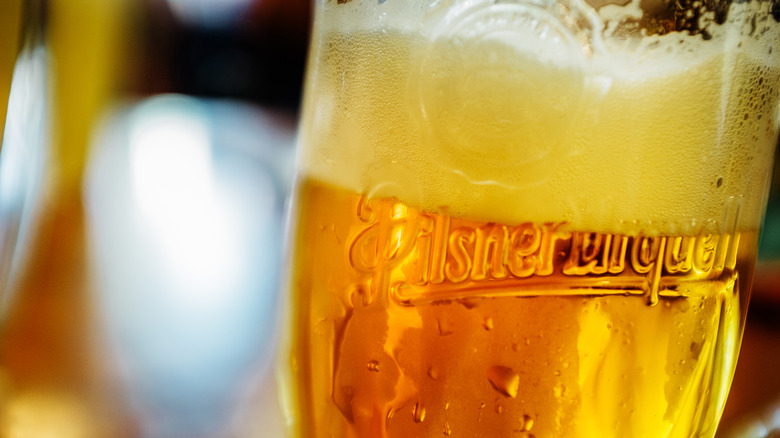
One of the world's most iconic beer styles, pilsner is an absolute classic pale lager, enjoyed globally at both the macro and micro level. True pilsner is brewed with pale barley malt, evidenced by its slightly sweet, biscuit-like flavor, and features a balancing, but notable, hop bitterness. The style originated in the mid-1800s, in the Czech city of Pilsen (hence the name), and famous brand Pilsner Urquell carries on that tradition to this day. German and American pilsners, on the other hand, tend to be less hoppy than their Czech counterparts, but always offer the same crisp, refreshing experience.
Helles
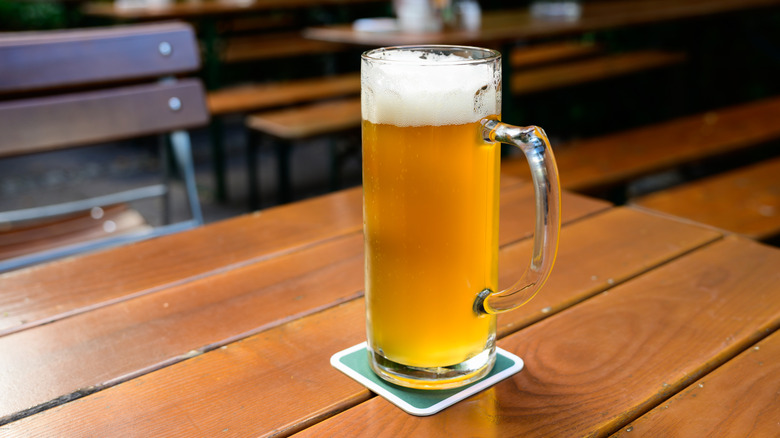
The German helles lager style is almost as prominent as pilsner on the worldwide beer stage, though has less name recognition. Like its Czech pale lager counterpart, helles offers an outstanding drinkability, due to its lovely balance of subtle sweetness alongside spicy hop notes. Many traditional southern German lagers, such as those by famed brewers Ayinger, Paulaner, Spaten, and Hofbräu München, are all Helles lagers.
Adjunct lager
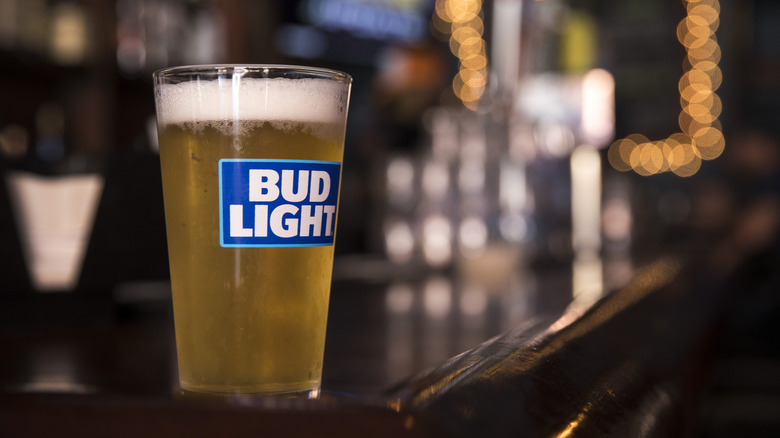
Though barley is the most common grain for brewing, the distinct element of pale adjunct lagers is the usage of alternative grains, typically rice or corn. This technique was brought to prominence by the popularity of Budweiser. Anheuser-Busch first added rice to its recipe in 1876 to create a lighter, brighter lager, prioritizing refreshment. Though Budweiser's use of adjuncts was done for flavor, the practice later became widespread due to cost savings. Specifically, corn was often chosen because it was much less expensive than barley; as such, today, beer experts usually consider adjunct lager to be an inferior style. Nonetheless, some of the top-selling beers in the US, such as Michelob Ultra, Modelo Especial, Coors Light, Miller Lite, and Corona are all adjunct lagers.
Dark lager
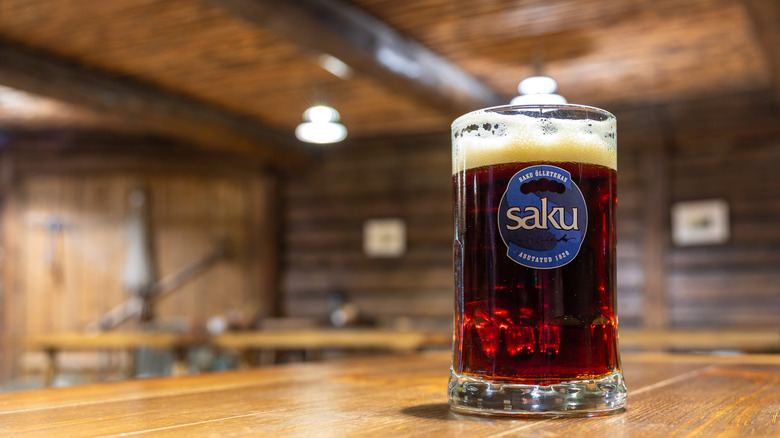
This category also represents light and refreshing beers made in the bottom-fermented lager style, but these instead use darker, more flavorful malt, which accentuates both the beer's color and flavor. Dark lagers usually emphasize caramelized notes that come from longer malt kilning times or from specialty malts, and can feature additional sweetness, breadiness, or even chocolate and coffee flavors, depending on the types of grain used. As such, hop bitterness is mostly relegated to the background, though this can obviously vary based on brewer discretion.
Amber lager
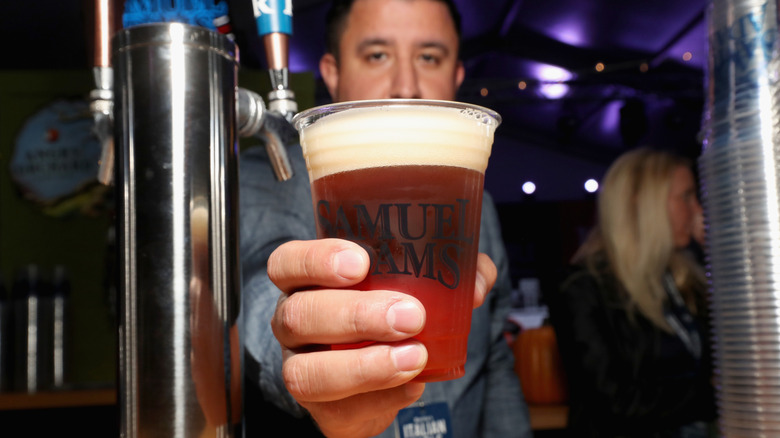
This is the most prominent of the darker lagers in American beer culture, particularly due the success of brands like Yuengling Lager or Samuel Adams Boston Lager, the former being a relatively easy drinking macro beer, while the latter features both increased caramel notes and prominent hop bitterness. This style, with its restrained use of malty sweetness, is perhaps the best entry level into darker lagers for those used to the paler styles.
Märzen (Oktoberfest)
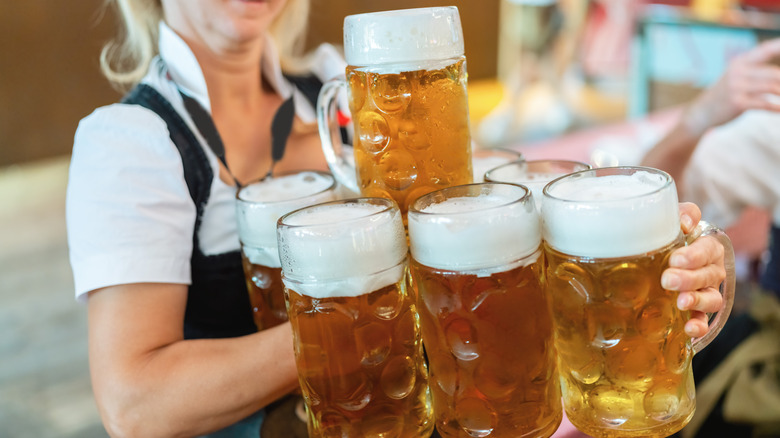
Another reddish-brown dark lager, märzen is known for a moderate, bready sweetness that's balanced, but never overwhelmed by, a subtle hop bitterness. Traditionally brewed in the spring (märzen means March in German), then lagered over the summer to be ready for the harvest celebrations of Oktoberfest, it is still commonly released as seasonal beer in the autumn. That said, another similar type — Vienna-style lager — is available year-round.
Dunkel
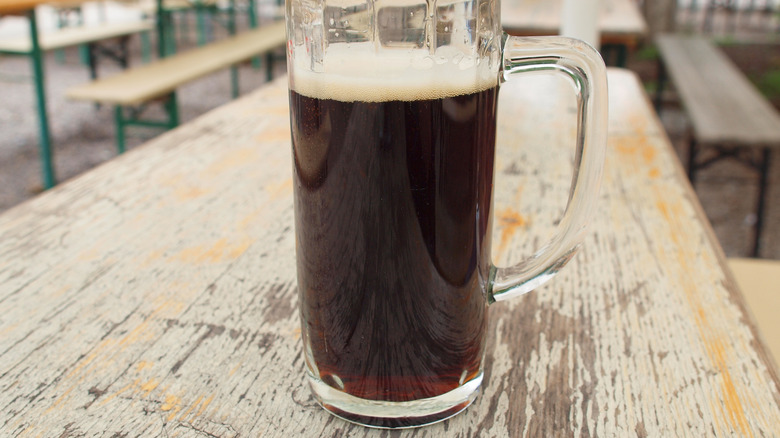
Derived from the German word for dark, dunkel is a classic Munich lager that features milk chocolate and bready notes from the use of Munich malt. In color, dunkel tends to sit somewhere between light and dark brown, never black, though certainly compared to the American ambers it prioritizes the sweeter, malty flavors. That said, it is never cloying, but rather a well-balanced lager with distinct malt character and just the right amount of bitterness from noble hops. Dunkel is typically lighter in color and flavor than its German cousin schwarzbier ("black beer"), which uses dehusked roasted malt (carafa) to impart deeper color and a slight bitterness.
Bock
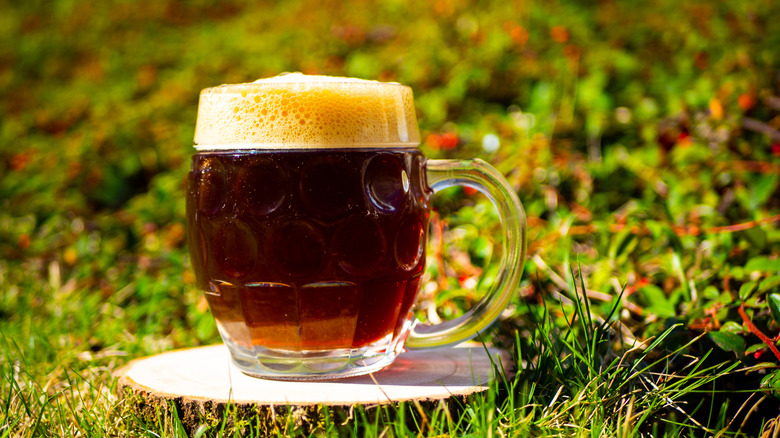
Traditional German, dark lagers that are known for their high levels of malty sweetness and toasty or nutty notes, bocks are typically low in hop bitterness, with the exception of the maibock ("may bock"), or pale bock style, which presents a light malt character along with more prominent hoppiness. Other popular variations include dopplebock ("double bock") which is stronger and even maltier than the original, as well as weizenbock ("wheat bock") which is made from wheat instead of barley. The word bock, which means goat in German — hence the goat motif on many labels — actually derives from the town of Einbeck, but was then, apparently, mispronounced by Munich brewers, eventually morphing into bock.
Czech dark lager
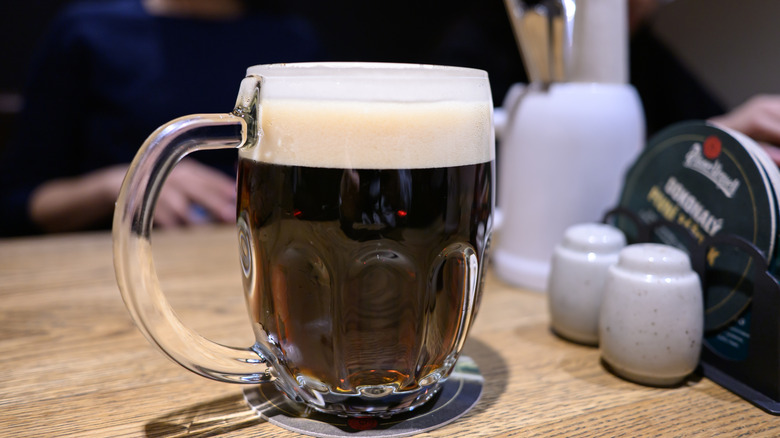
Notably sweeter and richer than other dark lagers due to the inclusion of higher percentages of caramel or crystal malt, this Czech style — known locally as tmavé pivo or černý — manages to offer a decadent experience while remaining light on its feet, the latter thanks to the slow lagering technique that keeps it fresh. Though less widely distributed than some of these other lager styles (it only accounts for around 3.5% of beer production in its home country), Czech dark lagers are some of the most desirable finds for maltheads, featuring unforgettable deep caramel and toffee notes.
Pale ale
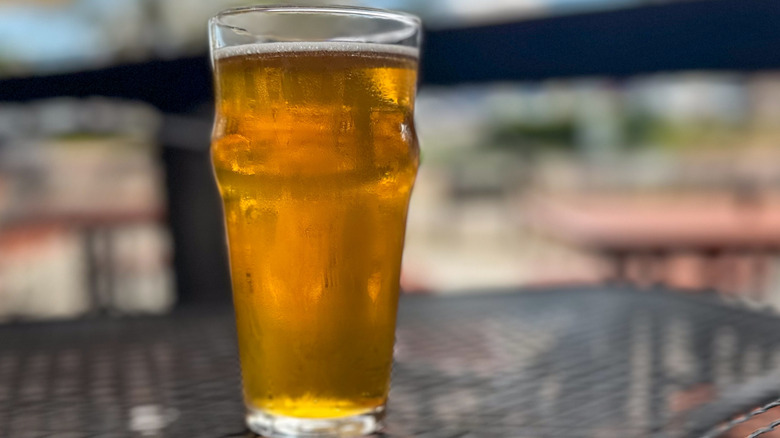
While pale lagers dominate the macro market, pale ale undoubtedly rules the American craft beer sector, particularly IPAs, which we'll get to, but also American pale and golden or blonde ales. In addition, in the UK, the "Campaign for Real Ale" was a precursor to the American craft beer movement, featuring a variety of English bitter and pale ales. As mentioned above, ales tend to feature richer, more complex flavors than lagers, often offering fruity and floral notes. In this case, there's also significant hop presence, with American pale ales in particular heavily emphasizing those bitter notes of pine and resin.
India pale ale (IPA)
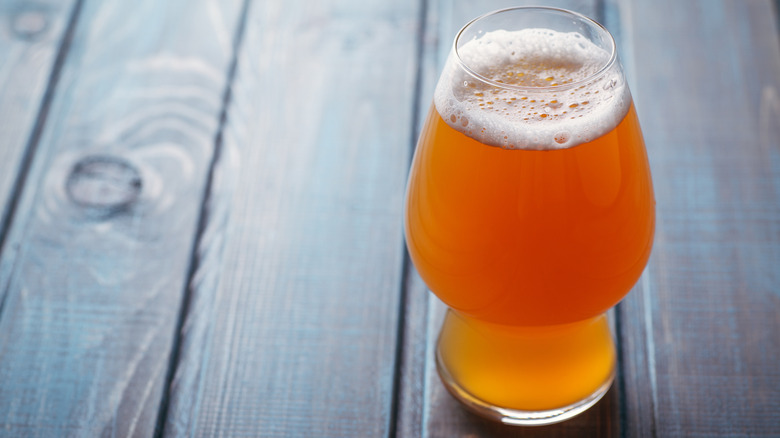
The undisputed king of the craft beer world, India pale ales are alternatives to the classic pale ale, including even more aggressive hop flavors and higher alcohol. As most commonly told, the IPA recipe was created by English brewers of the 18th century to meet a need to survive the long sea voyage to India, a British colony at the time. This tale is, however, proclaimed apocryphal by some historians. Regardless, the signature of modern IPAs is aggressive, over-the-top, mouth-puckering, hop bitterness, though these ales can also feature a fair amount of light-to-medium malty flavor as well. Important IPA sub-styles include imperial IPA, which has much higher alcohol levels (typically 7–10%) and New England IPA, which emphasizes hop aroma while attempting to minimize bitterness on the palate, focusing instead on juicy and tropical hop notes.
Dark ale
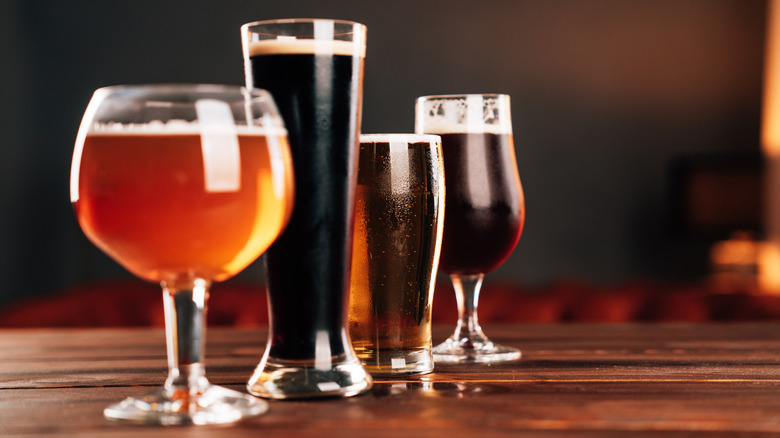
While not as dominant as pale ale, dark ale tends to be more successful than its (dark) lager counterparts in the overall beer market, presumably because some of these styles are more well-known among craft beer drinkers. As with the lagers, dark ales tend to emphasize malty flavor — caramel, chocolate, coffee, etc. — over hops, though the American craft beer scene certainly has its fair share of hoppier dark ales. These beers can range widely in color, from the light amber or ruddy color of some Scottish or Irish-style ales, to the nearly black hue of many stouts and porters.
Brown or amber ale
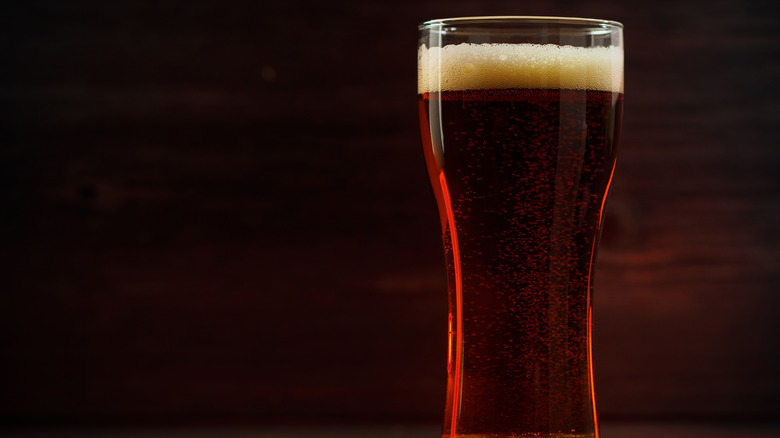
Brown ale, sometimes labeled Amber Ale, was a staple dark ale of the 1990s American microbrew movement, with beers such as Pete's Wicked Ale and Dock Street Amber — as well as macro favorite J.W. Dundee's Honey Brown — developing cult followings during that decade. Since then, however, browns and ambers have fallen somewhat out of style, mostly relegated to the background of many craft beer portfolios. As a general rule, beers labeled "brown ale" tend to be malt-forward, with sweet, toasty, and even fruity flavors, whereas beers labeled "amber ale" are usually more hop-forward.
Porter
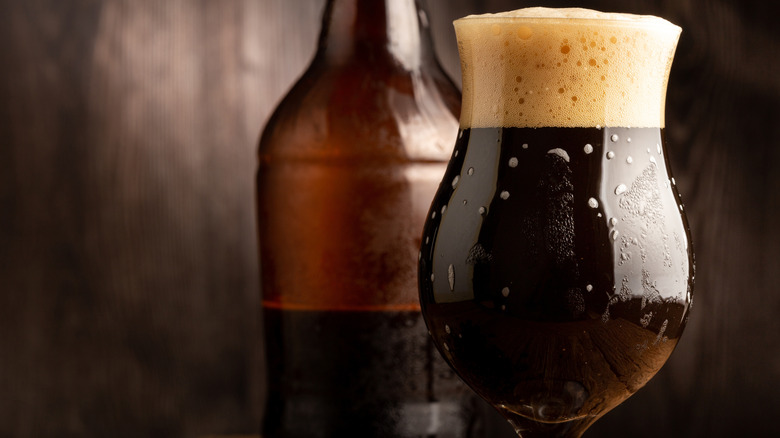
There's much debate among beer nerds about the difference between porter and stout (see below), however it's safe to say that porter is the original — meaning, it was created first — style of English dark ale that features rich, often roasty notes of coffee and chocolate, and ranges in color from dark brown to nearly black. Over time, many sub-styles of porter have been introduced, including robust porter, which offers more bitterness through both heavier malt roasting and additional hops, and imperial or Baltic porters, which are higher in alcohol than standard ones.
Stout
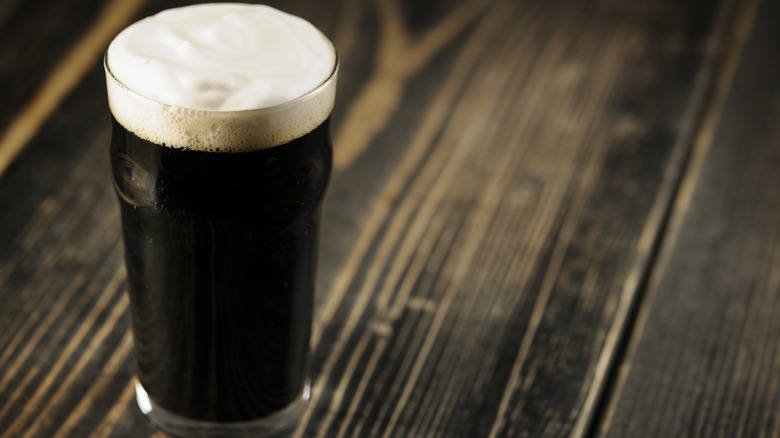
When first introduced in England, this beer's full name was actually "stout porter," used to indicate a stronger porter. In the modern beer world, however, that differentiation no longer applies with any regularity; the strength of both of these dark ales can vary widely, and stouts such as Guinness can be some of the lowest-alcohol beers on the market. Another oft-suggested difference is that stouts are more likely to use roasted, unmalted barley in their grain blend, which imparts more defined roasted, bitter notes. As with strength, however, this is an inconclusive pattern, rather than an unwavering rule, and the bottom line is that the decision to call something a stout or a porter ultimately comes down to the brewer. Like with porters, there are a variety of fascinating sub-styles, including Irish-style, dry, coffee-inspired breakfast stouts, and higher-alcohol imperial stouts.
Strong ale
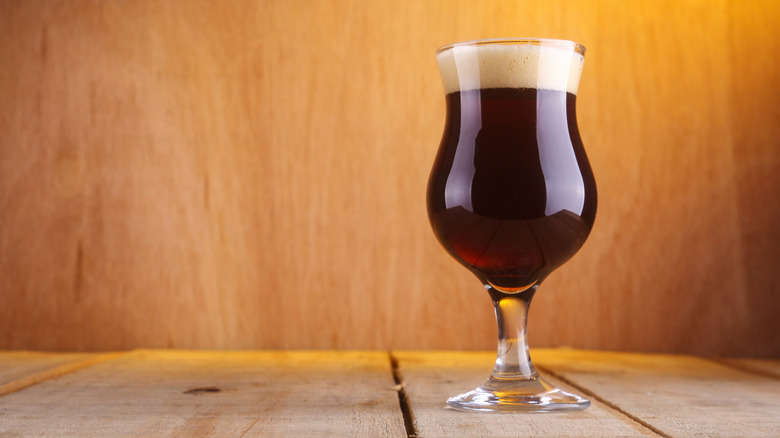
Often called barleywine — though sometimes referred to as imperial or old ale, and even the decidedly fun Scottish moniker wee heavy — strong ales are characterized primarily by high alcohol (8% ABV and up), leading to a marked sweetness and heat. Though American-style barleywines can occasionally be mildly hoppy, bitterness is not a traditional aspect of the strong ale style, as the high alcohol and rich maltiness already bring plenty of complexity. This style is perhaps the antithesis of lawnmower beer, meaning it is never meant to be chugged, but instead intended for slow sipping and careful contemplation. These dark ales can even age well when cellared properly.
Wheat beer
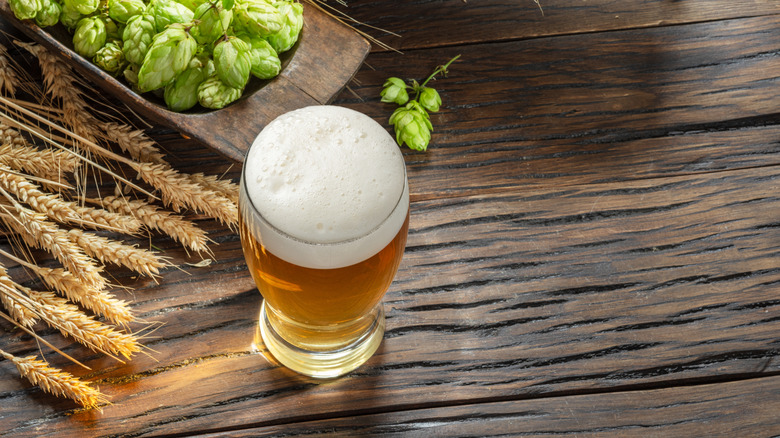
While to this point all the beers discussed — with the exception of adjunct lagers — are brewed exclusively with barley, the other major global style is wheat beer, which replaces a significant amount of the barley with either malted or unmalted wheat. Though the styles within the wheat beer category can vary greatly, the inclusion of this grain typically creates bread or cereal notes, as well as a lighter overall flavor profile, hence their traditional popularity during warmer weather. While classic wheat styles include hefeweizen and witbier (see below), other important examples include Berliner weisse and the aforementioned dunkelweizen.
Hefeweizen
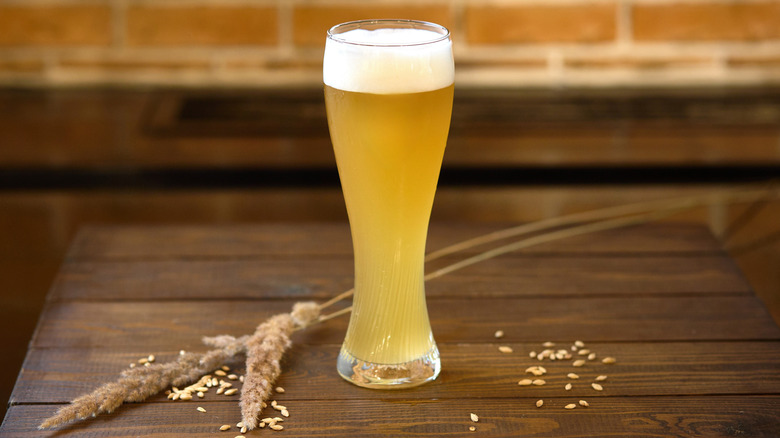
A globally iconic wheat beer style, hefeweizen features malted wheat, which typically represents 50–70% of the grain blend (the rest being malted barley). While this wheat brings a subtle but noticeable sweetness, it is the particular yeast attached to this style — which is actually called hefeweizen or weizen yeast — that imparts the beer's unique and distinct signature of banana and cloves. All together, the result is a delicious and refreshing brew.
Witbier
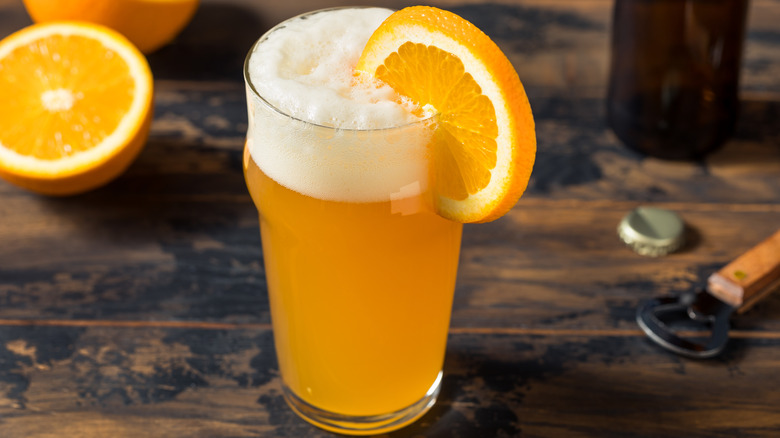
The Belgian style of wheat beer, known as witbier ("white beer") uses unmalted wheat — typically 30–50% of the overall grain, sometimes blended with up to 10% raw oats — creating a decidedly different flavor profile than hefeweizen, in this case offering a more raw, flour-like palate than its malted cousin. Witbier also features a notable, visual cloudiness, which may seem strange at first, but in fact helps create a distinct creamy texture. The other unmistakable aspect of witbier is the inclusion of coriander and orange peel, which are added during the brewing process (unlike hefeweizen, which derives its fruit and spice notes from the fermentation process).
Belgian styles
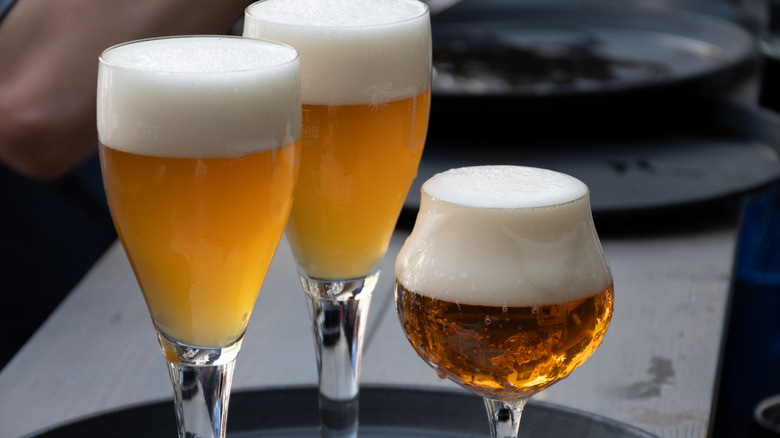
While there are indeed a number of distinct styles within the larger category of Belgian beer, there are certain characteristics that most of these tend to include. In particular, the use of unique yeast strains that develop specific flavors during fermentation is an important stylistic note here, with fruity esters and spicy phenolics coming to the forefront. In addition, these ales tend to finish considerably dry, not because of hops, but from both the yeast and the use of highly fermentable sugars which are consumed completely during fermentation. Belgian beers are also notable for their association with abbeys and monks, who were the traditional brewers of these beverages in the region.
Dubbel
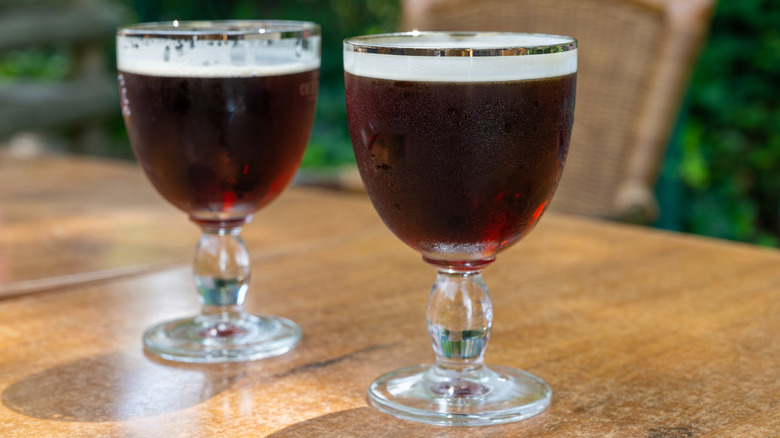
The Belgian abbey-inspired ale dubbed dubbel — ostensibly because it has double the alcohol than a standard ale — is known particularly for its dark color and sweet flavor. In this case, however, the rich and layered notes of brown sugar, raisins, and toffee come not from the malt but from the use of dark candi sugar, added to the wort during the boiling process. Because this sugar is entirely fermentable, it allows these beers to develop deep candied flavors without becoming as heavy as they might if additional malt was used. A notable cousin of the dubbel, by the way, is the less common quadrupel, which uses even more dark candi sugar, giving it a similar flavor profile to the dubbel, but with even more alcohol and flavor intensity.
Tripel
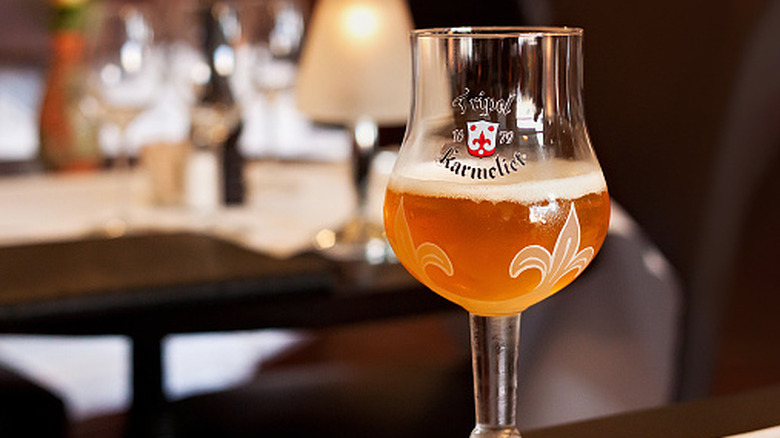
Perhaps the most highly regarded abbey-style Belgian ale is the tripel, which, in contrast to the dubbel and quadrupel, is always light in color. Like its cousins, this beer is able to reach higher alcohol levels through the use of candi sugar, however, in this case light-hued sugar is used, imparting minimal additional color and flavor to the beer. Instead of malt and dark sugar flavors, then, tripels tend to showcase fruity esters, like orange and banana, as well as mild spiciness and alcoholic heat.
Saison
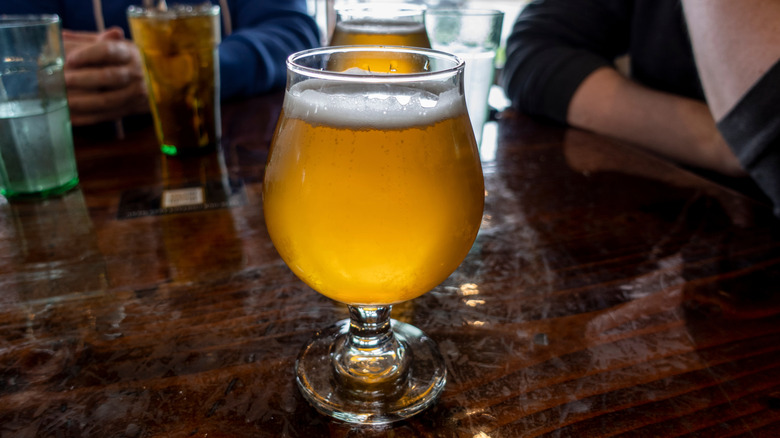
Also called farmhouse ales, Belgian saisons originated as lighter-bodied summertime beers in the country. The fact that these ales are often bottle-conditioned gives them a strong yeast character, often emphasizing citrus and pepper notes. In addition, these beers can sometimes be brewed with brettanomyces (see below), giving them wild nuances of barnyard or leather. In sum, saisons are prized because they manage to be relatively easy drinking, yet incredibly complex and unique in character.
Wild & sour beer
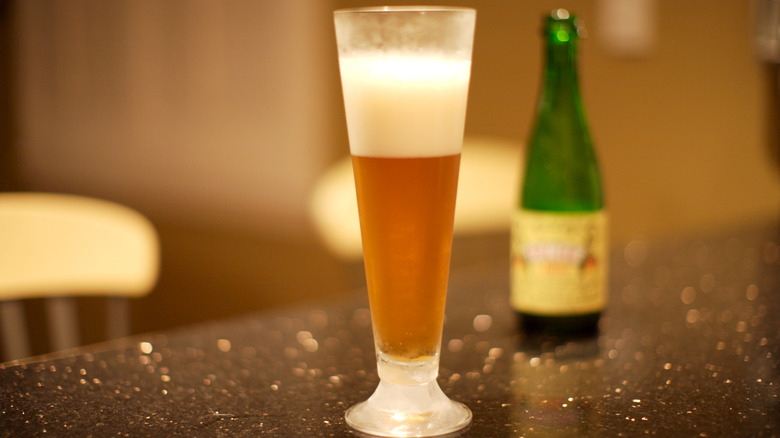
Though thoroughly Belgian in origin, saison might also fit in the broader category of wild and sour, which are beers that showcase unique, sometimes divisive, savory, spicy, floral, or sour notes that are not typically found in mainstream or macro beers. These ales are thoroughly influenced by microbes present during the brewing process, in particular yeast or bacteria. This includes, for example, brettanomyces (commonly known as brett), which is a wild yeast that produces earthy, funky, and barnyard flavors, and lactobacillus, which leads to strong sour notes.
Lambic
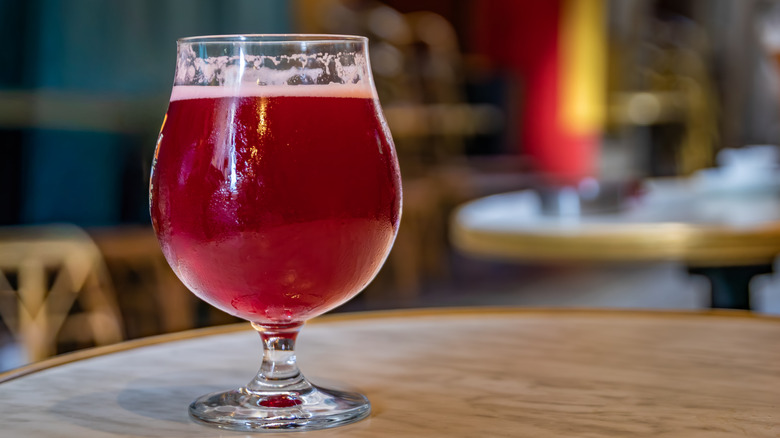
Lambic is another Belgian style that fits squarely in the wild and sour category, due to the fact that it is exposed to wild yeast and bacteria that impart a funky, earthy, and tart aroma and flavor. While straight lambic emphasizes this sour flavor and funkiness, there are also fruit lambics that are fermented with cherries (a.k.a. kriek), raspberries (a.k.a. framboise), or other fruits, which combine to offer a compelling, sweet-sour balance. There's also geuze, which is a blend of young lambic (around one year of age) and old lambic (2–3), leading to an incredibly complex drink that balances funk, sourness, and acidity.
Gose
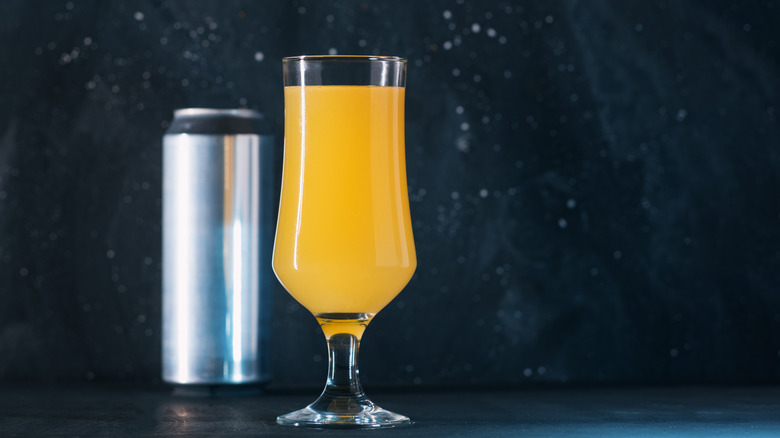
A sour wheat beer most commonly associated with the city of Leipzig in eastern Germany, and named for the nearby town of Goslar along the Gose river, Gose is known for its signature tartness and mild additions of coriander and salt. Its slightly sharp sourness — due to the presence of lactobacillus — and a mild lemony flavor from the coriander makes it an incredibly clean, refreshing brew. Because Gose is unfiltered, it can be somewhat hazy, however, high carbonation ensures that it is never heavy on the palate.