

What Happens To Chick-Fil-A's Leftover Chicken?
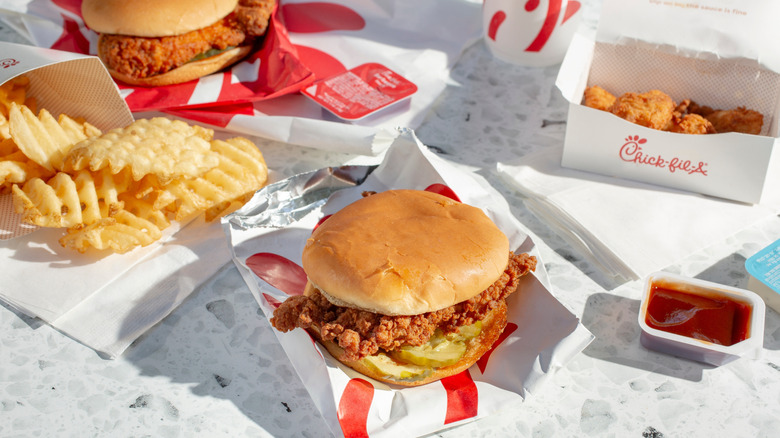
As one of the top three biggest fast food chains in the United States (below McDonald's and Starbucks), Chick-fil-A records insanely huge sales yearly, peaking at $22 billion in 2024 — its largest ever recorded systemwide sales year in the brand's history. However, alongside the impressive performance of Chick-fil-A's more than 3,100 locations is also the massive food waste that comes with its regular operations.
A big chunk of this waste is leftover chicken, its primary product. The restaurant could simply throw away whatever unsold food it has at the end of the day like many other companies do, or it could follow what McDonald's does with its leftover food and develop a multi-pronged strategy for minimizing food waste, including sending unsold items to composting stations and donation drives.
So, where do Chick-fil-A's leftovers go? To reduce food waste, the fast-food chain primarily donates its leftovers to local nonprofits, shelters, and soup kitchens under its Shared Table food donation program. There are also branches that simply toss the unsold products, like its chicken nuggets, in the trash.
Chick-fil-A's food waste program could be so much more
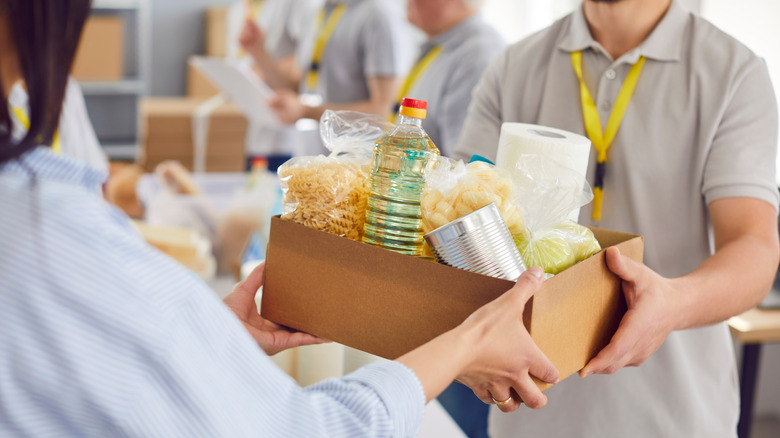
Similar to grocery stores that donate their unsold food instead of tossing it in landfills, Chick-fil-A extends a helping hand to local communities struggling with hunger and poverty through its Shared Table food donation program, which launched in 2012. Through this initiative, the chain aims to divert around 25 million pounds of food leftovers from landfills to different organizations, including food shelters, senior centers, after-school programs, and soup kitchens across the country. While the initiative is quite noble, it isn't mandatory. As such, not all locations participate in this donation drive.
So far, more than 2,500 locations, or 80% of the total number of Chick-fil-A restaurants, are active participants in the Shared Table program. While this is not 100%, it still accounts for a healthy majority of the stores willing to help address the global food waste problem, which amounts to around 1.6 billion tons of food waste each year. Still, mandating all branches to join the Shared Table program might have been a better direction for the fast-food chain, as it would have established its solid commitment to the cause. After all, Chick-fil-A senior director of corporate social responsibility, Brent Fielder himself, has acknowledged the problem with food scarcity in relation to the food industry's waste. "We have a responsibility to do this as a restaurant company. 100% of counties in this country are dealing with food insecurity," Fielder said (via NRN).