

How To Pick Out The Freshest Live Crabs For Your Next Seafood Feast
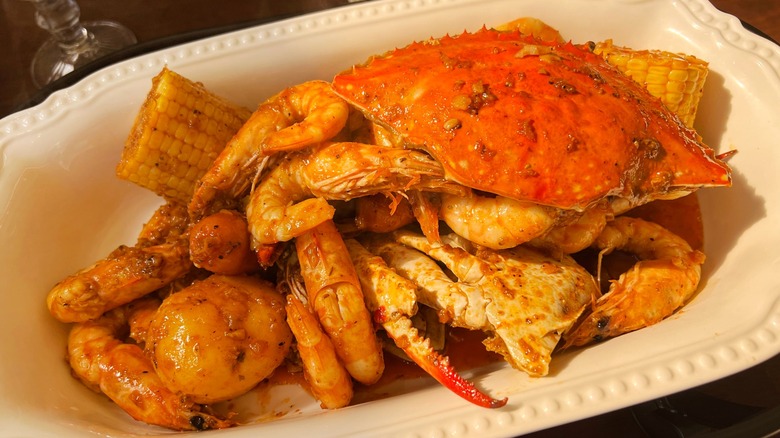
Seafood lovers all know that fresh crab beats the canned stuff hands down. But there's more to tracking down the best live crabs than seeing them move slightly. When The Takeout spoke with Dora Swan, the founder of fin — your fishmonger, about sourcing live crabs, she revealed some tell-tale signs that you're getting the freshest seafood money can buy.
The most obvious thing to look for is whether the crustacean still has some spunk. "Look for active, lively crabs," Swan said. "They will raise their claws when your hands approach them, as a defense mechanism. And, they'll try to pinch you, for sure!" You'll want to watch your fingers, but don't let a crab's feistiness deter you from picking them up to check their weight and give them a sniff.
"Fresh crabs should smell like the ocean (as all seafood should) and should feel heavy for their size," Swan said. "They should ideally have all their legs intact, although it's certainly possible that they might be missing one or two." While it is possible to make some seafood taste less fishy with milk, crab with a pungent aroma is on its way out the door.
As for what species to pick up, Swan said folks shouldn't have any trouble finding the best type of crab for a crab boil. "Blue crabs are the most available, running from Florida all the way up to Nova Scotia. These are what we prize as 'soft-shell crabs,' or 'softies,' during their molting season." More specifically, male blue crabs (called "Jimmies") should be a priority. "In addition to being more meaty, folks say that the meat is firmer and more sweet," Swan said.
Keep live crabs fresh until you're ready for them
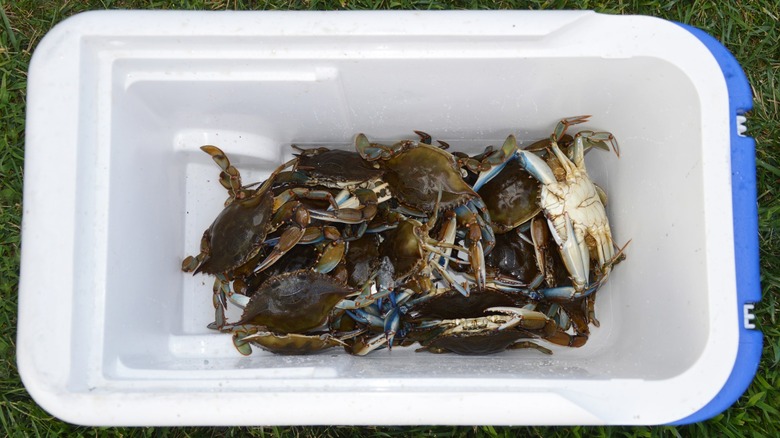
You've made the wise decision to ditch lump crab meat for fresh, whole crustaceans, but you don't actually plan on cooking them until the next day. Keeping them in peak condition is critical to the flavor and quality of the meat. With that in mind, Dora Swan shared a couple of tips that will keep your live crabs from perishing before they can be enjoyed.
If you did well and bought the liveliest crabs you could find, understand that they are going to be spirited little buggers as you transport them to your home. "If they're in an unlidded box on the floor of the passenger side of the car for your journey home from the grocer, well, you should reconsider that decision," Swan said. "They climb and skitter. So, you'll want to store them in some type of lidded container until you're ready to prepare them."
Once the journey is over, live crabs should stay wet — but not too wet. "You'll want to keep them moist until cooking time, so cover them, loosely, in a cooler, with cold, wet newspaper, paper towels, or dish towels," Swan said. "But, absolutely, positively do NOT store them in water." Oddly enough, considering they live in the ocean, if you submerge them in water, they will drown.
Swan also noted that live crabs are best preserved at low temperatures. "They should be kept fairly cold, as well," she said. "A cooler with ice packs or your refrigerator veg drawer works really well." Stored correctly in a relatively cold, moist environment, live crabs can last for a couple of days before they need to be cooked.