

5 Fast Food Scandals We Can't Believe Really Happened
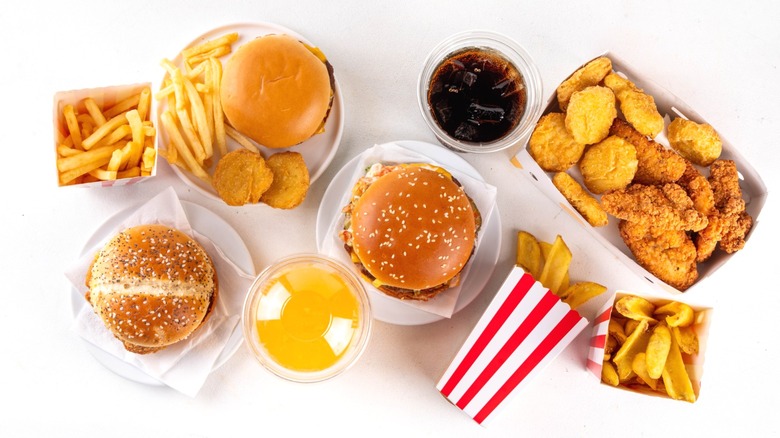
Fast food is one of the most lucrative industries in the entire world. While the idea that "no two countries with McDonald's have gone to war" no longer holds true, fast food remains a powerful symbol of globalization and capitalism, for good or for ill. Despite this (or perhaps because of this), fast food doesn't always have the best reputation: there's plenty to criticize regarding its nutritional quality and its harmful labor practices, and customers will roast chains for missteps both big and small.
It's true that there are plenty of wild urban legends floating around — nobody's ever found a deep-fried rat in their KFC bucket, and McDonald's doesn't include worm meat in their hamburgers. (We're sure Upton Sinclair, whose muckraking led to the founding of the FDA, would be glad to hear that.) But while the real stories are less salacious on the surface, they still offer plenty of twists and turns, dealing with corporate heartlessness, opportunistic customers, and some good old foot-in-mouth PR blunders.
The not-so-frivolous McDonald's hot coffee lawsuit
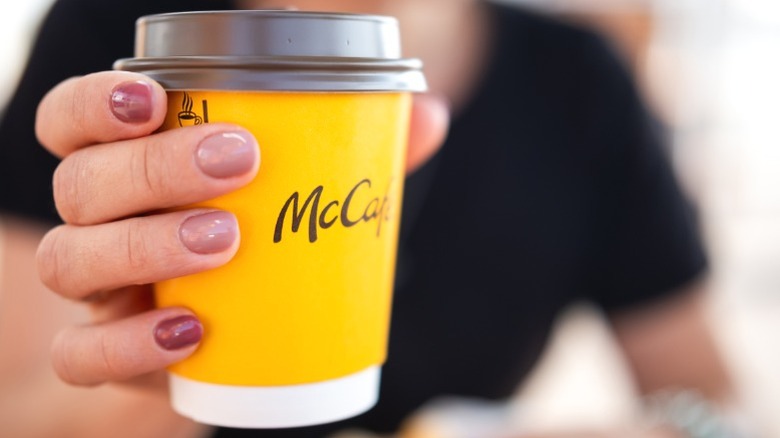
For a time, the 1994 "hot coffee" case made against McDonald's by a New Mexico woman named Stella Liebeck was seen as the ne plus ultra of frivolous lawsuits. A woman suing McDonald's because she spilled a bit of java on her lap one morning? Let's break out the tiny violins. (The slang term "Karen" didn't exist back then, but that was what Liebeck was generally seen as.) But behind the late night talk show bits and "Seinfeld" parodies, the truth was a lot uglier and a lot less flattering for McDonald's.
The coffee was not just a little warm but near-boiling; Liebeck suffered third-degree burns on her inner thighs and required extensive surgery. McDonald's knew that its coffee was an unsafe temperature and had in fact received hundreds of other reports regarding burns suffered from spilled coffee; despite this, it refused to cover Liebeck's medical expenses of over $10,000, offering a mere $800. Liebeck won her lawsuit, receiving $480,000 in damages (down from the $2.7 million initially awarded by the jury), and McDonald's quietly began serving their coffee at a lower temperature. Unfortunately, Liebeck was worn down by her injuries and the legal circus, passing away in 2004.
Wendy's bogus finger in the chili
Here we have another infamous lawsuit against a fast food chain in the western United States. Luckily for Wendy's, though, this one wasn't its fault. In 2005, a woman from San Jose, California named Anna Ayala claimed to have bitten into a severed finger she found in her cup of Wendy's chili. As you can imagine, people got a little leery of Wendy's after that, and the chain reported $21 million in losses as a result. (Wendy's didn't start selling its chili in grocery stores until 2023, but if it did, we imagine it would have suffered some losses there too.)
As it turns out, Ayala didn't find a finger in her chili — she put it there herself. Ayala's husband, one Jaime Plascencia, bought the finger from his coworker, who lost it in a workplace accident. (For some reason, this is so much weirder than it would have been if he used his own severed finger.) Eventually, someone caught on that nobody in the San Jose Wendy's lost their finger, and Ayala and Plascencia were both arrested and sentenced to 9 years and 12 years and 4 months in prison, respectively. Ayala was released after serving four years, later popping up in a New York Times article offering a quote about the 2024 election. (She was swiftly removed.)
Krispy Kreme and the unfortunate acronym
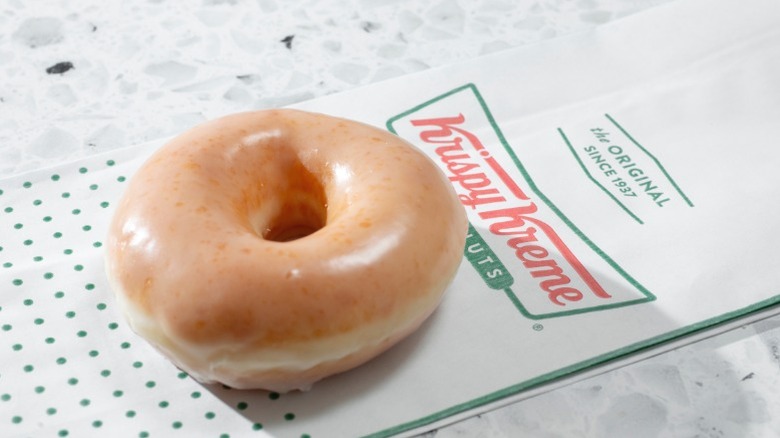
Perhaps it's not fair to expect fast food franchisees in the United Kingdom to keep a global (read: American) audience in mind for their promotional events. After all, us Yanks barely even know what a kilometre is. But all the same, we're fairly sure most people would see the problem with a promotion set up by a Krispy Kreme in Hull in 2015. (Hull, coincidentally, is also home to the world's largest Wendy's.)
A Hull Krispy Kreme advertised a promotion on Wednesdays where customers could come in and decorate their own donuts — a pleasant and wholesome activity, we're sure you'll agree. The only trouble is that this was advertised to members of the so-called "Krispy Kreme Klub," for an event called "KKK Wednesday." It's true that the infamous white supremacist organization known as the Ku Klux Klan doesn't have much of a presence in the United Kingdom, but it's still a pretty big oversight. (Heck, Arthur Conan Doyle wrote a "Sherlock Holmes" story where the Klan were the bad guys all the way back in 1891.) Needless to say, a profuse apology was issued, and the promotion ended.
Burger King's disastrous International Women's Day tweet
If we had a nickel for every PR debacle from a fast food restaurant in the United Kingdom on this list, we'd have two nickels — which isn't a lot, but it's weird that it's happened twice. On International Women's Day in 2021, Burger King's UK division wanted to announce a scholarship for female Burger King employees who wanted to become professional chefs. That's certainly a noble aim, but some clown comic in the communications department decided to announce this on Twitter with a thread that began "women belong in the kitchen."
Of course, Burger King was trying to be cute: it followed that tweet with another saying "if they want to, that is," before listing statistics concerning the low percentage of women in restaurant kitchens. But to paraphrase Mark Twain, a bad tweet can travel halfway around the world while a good tweet is putting on its shoes. Everybody saw Burger King seemingly disparage half the population, nobody saw the follow-up about the scholarship, and the whole thing became a corporate faux pas so painful it would make Michael Scott cringe. (Or David Brent, we suppose, since this happened in Britain.)
Domino's gross viral videos
By 2009, the social media ecosystem we know today was starting to take shape, for better or worse. On the one hand, media creation was democratized, meaning just about anybody could upload a video on YouTube and potentially rack up millions of views; on the other hand, that made it much easier for attention-seeking fools to get what they craved, with disastrous consequences for pretty much everybody involved. Case in point: the "Disgusting Domino's People."
In March 2009, a series of videos released by a pair of Domino's employees named Michael Setzer and Kristy Hammonds in Conover, North Carolina appeared to show Setzer contaminate the food by shoving it up his nose (among other things we'd rather not go into), all while Hammonds narrated that said food would go out to unsuspecting customers. Although Hammonds insisted that the videos were fake and that none of the food went out to customers, the damage was done: the chain weathered controversy nationwide, Domino's locations near the restaurant in question saw a decline in business that led to closures and job losses, and both Setzer and Hammonds lost their jobs and ran into legal trouble.