

When You Do (And Don't) Need To Pat Canned Peaches Dry For Baking
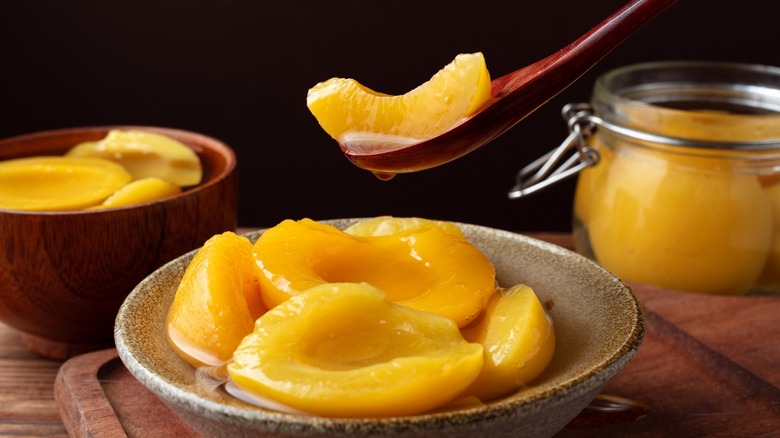
If you're like me and struggle with pitting fresh peaches without tearing apart the fruit, canned peaches are probably sitting in your pantry waiting for their debut in your next summery confection. While some purists believe that only fresh produce should be used in baked goods, you absolutely can use canned peaches for a phenomenal cobbler and various other desserts. However, because they spend so much time languishing in syrupy moisture, chef Megan Garrelts of Rye and Cornflower Baked Goods indicated that people should consider patting them dry before using them — sometimes.
"In recipes like cakes, muffins, or quick breads, excess syrup can thin the batter and lead to soggy spots or affect how the baked good rises," Garrelts said. "For those recipes, draining or patting the peaches dry helps maintain the proper structure." Too much moisture can likewise spell trouble for tarts and puff pastry-style desserts. Yet, occasionally, that supplemental syrupy goodness can be used to your advantage.
"In pies, cobblers, or crisps, the syrup and juices are often part of the filling; helping create the saucy texture that develops as the dessert bakes," Garrelts said. "In these cases, draining lightly is usually enough, and the extra liquid can actually enhance the final dish." If you're having trouble determining whether to pat canned peaches dry or not, Garrelts offered a pragmatic guideline to follow. "General rule would be to drain canned peaches first, then decide whether to pat them dry based on how much moisture the recipe can handle."
The overall quality of canned peaches also matters
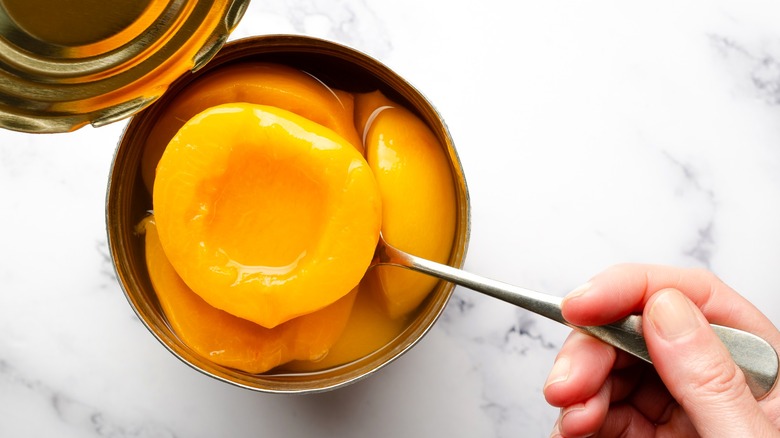
While canned fruit may not be the best peaches for grilling due to their high moisture content, using them to create a mouthwatering pie or cobbler can lead to an exceptional confection you won't soon forget. Still, Garrelts warned that excess juice isn't the only aspect of the fruit people should pay attention to when whipping up a dessert worthy of a starring role on a summer BBQ table. Apparently, size matters as well.
"If the peaches are large, thick slices or full pieces, they tend to hold their shape better during baking," she said. "However, if the peaches are thin, narrow slivers, they are more likely to break down as they bake. This can cause the filling to lose structure and may result in a cobbler that looks flat or slightly sunken after baking rather than full and fruit-forward."
Garrelts also mentioned an obvious fact that may escape some folks: Quality can vary between brands. The difference between a superb product and a lousy one could mean the difference between a picturesque dessert and a depressing tragedy, which is why Garrelts recommended seeking out first-rate canned peach brands from stores like Whole Foods and Trader Joe's. "These brands typically use better-quality fruit and lighter syrup or juice, which lets the natural peach flavor come through and makes it easier to control the sweetness in recipes," she said. "They also tend to hold their texture better during baking, giving you more distinct pieces of fruit in dishes like cobblers or pies."