

Don't Put Frozen Veggies Into Your Casserole Without Doing This First
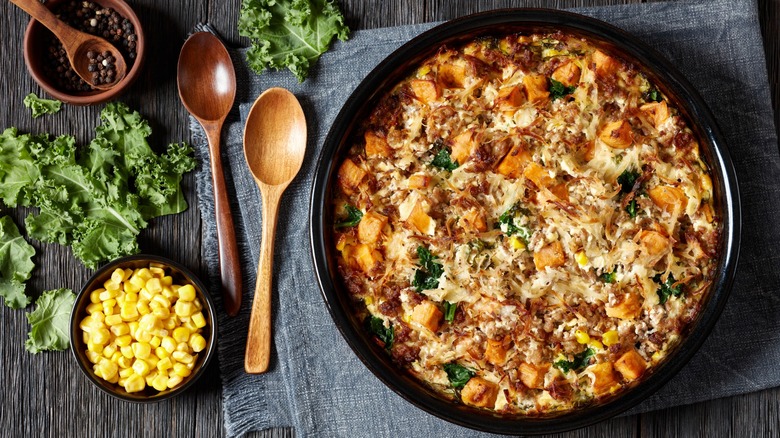
If you're a fan of cheesy lasagna, saucy baked ziti, and sweet apple cobbler, you, my friend, are actually a casserole enthusiast. The word "casserole" is essentially a universal term for any food that is composed of ingredients finished in the oven. Besides most dessert varieties, the dish generally features a combination of protein, veggies, and a starch that ties everything together. With frozen vegetables being the ultimate kitchen shortcut, it's safe to assume that many folks reach into the freezer for casserole produce. But according to chef John Politte, the host and creator of It's Only Food, simply dumping them in without any preparation is a recipe for remorse.
"If you add frozen vegetables directly to a casserole without thawing them first, they will release excess water as they cook," Politte said. "This extra moisture can make your casserole watery, dilute the flavors, and affect the texture — especially in dishes with creamy sauces or crispy toppings." I know I'm not alone in thinking that a watery green bean casserole sounds about as appealing as soggy fries (looking at you In-N-Out).
Making matters worse, not thawing your veggies before tossing them into the dish can wreck their texture and increase the casserole's cooking time. "The vegetables themselves may also end up mushy or unevenly cooked since the cold temperature can slow down the overall baking process," Politte said. "While some recipes allow for frozen veggies to be added straight in (especially when moisture isn't a concern), it's generally best to thaw and drain them first." Depending on the amount of moisture in the veggies, they may require more work than simply letting them defrost.
Some veggies need more attention for a casserole
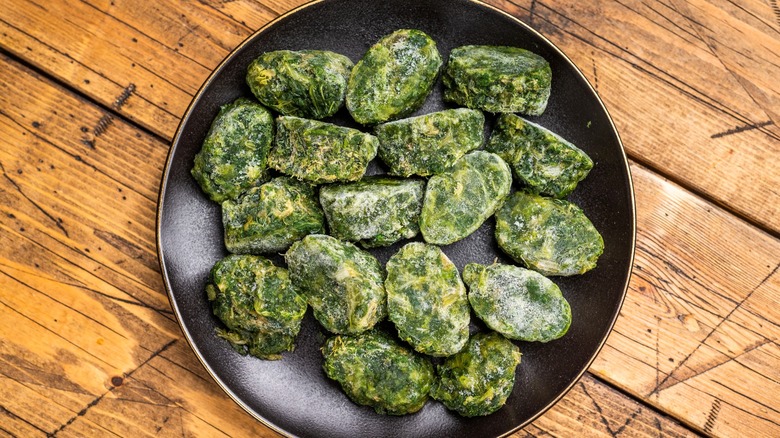
For some types of frozen veggies, busting out your colander and letting them release moisture as they thaw is all you need to do for a winning casserole. However, Politte had a word of warning: "Different frozen vegetables often require specific methods to effectively remove excess moisture since their structure and water content vary." He used spinach as an example of produce that calls for a bit more TLC. "Frozen spinach holds a lot of water," he said. "After thawing, place the spinach in a clean kitchen towel or several layers of paper towels and squeeze firmly to extract as much liquid as possible."
Of course, other methods besides thawing can remove surplus moisture and upgrade the veggies before they enter the casserole. One way to cook frozen vegetables without having them turn out soggy is by roasting them in the oven. "Roasting caramelizes natural sugars, intensifies flavor, and helps drive off excess moisture so your casserole turns out more flavorful and less watery," Politte said.
Par-cooking is another technique that's especially beneficial for produce with high moisture content. Politte explained, "For vegetables that tend to be dense or release a lot of water (like carrots or mushrooms), consider microwaving or steaming them briefly after thawing." Yet, if you want to enhance the veg similar to roasting, giving it a quick sauté presents an opportunity to elevate it before it hits your casserole. "This not only removes residual moisture but also allows you to add extra flavor with aromatics like garlic, onions, or herbs."