

Avoid Overcooked Rubbery Shrimp Every Time With This Foolproof Method
We may receive a commission on purchases made from links.
Rubbery is a quality we desire in automobile tires, the soles of footwear, and craft projects involving slime; it is not anything we want to associate with shrimp. And yet, these versatile crustaceans can easily turn from delicate to a chewy mass with the mouthfeel of a dishwashing glove if not cooked with care. Popular kitchen wisdom suggests that to avoid such a grisly fate for your shrimp, stay away from precooked shrimp, which can turn rubbery quickly. However, there's another method that wards off that pool floatie texture, one that requires a few special kitchen accoutrements but also delivers the tenderest, most flavorful shrimp. To get more information, The Takeout turned to Chef Ashley Lonsdale, chef-in-residence for ButcherBox.
"The sous vide method is a nice choice for nailing a tender texture without losing too much of the shrimp's flavor to a poaching liquid," says Lonsdale. Don't let the French verbiage scare you, sous vide is for everyone. It involves vacuum-sealing food in a plastic bag and then cooking it submerged in water held at a relatively low temperature. According to Lonsdale, shrimp benefit greatly from sous vide: "The process concentrates the flavor and infuses the shrimp with whatever additional ingredients you decide to add, like garlic, lemon, and thyme or perhaps a spicy, smoky Cajun seasoning." There are additional perks for going the sous vide route with your shrimp.
Slow and low is the key to sous vide
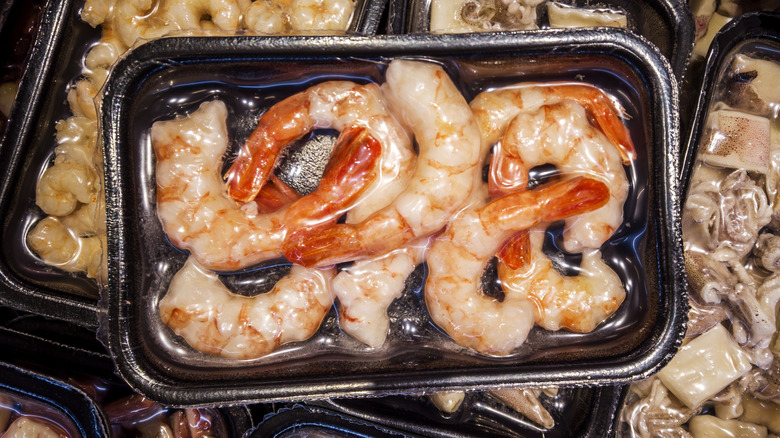
Overcooking shrimp is the surest way to send them on a one-way ticket to Rubbery Town. However, sous vide turns that notion on its head. It takes much longer to cook shrimp with this method, but the results are juicy and flavor-rich. "Poaching or pan-frying shrimp can take mere minutes to cook, whereas sous vide cooking takes 15 to 30 minutes while slowly cooking the shrimp," says Lonsdale. A longer cooking time affords you more time to prevent mistakes, unlike the margin of error with other methods which can be just seconds in length. "Sous vide also utilizes precise temperature control, which is a benefit when aiming for a specific internal temperature," adds Lonsdale. (For the record, shrimp is safe to eat when its internal temperature reaches a minimum of 145 degrees Fahrenheit.)
If you're sold on sous vide cooking shrimp and ready to roll up your sleeves and try it, you'll first need a few items. Lonsdale advises that you pick up a quality sous vide circulator, some vacuum seal bags, and a container large enough to accommodate the shrimp and circulate the water. As for the shrimp, smaller varieties are the best types for poaching, which employs a method similar to sous vide.